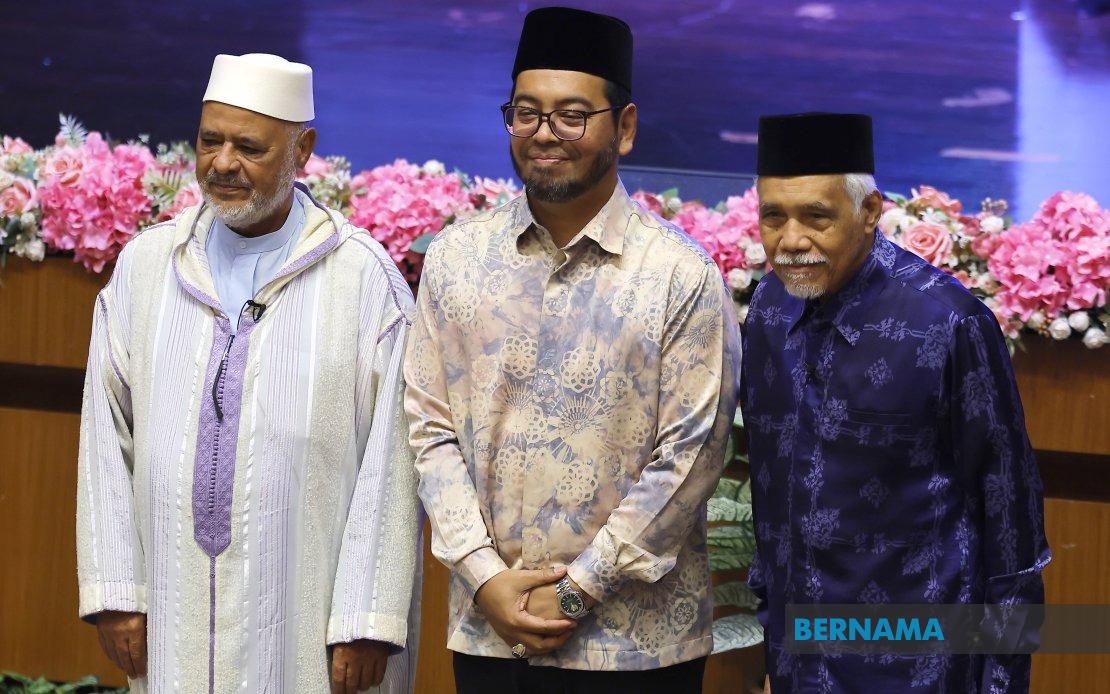
The Prime Minister's Department (Religious Affairs) has introduced the Maal Hijrah Lecture Series as a concerted effort to translate the theological and intellectual work of nationally and internationally recognised Islamic figures into public discourse. The initiative, officially launched at an event in Putrajaya on June 18, represents a deliberate strategy to democratise Islamic scholarship and ensure that sophisticated Islamic thought reaches beyond the confines of universities and religious institutions into communities across Malaysia.
Minister in the Prime Minister's Department (Religious Affairs) Dr Zulkifli Hasan framed the programme as a response to the challenge of intellectual gatekeeping. He emphasised that allowing the perspectives of prominent Islamic scholars to remain sequestered within academic seminars or elite discussion groups undermines their potential societal impact. By creating a structured platform for disseminating these insights, the government aims to foster a more informed religious consciousness across diverse segments of the population, transcending traditional boundaries of access to scholarly discourse.
The stated ambition extends beyond Muslims to encompass non-Muslim audiences as well, reflecting a broader vision of Islamic intellectual engagement as part of Malaysia's multicultural social fabric. Dr Zulkifli expressed hope that the lecture series would cultivate appreciation for Islamic thought among citizens of all faiths, positioning religious scholarship not as sectarian content but as contributions to national intellectual life. This universalist framing suggests recognition that Islamic perspectives on ethics, law, governance, and social responsibility hold relevance for Malaysian society more broadly.
The initiative has already garnered institutional backing from key players in Malaysia's higher education and religious landscape. Both Universiti Sains Islam Malaysia (USIM) and International Islamic University Malaysia (IIUM) have provided positive responses, signalling readiness to participate in collaborative delivery. These institutions bring considerable credibility and existing networks that can amplify the reach of the lecture series. The government has signalled intention to expand partnerships to additional universities and institutions, creating a distributed network capable of hosting events and facilitating scholarly engagement at regional and local levels.
The inaugural Maal Hijrah 1448H/2026 Lecture Series featured two distinguished recipients of Maal Hijrah figure awards announced the previous day. Emeritus Professor Osman Bakar, rector of IIUM, received the national Maal Hijrah figure award, while Prof Sheikh Dr Ahmad Al-Raysuni, an Islamic jurisprudence specialist from Morocco, was recognised as the international Maal Hijrah figure. These selections underscore the government's intention to leverage established scholars with broad intellectual standing and cross-cultural credibility to champion the lecture series.
The recognition ceremonies took place within significant ceremonial contexts. The awards were presented by Sultan Nazrin Shah, the Sultan of Perak, at the national-level Maal Hijrah celebration held at Masjid Putra. Beyond ceremonial value, this protocol—with cash prizes, trophies, and certificates accompanying the awards—underscores official commitment and resource allocation to the initiative. The presence of royal patronage signals that this programme enjoys high-level institutional support within Malaysia's governance hierarchy.
The timing of the initiative coincides with growing global discussions about the accessibility and relevance of religious scholarship. Many Muslim-majority societies face challenges in translating complex theological and jurisprudential work into formats and forums that resonate with non-specialist audiences. Malaysia's approach through the Maal Hijrah Lecture Series reflects pragmatic recognition that maintaining intellectual vibrancy in religious institutions requires active engagement with public consciousness. Without such bridges between academic and popular spheres, scholarly work risks losing traction and influence over long-term social and policy development.
For Malaysian policymakers, the programme also serves strategic purposes related to countering fragmentary or potentially harmful interpretations of Islam that proliferate through less regulated channels. By creating official platforms for established, internationally credible scholars to articulate their perspectives, the government implicitly offers an authoritative counter-narrative to more marginal voices. The selection of scholars with credentials across both national and international contexts suggests careful attention to maintaining legitimacy and avoiding accusations of governmental bias or control over religious discourse.
The educational infrastructure implications are substantial. By involving USIM, IIUM, and intended future partner institutions, the lecture series integrates religious scholarship into the mainstream higher education sector. This positioning reinforces that Islamic thought is not peripheral to Malaysian intellectual life but constitutive of it. For students and faculty at these institutions, exposure to Maal Hijrah figures through structured lecture series provides curricular enrichment and normalises engagement with sophisticated Islamic intellectual traditions.
The international dimension through figures like Prof Ahmad Al-Raysuni also positions Malaysia as a venue for global Islamic intellectual exchange. Bringing scholars from established international networks into Malaysian forums enhances the country's standing as a centre for Islamic learning and dialogue. This has implications beyond religious domains, touching on Malaysia's broader aspirations toward regional leadership in thought and culture.
Successfully implementing the Maal Hijrah Lecture Series will require sustained institutional commitment and genuine public engagement beyond ceremonial launching. The programme's ultimate measure of success lies not in awards presented or events held, but in whether broader populations actually absorb and reflect upon the insights being shared. This demands creative approaches to publicity, accessibility of venue locations, timing that accommodates diverse schedules, and perhaps multimedia extensions that capture lectures for wider distribution across digital platforms.
The initiative also raises questions about how the programme will balance accessibility with intellectual rigour. Translating complex jurisprudential or theological material for general audiences risks oversimplification, yet maintaining scholarly density risks excluding non-specialist participants. The collaboration with established universities may help navigate this tension, as academic institutions bring experience in layered communication appropriate to mixed-level audiences.

