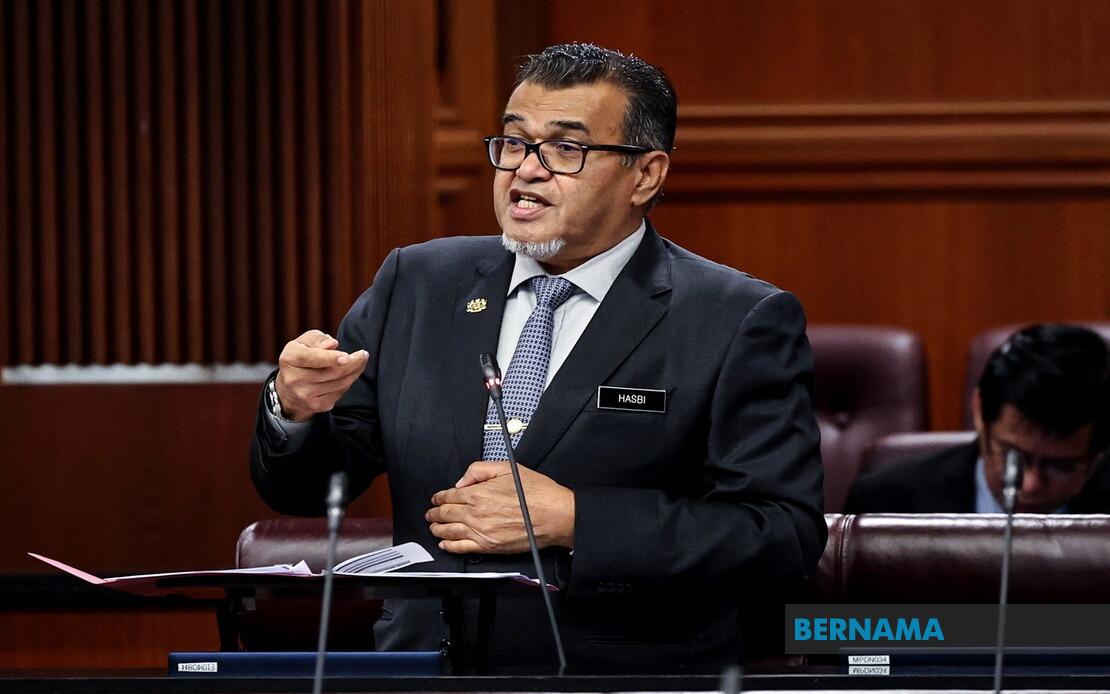
The Malaysian government is moving swiftly to overhaul the legal framework protecting railway infrastructure, with Deputy Transport Minister Datuk Hasbi Habibollah confirming that parliamentary amendments addressing cable theft, vandalism and trespassing are nearing completion. Speaking during question time in the Dewan Rakyat, Hasbi emphasised that current legislation has become inadequate to tackle the scale of organised theft targeting Malaysia's rail network, with penalties remaining far too lenient to deter serious offences.
The scope of the problem is substantial. Official figures revealed that 393 cable theft incidents occurred across Malaysian railways during the preceding three years, resulting in the loss of 19,756 metres of cable valued at approximately RM16.3 million. This represents not merely a financial burden on the rail operator but a critical infrastructure vulnerability, as illegally removed cables can disrupt signalling systems, power supply and communication networks essential for safe train operations. The scale of these losses underscores why the government has prioritised legislative action.
Currently, trespassing on railway property carries only modest sanctions of between RM500 and RM1,000, a deterrent insufficient to prevent criminal activity on a network spanning thousands of kilometres. The anticipated amendments will introduce substantially harsher penalties specifically targeting cable theft involving security-related infrastructure, reflecting recognition that such offences carry implications extending well beyond simple property crime. Hasbi stated that the revised legislation would be tabled before Parliament before the year concludes, signalling government commitment to addressing the problem within a defined timeframe.
The strategy extends beyond legal penalties to encompassing supply-side interventions. Government officials are working closely with the Royal Malaysian Police to engage scrap metal dealers and operators, establishing protocols to prevent these businesses from accepting stolen copper and other materials extracted from railway infrastructure. This approach targets the commercial incentive structure sustaining cable theft, recognising that thieves operate within networks of recyclers and dealers who provide the market outlet for their stolen goods. By disrupting this supply chain, authorities aim to reduce the profitability and attractiveness of railway-related theft.
Simultaneously, the Railway Assets Corporation has undertaken a major technological upgrade, deploying 1,146 artificial intelligence-enabled closed-circuit television units throughout high-vulnerability sections of the network at a capital investment of RM14 million. These smart systems can detect movement, recognise patterns of suspicious behaviour and potentially trigger real-time alerts to enforcement personnel. The strategic placement of these cameras focuses on areas experiencing concentrated theft activity, allowing authorities to concentrate monitoring resources where risk is highest.
Drone surveillance represents an additional technological addition to the enforcement arsenal. Unmanned aerial systems enable monitoring of remote rail corridors and isolated sections that conventional ground patrols struggle to access regularly, expanding the effective reach of security operations. This aerial capability proves particularly valuable in monitoring infrastructure in terrain difficult to navigate or in identifying theft activity occurring in less-trafficked locations where thieves believe they can operate undetected.
Keretapi Tanah Melayu Berhad, the primary passenger rail operator, has obtained authorisation to acquire twenty scrambler motorcycles equipped for the Auxiliary Police force. These vehicles enhance mobility and speed of response to reported incidents, allowing enforcement personnel to reach theft locations more rapidly and maintain visible security presence across dispersed rail segments. The motorcycles also provide greater flexibility than traditional foot patrols or standard vehicles, enabling coverage of irregular terrain adjacent to rail corridors.
The comprehensive approach reflects understanding that addressing infrastructure crime requires simultaneous action across multiple domains—legal consequences, market disruption, technological surveillance and physical enforcement presence. For Malaysian readers, the implications extend beyond railways themselves. Cable theft, particularly of telecommunications and electrical infrastructure, represents a persistent problem affecting broader national infrastructure security. The legislative and operational strategies being applied to railways may establish templates applicable to protecting other critical systems.
From a regional perspective, Malaysia's experience with organised infrastructure theft mirrors challenges confronting neighbouring countries across Southeast Asia. Thailand, Indonesia and the Philippines have all reported significant losses from coordinated cable theft targeting electrical grids, telecommunications networks and railways. The Malaysian government's multifaceted response provides a potential model for regional collaboration and information-sharing regarding theft prevention tactics and legislative approaches.
The financial impact warrants serious attention. Beyond the direct RM16.3 million loss quantified by Hasbi, railway disruptions impose indirect costs through delayed services, inconvenienced commuters and potential safety incidents when critical infrastructure operates impaired. The investment in CCTV systems and enforcement capabilities, while substantial, represents cost-effective prevention compared to repeated theft losses and operational disruptions that undermine public confidence in rail transport reliability.

