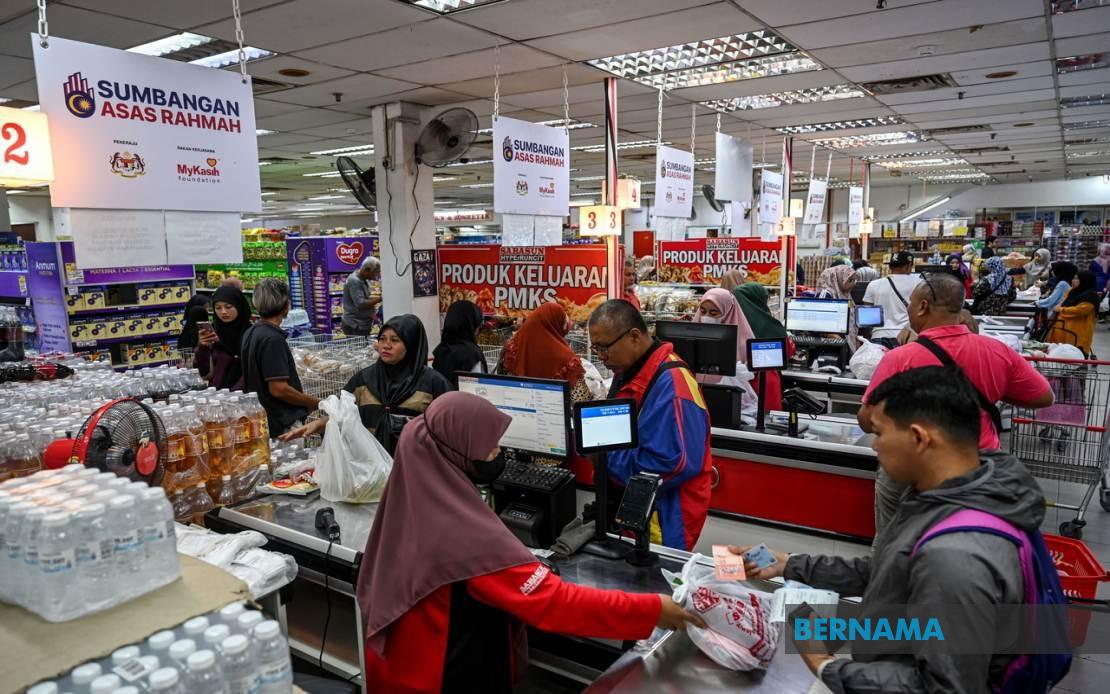
Prime Minister Datuk Seri Anwar Ibrahim has signalled that the MADANI Government is actively exploring the possibility of raising benefit levels under two key cash assistance schemes if Malaysia's economic circumstances improve, potentially offering relief to millions of lower-income households already reliant on these monthly transfers.
Speaking during a community engagement event in Ipoh on July 19, Anwar revealed that deliberations on expanding the Sumbangan Tunai Rahmah (STR) and Sumbangan Asas Rahmah (SARA) programmes have already commenced at the ministerial level. The Prime Minister, who doubles as Finance Minister, stated that he had recently discussed the matter with Treasury secretary-general Tan Sri Johan Mahmood Merican, with substantive consideration planned during the development of the next national budget.
The statement carries significance for Malaysia's substantial beneficiary population. The STR and SARA schemes represent the government's primary mechanism for direct cash support to vulnerable households, with millions of Malaysians depending on these monthly allocations to meet basic living expenses. For many recipients, even modest increases in assistance levels translate into meaningful improvements in purchasing power and financial stability, particularly given persistent inflationary pressures affecting food, transportation, and utilities across Southeast Asia.
Anwar's comments underscore an emerging tension within government fiscal policy between maintaining macroeconomic prudence and responding to citizen welfare demands. By tying potential increases to economic performance, the Prime Minister has positioned the government as willing to act if conditions warrant, whilst simultaneously emphasising fiscal responsibility. This framing reflects awareness that any expansion must be sustainable and not further strain public finances during a period when Malaysia continues navigating post-pandemic economic recovery and global economic uncertainty.
The conditional nature of the commitment—premised on whether "the economy allows"—hints at ongoing assessments within the Treasury regarding growth projections, revenue collection, and debt servicing requirements. Malaysia's fiscal position, while gradually stabilising, remains subject to external shocks from regional economic slowdowns, currency fluctuations, and commodity price volatility. The government's cautious optimism appears grounded in realistic acknowledgment that budgetary flexibility depends on variables beyond complete domestic control.
Beyond the welfare assistance discussion, Anwar used the Ipoh gathering to reinforce government commitment to security sector personnel, particularly the Malaysian Volunteer Corps Department (RELA), whose members operate on a part-time, volunteer basis whilst supporting disaster response and community policing initiatives. The Prime Minister announced that RELA welfare allocations would be sustained at RM3 million annually, matching the previous year's commitment, though he acknowledged such sums remain insufficient for comprehensive coverage of personnel needs.
This secondary focus on RELA welfare reflects broader government recognition that security volunteers, whilst playing crucial roles in maintaining public order and responding to emergencies, often operate with limited resources and inadequate compensation relative to their contributions. By explicitly prioritising their welfare, Anwar signalled that the government views investment in security personnel as integral to national resilience, particularly given the demands placed upon volunteer forces during natural disasters, security incidents, and public health emergencies.
The Ipoh event represented one of several MADANI KITA community programmes designed to showcase government engagement with grassroots constituencies. These initiatives serve multiple purposes: they provide platforms for direct communication between senior leadership and citizens, enable gathering of localised feedback on policy impacts, and facilitate announcement of targeted assistance initiatives. For a government conscious of maintaining popular legitimacy whilst managing fiscal constraints, such events offer valuable opportunities to demonstrate responsiveness without necessarily requiring immediate large-scale expenditure increases.
For Malaysian households currently receiving STR and SARA benefits, Anwar's remarks offer measured hope. The schemes have provided crucial stabilisation for lower-income families, particularly during periods of economic stress. However, the real value of these transfers has been gradually eroded by inflation, with purchasing power declining unless nominal amounts increase commensurately. The Prime Minister's indication that budget deliberations will examine expansion possibilities signals that such concerns are being registered within government planning processes.
The timing of these comments proves noteworthy given Malaysia's broader economic trajectory. The country has demonstrated resilience through 2023 and into 2024, with growth rates tracking above regional averages in several quarters. Should this momentum continue through the remainder of the fiscal year, the budgetary space for assistance increases may indeed materialise. However, geopolitical tensions affecting trade routes, potential regional economic contagion, and domestic policy uncertainties create genuine unpredictability regarding whether economic conditions will ultimately permit the welfare expansions under consideration.
For policymakers across Southeast Asia observing Malaysia's approach, the government's cautious optimism regarding welfare expansion provides instructive contrast to more expansionary or restrictive approaches elsewhere in the region. Malaysia's linking of increased assistance to demonstrable economic capacity reflects lessons learned from previous fiscal challenges and represents an attempt to balance social spending ambitions against long-term fiscal sustainability imperatives that limit government flexibility during unforeseen crises.
The conversation around STR and SARA increases must also be contextualised within Malaysia's broader social protection architecture. These cash transfers form a crucial component but operate alongside other assistance mechanisms including subsidies on essential goods, targeted housing assistance, and skills development programmes. Comprehensive welfare policy assessment requires examining how increases to cash schemes interact with and potentially complement or substitute other support mechanisms, ensuring that the total policy package optimally serves intended beneficiaries.

