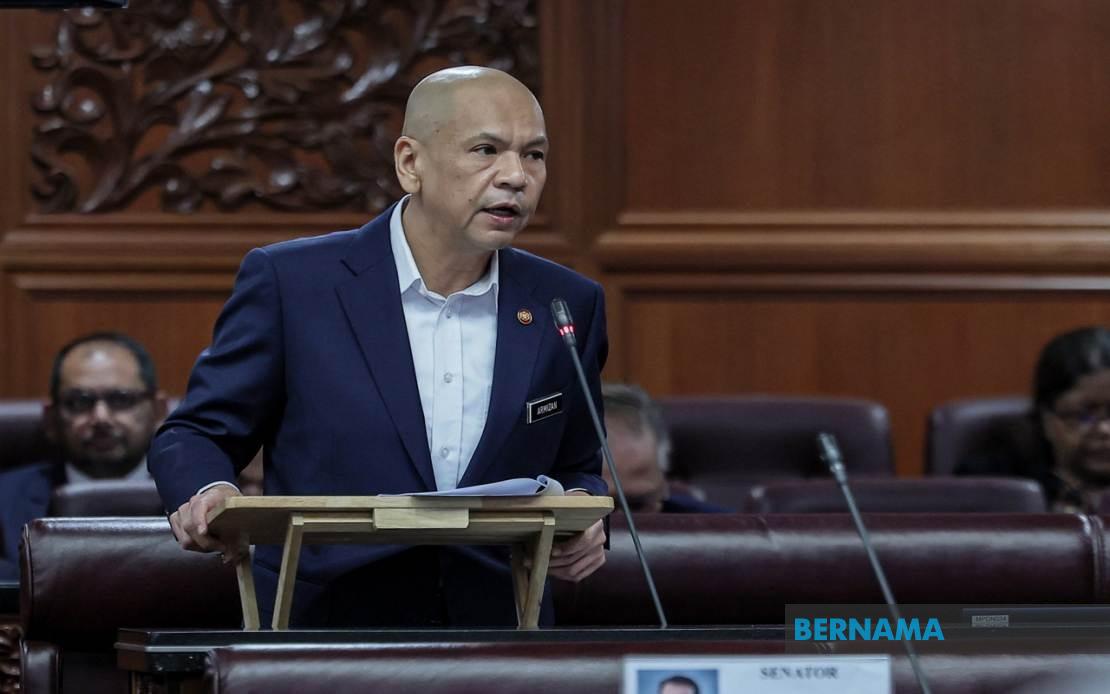
Malaysia's cost-of-living relief initiative gained significant momentum in the first half of 2024, with the Ministry of Domestic Trade and Cost of Living reporting the completion of 15,881 Rahmah MADANI Sales Programme events between January and June. Minister Datuk Armizan Mohd Ali disclosed this achievement during a parliamentary question-and-answer session, emphasising the government's determination to expand the frequency of discounted shopping events in response to positive reception from the public across the country.
The scale of the programme's geographic reach underscores a comprehensive approach to distribution. Every one of Malaysia's 600 state constituencies participated in the initiative, while the 40 Federal Territory zones in Putrajaya, Kuala Lumpur, and Labuan also received dedicated events. This blanket coverage represents a fundamental shift in how the government conceptualises cost-of-living interventions, moving away from sporadic relief measures towards systematic, recurring support mechanisms accessible to citizens regardless of their location or urban-rural context.
The trajectory of growth demonstrates accelerating implementation capacity. The programme conducted only 6,870 sessions throughout 2023, but this nearly doubled to 12,419 in 2024 alone. Most dramatically, the government is on pace to deliver 25,708 events in 2025, reflecting a fourfold expansion from just two years prior. This escalation reflects not merely increased political will but rather institutional embedding of the programme into government machinery and budget cycles.
When Prime Minister Datuk Seri Anwar Ibrahim announced an upward revision of targets in May, the government reset its annual expectations from 23,040 to 30,000 sessions. This adjustment occurred explicitly in response to global commodity supply disruptions and energy market volatility stemming from the West Asia conflict, positioning the Rahmah MADANI initiative as part of a broader economic stabilisation strategy rather than a standalone subsidy programme. The recalibration signals official recognition that external economic shocks require proportionally enhanced domestic support mechanisms.
Understanding the institutional architecture reveals how the government has transformed a temporary relief scheme into permanent infrastructure. Beginning in 2024, the Rahmah MADANI Sales Programme received its own dedicated budget allocation and activity code within the national budget framework. This constitutional embedding ensures that future governments cannot casually dismantle the initiative, while guaranteeing predictable funding streams independent of annual political negotiations. For Malaysian households, this translates into institutional certainty that periodic discount sales will continue regardless of electoral cycles.
The second strategic pillar establishes binding targets and schedules across all constituencies and zones. Unlike earlier ad-hoc bargain sales conducted sporadically by previous administrations, the current structure mandates specified frequencies and timing for each geographic area. This approach transforms passive participation into planned engagement, allowing residents to anticipate events and coordinate household purchasing accordingly. The systematic scheduling also creates accountability mechanisms whereby constituency-level performance becomes measurable and comparable.
Private sector mobilisation constitutes the third operational pillar. The government has secured 2,695 strategic retail partnerships spanning companies, businesses, and consumer cooperatives as of late June. This expansive commercial engagement means that Rahmah MADANI Sales transcends government-operated discount counters, instead leveraging existing retail infrastructure and supply chains. Retailers benefit from predictable foot traffic and bulk customer engagement, while consumers access genuine discounts from established commercial entities rather than state-operated outlets, potentially enhancing product variety and competition.
The fourth strategic dimension employs diversified delivery mechanisms tailored to population characteristics and seasonal patterns. In-store events operate within established retail premises, open-air sales function in markets and public spaces, while mobile sales teams serve remote and underserved communities. Beyond location flexibility, the programme synchronises events with paydays, festive seasons, and back-to-school periods when household purchasing power and consumption patterns peak. This temporal alignment maximises the economic utility of discount savings for target demographics.
A significant innovation introduced in 2025 involves publishing a comprehensive annual Rahmah MADANI Sales calendar providing advance notification of dates, times, and locations for every state constituency and zone. This transparency mechanism enables citizens to plan purchases strategically, potentially increasing participation and economic impact. For rural and remote residents who face logistical constraints in accessing sales events, advance notice facilitates travel planning and household budget coordination. The calendar represents a subtle but consequential shift from government-administered relief towards citizen-directed engagement with available programmes.
From a Southeast Asian perspective, Malaysia's approach offers instructive lessons regarding inflationary pressures and domestic policy responses. Rather than relying solely on monetary policy adjustments through central bank rate changes, the government has constructed a parallel fiscal mechanism that directly addresses consumer purchasing power through structured discounts. The scalability of the programme—from 6,870 to projected 25,708 annual events—demonstrates institutional learning in programme design, private sector coordination, and geographic distribution.
The programme's evolution reflects broader tensions in managing cost-of-living crises within emerging market contexts. Direct subsidies risk unsustainable fiscal commitments and market distortion, while the Rahmah MADANI approach leverages existing retail infrastructure and commercial partnerships to distribute benefits without creating permanent government expenditure obligations. For Malaysian consumers, particularly lower-income households vulnerable to price volatility, the quarterly expansion of discount sales provides tangible relief independent of wage adjustments or welfare expansion.
Moving forward, the government's commitment to reach 30,000 sessions annually and sustain the 2025 calendar system will test institutional capacity and private sector willingness to participate. Success requires coordination across multiple ministries, state governments, local authorities, and commercial entities—a complexity that previous ad-hoc approaches avoided. However, the comprehensive coverage achieved in just six months of 2024 suggests that the operational framework, while intricate, has proven administratively viable across Malaysia's diverse geography and demographic contexts.

