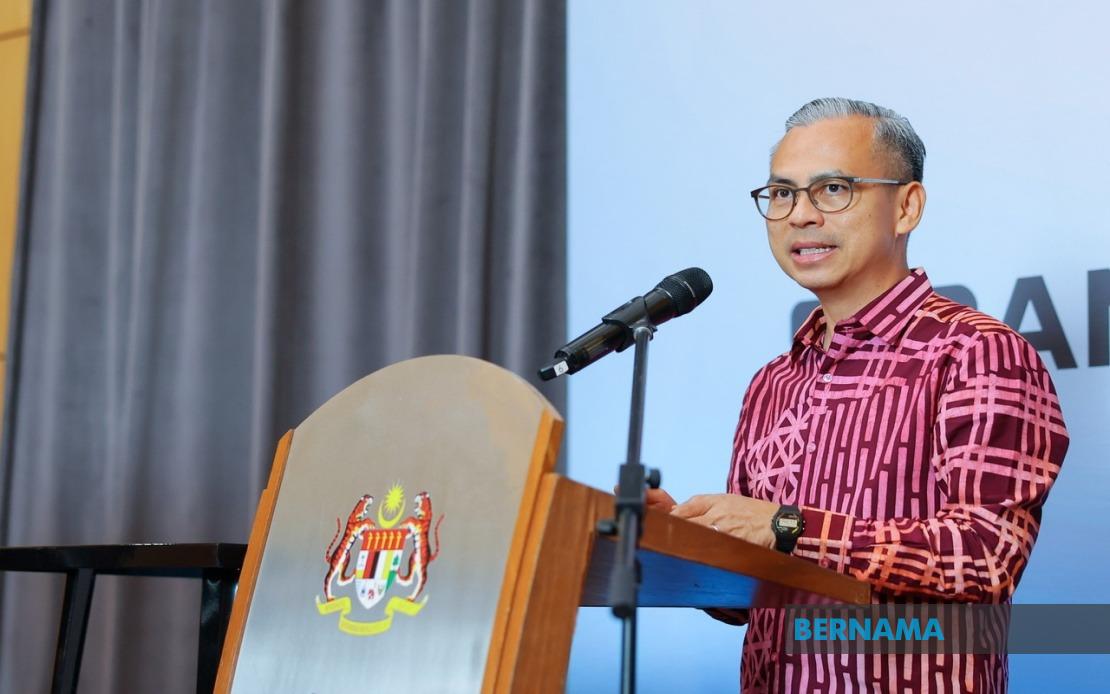
Authorities in Malaysia have moved to establish a comprehensive inter-agency response to combat online fraud, forming a special working committee tasked with coordinating enforcement and investigative efforts across government, the private sector and technology companies. Communications Minister Datuk Fahmi Fadzil announced the initiative on June 18 following deliberations at a Cabinet retreat focused on the alarming growth of digital-era crimes that continue to victimise Malaysians at an unprecedented rate. The formation of this coordinated taskforce represents a significant shift in how the country addresses cybercrime, moving beyond isolated departmental responses to a unified national strategy.
The composition of this newly established committee represents a watershed moment in Malaysia's approach to online security. For the first time, the working group will incorporate representatives from multiple government ministries, alongside officials from the banking sector, telecommunications operators and major digital platforms including social media companies. This inclusive structure acknowledges a fundamental reality that has become impossible to ignore: online scams operate across jurisdictional and sectoral boundaries, requiring participation from every stakeholder with visibility into financial flows, communications networks and digital spaces where criminal activity occurs. The involvement of private sector institutions, which previously operated independently of official crime-fighting efforts, signals recognition that government agencies alone cannot police the digital ecosystem effectively.
According to Fahmi, who serves as the MADANI Government's official spokesperson, the committee's mandate encompasses three interconnected pillars: strengthening enforcement action against identified criminals, reviewing and modernising legal frameworks to close regulatory gaps, and enhancing investigative capabilities to detect and apprehend perpetrators more rapidly. The strategy implicitly acknowledges that existing legislation may struggle to keep pace with the sophistication of online fraud schemes, which frequently exploit ambiguities in law or jurisdictional boundaries to evade prosecution. By bundling legislative review alongside enforcement and investigation, the government recognises that creating the legal architecture to support aggressive prosecution is as essential as identifying suspects.
The emphasis on user safety on digital platforms suggests the committee will examine both reactive measures—pursuing scammers after crimes occur—and proactive interventions to prevent victimisation in the first place. Financial institutions and telecommunications providers can implement transaction monitoring systems, communication filtering and account verification protocols that raise barriers to fraudulent activity. Social media platforms possess the technical capability to identify and suspend accounts engaged in coordinated scam campaigns, though their responsiveness to Malaysian law enforcement requests has been variable. By convening all parties in formal committee structures, authorities seek to establish clearer protocols and accountability mechanisms for swift action when fraud is detected.
Fahmi acknowledged that the government has identified several concrete outcomes expected to materialise in the short term, though he deliberately refrained from elaborating on specifics. This reticence reflects a calculated decision to avoid forewarning the criminal networks the committee intends to disrupt. The communications minister's candid observation that potential scammers may monitor official announcements demonstrates awareness that operational security and information control must be part of any credible counter-fraud strategy. Criminals continuously adapt their tactics based on intelligence about enforcement priorities and investigative techniques, making premature disclosure of the committee's precise plans counterproductive.
The government's earlier success in addressing child sexual crimes through cross-agency collaboration provided a template for this initiative. Those operations mobilised coordinated resources across agencies to conduct targeted enforcement actions, generating measurable results that demonstrated the effectiveness of integrated approaches. The parallel between child exploitation crimes and online fraud lies in their common dependence on digital infrastructure, their involvement of multiple jurisdictions, and their requirement for rapid intelligence-sharing and coordinated response across institutional boundaries. Drawing explicitly on this precedent, Fahmi expressed confidence that the new committee structure would enable the government to mount more sophisticated, faster and more comprehensive responses to scammers operating within Malaysian jurisdiction or targeting Malaysian citizens.
The inclusion of telecommunications companies in formal anti-fraud coordination represents a particular strategic innovation. Telecommunications operators control the infrastructure through which much online fraud originates and operates—the SMS gateways used for phishing messages, the data networks facilitating financial crime, the billing systems sometimes exploited for fraud. Their technical expertise and real-time visibility into network activity make them invaluable partners in disrupting criminal operations. Similarly, social media platforms serve simultaneously as recruitment channels for scam victims, marketplaces where fraudsters advertise schemes, and repositories of digital evidence linking perpetrators to crimes. Formal incorporation of these companies into government structures could facilitate rapid takedowns of verified criminal accounts and the preservation of forensic evidence.
For Malaysian citizens and residents, the establishment of this committee signals that a fragmented institutional landscape has been recognised as inadequate to the scale of the threat. Online fraud has metastasised into one of the primary sources of financial loss for ordinary Malaysians, with scammers operating increasingly sophisticated schemes that exploit psychological manipulation alongside technical trickery. The consolidation of institutional responses may gradually improve outcomes by reducing delays in information-sharing between agencies, establishing clearer chains of command for rapid decision-making, and creating accountability mechanisms to ensure that identified suspects are pursued persistently across jurisdictional boundaries.
The timing of this initiative reflects mounting public frustration with the apparent inability of existing systems to provide adequate protection. As scam losses have climbed and victim numbers expanded exponentially, the demand for more aggressive government action has intensified. The committee's establishment represents a response to both institutional pressure from concerned agencies and political pressure from a public increasingly aware that online fraud poses a threat to national economic confidence and individual financial security. The formation of a dedicated body with cross-agency mandate provides a visible focal point for anti-fraud efforts and creates structures within which competition between agencies can be channeled into collaborative problem-solving rather than jurisdictional disputes.
Moving forward, the committee's effectiveness will depend substantially on the quality of cooperation from private sector participants and the willingness of government agencies to subordinate departmental interests to coordinated objectives. Telecommunications companies and banks have sometimes resisted regulatory pressure or been slow to implement protective measures, citing cost concerns or customer convenience objections. Social media platforms have frequently proven sluggish in responding to law enforcement requests from Southeast Asian authorities. Establishing formal committee structures creates opportunities to negotiate binding commitments and establish performance benchmarks, though enforcement mechanisms remain underdeveloped. The government will need to balance its stated commitment to user safety with practical negotiation of sector compliance, particularly where implementation costs or operational constraints pose barriers to participation.

