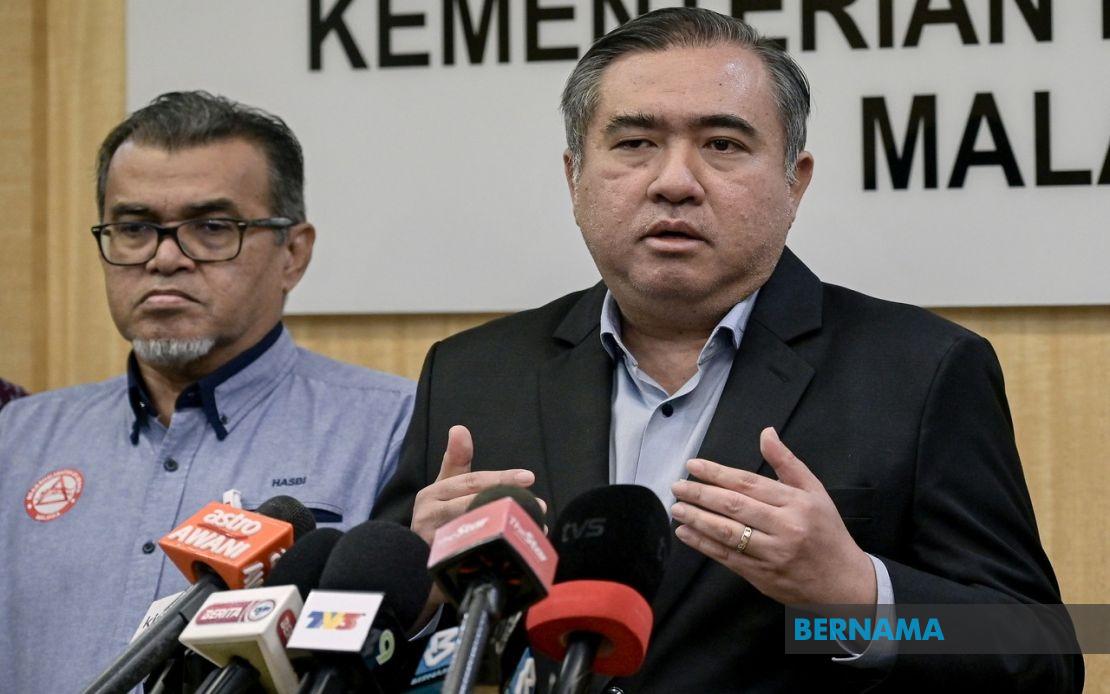
Transport Minister Anthony Loke has moved to clarify the government's regulatory stance on personnel appointments within the country's port sector, stating unequivocally that authorities do not exercise control over management decisions at operating companies so long as Malaysian interests retain decisive ownership. Speaking at a press conference in Putrajaya on Wednesday, Loke outlined the administration's formal policy distinguishing between structural requirements and operational matters, a demarcation that carries important implications for how Malaysia manages its critical maritime infrastructure.
The minister's remarks came in response to international media coverage surrounding the appointment of Sultan Ahmed Sulayem, former chairman and chief executive of global shipping giant DP World, to the position of executive chairman at MMC Ports Holdings Bhd, Malaysia's largest port operator group. This high-profile transition, which followed the immediate resignation of group chief executive Azman Shah Mohd Yusof, had prompted scrutiny regarding the involvement of foreign executives in strategic Malaysian assets. Loke's intervention sought to reframe the debate by emphasising the distinction between who owns port operators and who manages them.
At the heart of the government's position lies a fundamental ownership threshold that applies to all companies holding port concessions or managing strategic national assets. The policy mandates that Malaysian entities must retain a minimum of 51 per cent stake in such companies, establishing a clear baseline for domestic control. This framework reflects a broader approach to managing Malaysia's relationship with foreign capital investment in sensitive sectors—permitting international participation and expertise while maintaining structural Malaysian dominance. By anchoring policy to shareholding rather than staffing, the government creates space for operational flexibility while preserving what officials view as essential sovereignty safeguards.
Loke stressed that management appointments constitute internal corporate governance matters falling outside the scope of state intervention. Once majority Malaysian ownership is secured, he indicated, the government takes a hands-off approach to determining who sits in executive offices or leadership positions. This principle, he noted, already operates at facilities across the Malaysian port system, with the Port of Tanjung Pelepas (PTP) serving as an example of an establishment whose chief executive officer is a foreign national. The approach reflects pragmatic recognition that operational excellence and international best practices may benefit from drawing talent across borders, provided ownership and ultimate decision-making authority remain rooted in Malaysia.
The appointment of Sulayem, one of the shipping industry's most recognisable figures with decades of experience building global port networks, exemplifies the type of scenario that the government's policy framework accommodates. His extensive background in transforming port operations and implementing advanced logistics systems represents precisely the kind of expertise that port operators might seek to enhance competitive positioning. Yet his elevation also triggered questions about governance and control at a national-level asset, making Loke's clarification timely and strategically important for reassuring stakeholders that ownership structures remain intact.
The minister emphasised that any alterations to shareholding arrangements require formal notification to the government, with submissions directed through the Public-Private Partnership Unit (UKAS). This notification mechanism serves as an early-warning system and compliance checkpoint, enabling authorities to monitor developments affecting strategic assets without micromanaging daily operations. When asked whether the ministry had received notification of changed ownership involving MMC Ports Holdings, Loke indicated that no such communication had reached the transport portfolio or the concession-granting authority, suggesting that whatever adjustments may have occurred in the executive sphere did not entail modifications to the underlying ownership structure.
This distinction bears careful consideration for Malaysian investors and the broader business community. The government's framework creates what amounts to a compartmentalised regulatory approach: strict governance of ownership percentages combined with operational deference to corporate decision-making. For multinational companies and executives seeking roles in Malaysian infrastructure, it signals that skilled international professionals can participate at senior levels without triggering government intervention, provided the ownership undergirding remains Malaysian. For local stakeholders concerned about sovereignty and control, it reiterates that the 51 per cent Malaysian ownership requirement functions as a genuine structural constraint, not merely symbolic.
The timing of Loke's comments reflects broader currents in Southeast Asian governance. Across the region, countries are navigating the tension between attracting global capital and expertise while maintaining meaningful national oversight of critical infrastructure. Malaysia's approach—distinguishing between ownership control and operational management—positions itself as a middle path that some other nations might study. Port operations in particular represent high-stakes assets, affecting national competitiveness, trade flows, and revenue generation, making the balance between openness and control perpetually fraught.
What remains unaddressed in the government's public positioning is how the 51 per cent threshold interacts with operational control when, for instance, foreign executives occupy the top management seat. Critics might argue that a foreign chief executive could wield disproportionate influence over strategic decisions affecting port development, pricing, and resource allocation, regardless of formal ownership percentages. Conversely, proponents of the current framework contend that Malaysian board members and shareholders retain ultimate veto authority over consequential matters, making the ownership requirement a genuine safeguard.
Looking forward, the minister's clarification will likely become a reference point for future appointments and foreign involvement in Malaysian port governance. By publicly restating that the government confines itself to monitoring ownership while respecting corporate autonomy in staffing, Loke has essentially invited international maritime expertise while maintaining that the regulatory lines have been clearly drawn. Whether this balance proves sustainable and whether it adequately protects Malaysian interests in an increasingly competitive global shipping environment remain questions that will test the framework's resilience over time.

