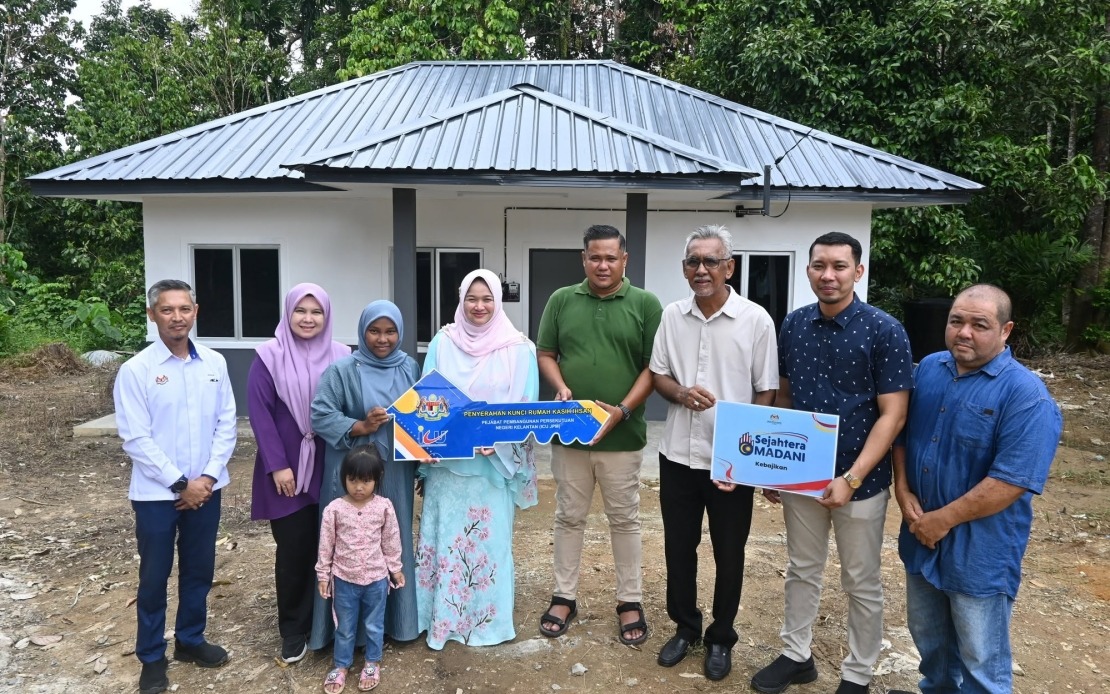
Prime Minister Datuk Seri Anwar Ibrahim has highlighted the government's continued commitment to enhancing people's welfare by delivering Rumah Kasih Ihsan housing to residents in Jeli, Kelantan. The initiative represents a broader push to ensure vulnerable households have access to safer, more dignified living spaces that support long-term social mobility and stability. Through coordinated efforts involving the Kelantan Implementation Coordination Unit (ICU) under the Prime Minister's Department (JPM), the programme demonstrates how targeted interventions can directly address housing insecurity in rural and underserved communities.
The Kelantan ICU JPM, operating under the PMX Coordination Team, facilitated the handover of two properties to qualifying residents this month. Dr Wan Nur Ibtisam Wan Ismail, director of the Kelantan ICU JPM, oversaw the official transfer ceremony. The first beneficiary, Yusof Mohamed Nawawi of Kampung Renyut, received formal acceptance of a newly constructed home that will replace his previous dwelling, while Shamsul Bahri Che Musa received an already completed house. Alongside the property transfers, both recipients were presented with food baskets, signalling governmental support that extends beyond infrastructure to encompass immediate welfare needs.
The Rumah Kasih Ihsan programme reflects a policy philosophy that views adequate housing as foundational to broader development outcomes. Officials emphasise that safe, comfortable accommodation transcends its basic utility as shelter—it functions as a catalyst for improved health outcomes, educational stability for children, and economic opportunity for households. By providing families with secure housing, the initiative aims to reduce the vulnerability factors that often trap communities in cycles of poverty and marginalisation across rural Malaysia.
Kelantan, as one of Malaysia's less developed states, has historically faced challenges in housing infrastructure and living standards, particularly in rural districts. Jeli, located in the northern reaches of the state, comprises predominantly agricultural communities with pockets of significant poverty. The handover of Rumah Kasih Ihsan homes here directly addresses documented deficits in safe, permanent housing stock. Such interventions are particularly important given that inadequate housing correlates with reduced school attendance, higher incidence of preventable health issues, and limited economic participation—factors that perpetuate intergenerational disadvantage.
The programme's emphasis on dignity and stability reflects contemporary understanding of welfare policy that moves beyond purely economic assistance to encompass social wellbeing. Officials articulate that meaningful development cannot be assessed solely through macroeconomic indicators or infrastructure proliferation, but must be measured against tangible improvements in citizens' lived experiences. When families transition from substandard housing to safe, weatherproof structures with proper sanitation and utilities, the psychological and practical benefits cascade through all aspects of their lives.
The coordination mechanism through JPM's ICU demonstrates institutional innovation in programme delivery. By establishing dedicated coordination units at state level, the government seeks to reduce bureaucratic delays and contextualise interventions to local needs. The Kelantan ICU can identify recipients through community engagement, assess housing requirements specific to the state's geography and demographics, and oversee construction quality to ensure beneficiaries receive homes meeting established standards. This decentralised approach potentially enables faster processing and more responsive allocation than centralised systems.
Rumah Kasih Ihsan operates within Malaysia's broader social safety net, which includes various housing assistance schemes targeting different demographic segments. The programme appears specifically focused on severely disadvantaged households lacking resources to construct or upgrade their own dwellings. By providing complete housing solutions rather than partial subsidies, the initiative removes barriers that might otherwise prevent qualifying families from accessing shelter improvements. This comprehensive approach recognises that households in extreme poverty often face multiple simultaneous constraints that prevent piecemeal solutions from generating meaningful outcomes.
The handover ceremony's public documentation through official channels underscores the government's intention to demonstrate tangible delivery on welfare commitments. For Malaysian policymakers and stakeholders, such visible implementation serves multiple purposes: it provides evidence of programme functionality, builds public confidence in government capacity, and creates accountability by establishing documented baselines against which future performance can be assessed. The practice of distributing food baskets alongside housing transfers reinforces messaging that government support encompasses comprehensive rather than narrow interventions.
For Southeast Asian observers, Malaysia's Rumah Kasih Ihsan programme offers lessons regarding targeted housing interventions in middle-income economies still containing significant pockets of poverty. The model of state-level coordination units, direct beneficiary engagement, and complete housing provision rather than voucher systems presents an alternative approach to housing assistance compared to market-based mechanisms prevalent in wealthier nations. As regional economies grapple with urbanisation, internal migration, and persistent rural poverty, examining how Malaysia operationalises housing programmes may yield insights for neighbouring countries developing their own safety nets.
Looking forward, the programme's scalability across other Malaysian districts remains a critical consideration. While Jeli's handovers represent meaningful progress for individual beneficiaries, housing deficits across the nation vastly exceed current delivery rates. Expanding Rumah Kasih Ihsan to additional districts requires sustained budgetary commitment, construction capacity enhancement, and institutional strengthening. The government's public highlighting of these deliveries suggests political prioritisation of housing as a welfare issue, potentially signalling intent to allocate additional resources or accelerate timelines in coming years.
The Rumah Kasih Ihsan programme ultimately represents government recognition that housing security functions as prerequisite rather than luxury for vulnerable populations. By delivering safe homes to families like those in Jeli, the initiative addresses immediate humanitarian needs whilst contributing to longer-term strategies for reducing poverty and improving social outcomes. As Malaysia continues navigating its development trajectory, ensuring all citizens have access to adequate housing remains both a moral imperative and practical requirement for achieving inclusive, sustainable growth across all regions and communities.

