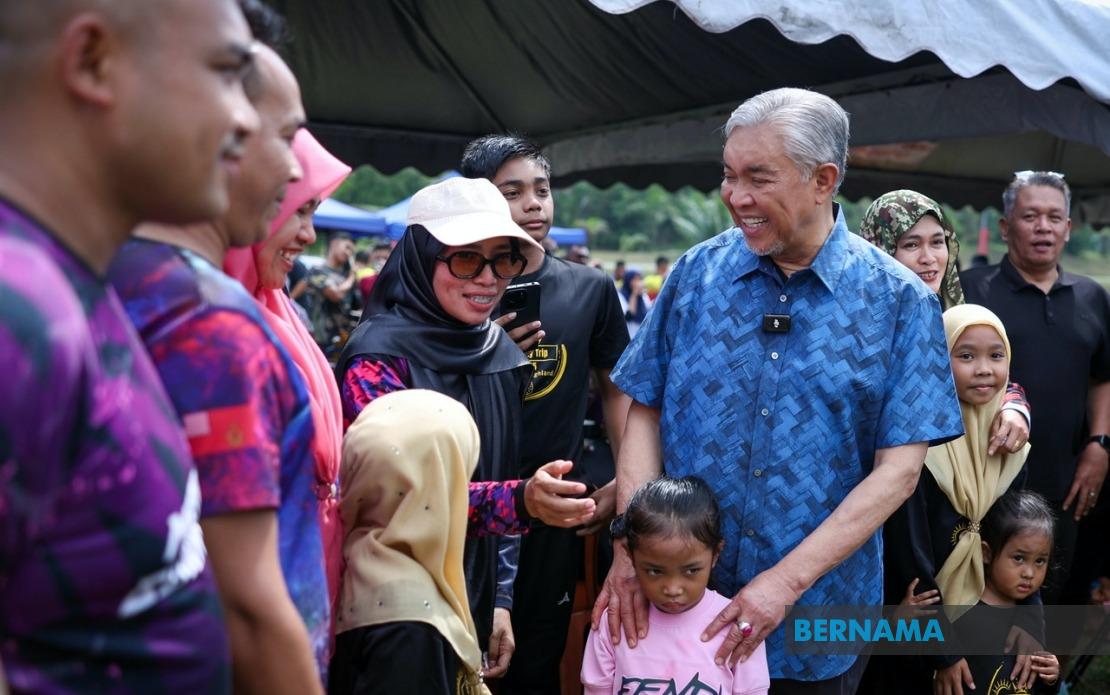
Deputy Prime Minister Datuk Seri Dr Ahmad Zahid Hamidi has underscored the government's commitment to enhancing the welfare of Malaysian Armed Forces (ATM) personnel, arguing that investing in military housing, education, and family support systems directly strengthens the nation's defence capabilities. Speaking at the Southern Zone ATM Family Day Carnival at Kem Syed Sirajuddin in Tampin, Ahmad Zahid framed military welfare not as a charitable gesture but as a strategic imperative that allows service members to perform their constitutional duties with undivided focus and peace of mind.
The government's welfare agenda encompasses a broad range of support mechanisms designed to address the practical needs of military families. Among the flagship initiatives is the construction of 1,300 Military Family Housing (RKAT) units at Kem Syed Sirajuddin in Gemas, representing a significant investment in residential infrastructure for armed forces personnel. These housing projects address a longstanding challenge within the military community, where service members often struggle with inadequate accommodation that fails to meet modern standards. By providing quality housing, the government seeks to eliminate one of the major sources of stress and distraction that could otherwise compromise military effectiveness.
Educational support for the children of service personnel forms another pillar of the government's welfare strategy. Ahmad Zahid emphasised that the military community faces unique challenges in accessing quality education, particularly given the frequent transfers and postings that characterise military careers. The government has therefore prioritised improved educational facilities and safer transport mechanisms to ensure that military children have equitable access to schooling opportunities. This initiative recognises that financial and logistical barriers to education can create hardship within military families, potentially affecting both morale and the retention of experienced personnel.
The rationale underlying these investments reflects a sophisticated understanding of military personnel management. Ahmad Zahid articulated the principle that when service members know their families are secure, educated, and well-supported, they can concentrate entirely on their primary mission of defending national sovereignty and maintaining public security. This approach acknowledges that military effectiveness depends not solely on training and equipment but critically on the psychological and emotional well-being of personnel. A soldier preoccupied with housing insecurity or children's educational challenges cannot perform optimally in complex operational environments.
Prime Minister Datuk Seri Anwar Ibrahim reinforced this government position in recent comments, emphasising that the welfare of both serving and retired military personnel constitutes a key policy priority. Anwar framed military support as recognition of the armed forces' indispensable contribution to national stability and security. This political endorsement at the highest executive level signals that military welfare enjoys sustained cabinet-level support and is not merely a departmental initiative subject to budgetary fluctuations. The consistency of messaging across different government leaders suggests a coherent strategic vision rather than ad-hoc policy announcements.
Financial commitment has been substantial, with RM844 million allocated under the current year's housing services budget specifically for upgrading and developing Military Family Housing nationwide. This allocation reflects genuine resource commitment rather than rhetorical support alone. The funding covers not only new construction but also infrastructure upgrades at existing military installations, addressing both immediate housing shortages and longer-term facility improvements. The concentration of investment at locations like Kem Syed Sirajuddin demonstrates that the government is undertaking visible, tangible projects that military personnel and their families can directly experience.
The timing of these welfare initiatives carries particular significance within Malaysia's regional and strategic context. As Southeast Asia experiences shifting geopolitical dynamics and evolving security challenges, maintaining a professional, motivated military force becomes increasingly important. Countries that fail to adequately support their service personnel risk experiencing recruitment difficulties, higher attrition rates, and reduced force morale—outcomes that directly compromise national defence capabilities. By contrast, nations that prioritise military welfare tend to maintain stronger institutional cohesion and operational readiness.
For Malaysian military families specifically, these initiatives address grievances that have surfaced periodically in defence community discourse. Military personnel have historically raised concerns about accommodation standards, the cost of educating multiple children across different postings, and the general financial pressures of military life relative to civilian employment. By addressing these concerns through concrete policy measures, the government demonstrates responsiveness to military community feedback and validates the professional sacrifices that service members and their families undertake.
The symbolic significance of the ATM Family Day Carnival itself warrants consideration. Such events serve not merely as recreational gatherings but as platforms for government-military institutional engagement and mutual recognition. The presence of high-level officials including the Army Chief Gen Tan Sri Azhan Md Othman signals respect for military institutions and formal acknowledgement of the armed forces' importance to national life. In societies where military-civilian relations require careful calibration, such visible public engagement carries meaning beyond the immediate event.
Looking forward, the sustainability of these welfare commitments will depend on consistent budget allocation and effective programme implementation. While political rhetoric about military support enjoys broad public consensus, translating announced programmes into quality outcomes requires professional administration and adequate resources at operational levels. The construction of 1,300 housing units, for instance, involves complex logistics, contractor management, and quality assurance that will determine whether these projects deliver genuine improvements in military family living standards.
The government's welfare emphasis also intersects with broader questions about military professionalism and civilian control of the armed forces. By meeting the material needs of service personnel, civilian governments can strengthen the social contract with military institutions, reinforcing norms of political non-interference and professional subordination to civilian authority. Countries where military personnel feel neglected or undervalued sometimes experience institutional instability or military interventionism, whereas nations that provide adequate support for their armed forces tend to maintain more stable civil-military relations.
For Malaysian readers, these developments carry implications beyond the immediate military context. A well-supported, professionally managed armed forces contributes to national stability and public confidence in state institutions. The government's prioritisation of military welfare therefore reflects not merely policy preferences but strategic thinking about how to maintain the institutional foundations of national security and social order in an increasingly complex regional environment.

