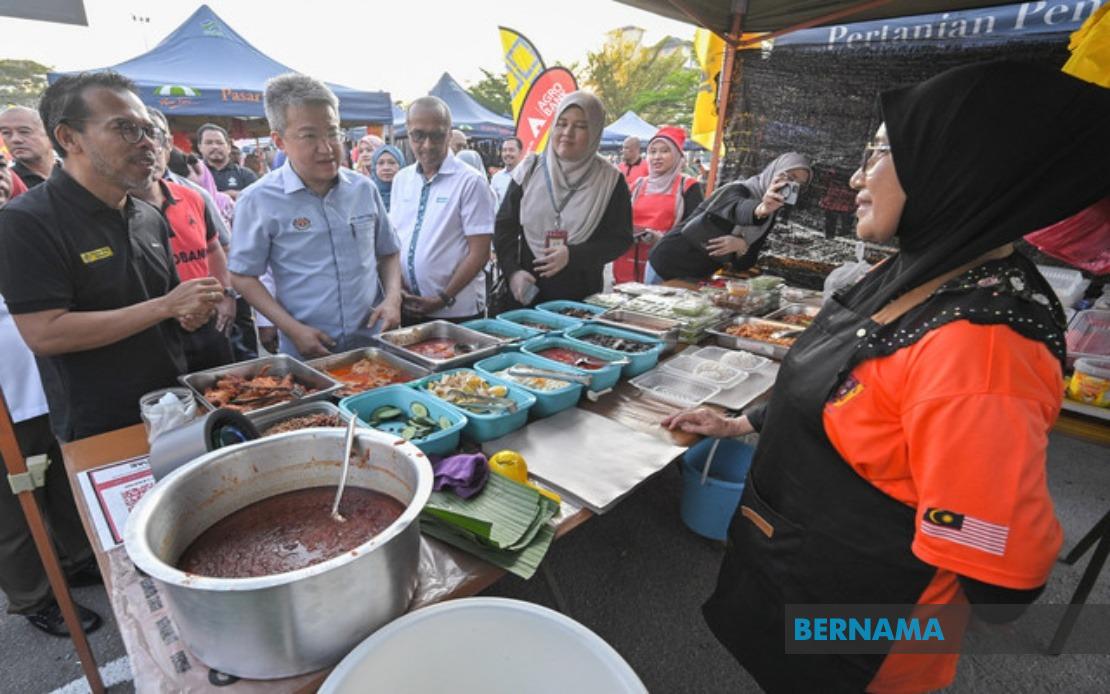
Malaysia's government is ramping up efforts to democratise access to working capital for small traders through a RM9.8 billion financing initiative channelled via six major institutions. Deputy Finance Minister Liew Chin Tong unveiled the scheme during an outreach programme in Puchong on June 21, signalling the administration's commitment to ensuring that micro and small enterprises do not fall through the cracks of the formal financial system. The substantial funding injection reflects growing recognition that capital availability remains a critical bottleneck for Malaysia's informal economy, where millions of hawkers and street vendors operate at the margins of the economy.
The government's approach represents a shift toward bringing financial services directly to traders rather than expecting entrepreneurs to navigate complex banking procedures. The "Mikro Kredit Turun Padang" programme, which translates to "grassroots microfinance initiative", embodies this philosophy by positioning lending officers and advisory staff at farmers' markets where target borrowers conduct their daily business. This model eliminates geographical and informational barriers that traditionally discourage informal traders from pursuing formal financing channels. By meeting potential clients on neutral ground, the programme reduces application anxiety and allows traders to ask questions in an environment where they feel comfortable.
The initiative involves six key entities working in concert: Bank Simpanan Nasional, Agrobank, Bank Rakyat, the Companies Commission of Malaysia, TEKUN Nasional and Majlis Amanah Rakyat. This multi-institutional approach distributes the lending load across different specialised players, each bringing distinct expertise and lending criteria suited to different borrower profiles. Such coordination creates redundancy in the system, ensuring that applicants rejected by one lender might find approval through another, thereby expanding the pool of funded entrepreneurs. The variety of institutions also allows borrowers to select terms and conditions most compatible with their business cycles and cash flow patterns.
Early results from the Puchong iteration of the programme demonstrate measurable traction. Within a single outreach session, twelve traders secured financing approvals, with Amanah Ikhtiar Malaysia providing seven loans, Bank Simpanan Nasional supplying three and Agrobank two. These numbers, while modest in absolute terms, carry significance as a proof-of-concept for a model that can be replicated across Malaysia's major urban and semi-urban centres. The speed of approval suggests that these institutions have streamlined their assessment procedures specifically for the initiative, reducing the typical bureaucratic delays that deter small borrowers.
Deputy Minister Liew emphasised that the RM9.8 billion allocation is fundamentally about inclusion—ensuring that capital assistance reaches traders who might otherwise remain trapped in informal lending networks or rely on expensive rotating savings groups. Sustainable growth for small businesses requires access to institutional credit at reasonable rates, yet traditional banks have long regarded such borrowers as too risky or too labour-intensive to serve profitably. Government-backed microfinance schemes help bridge this gap by subsidising the administrative costs and absorbing some credit risk that private lenders would find commercially unacceptable.
The feedback loop embedded in the programme design deserves particular attention. The Ministry of Finance is systematically collecting direct testimony from grassroots traders and plans to escalate this intelligence to the Prime Minister's office for incorporation into future budget allocations. This bottom-up input mechanism contrasts with traditional policymaking, where officials design programmes in offices and later struggle to achieve adoption. By allowing traders themselves to articulate their needs and constraints, the government can tailor future interventions with greater precision. If a borrower repeatedly cites issues with collateral requirements or documentation burdens, these pain points can inform regulatory or procedural reforms.
The programme has now visited multiple farmers' markets across the Klang Valley, including Taman Melawati, Kelana Jaya and Bandar Tasik Permaisuri, with the Puchong session representing a continuation of this expanding footprint. This incremental rollout suggests the government is testing the model's effectiveness and operational logistics before potentially scaling to other states. The choice of farmers' markets as venues is strategic, as these locations already aggregate traders in high-traffic settings with predictable schedules, simplifying logistics for the lending agencies and maximising the number of potential borrowers reached per event.
For Malaysian and Southeast Asian traders more broadly, this initiative carries broader implications about financial inclusion in developing economies. Many countries across the region face similar challenges: large informal sectors, limited access to formal credit and high rates of financial exclusion among small entrepreneurs. Malaysia's structured attempt to deploy government capital and coordinate multiple lenders offers a replicable template that other governments might adapt. The success or failure of this RM9.8 billion experiment could influence regional approaches to microfinance policy and demonstrate whether targeted capital availability genuinely stimulates small business growth or merely shifts existing financing patterns.
The initiative also reflects implicit acknowledgement that many small traders lack the formal business registration, tax compliance history or accounting records that conventional banks require. By partnering with TEKUN Nasional and the Companies Commission of Malaysia within the outreach programme, the government simultaneously addresses these structural deficits. Traders can receive guidance on business formalisation while applying for credit, creating a pathway not just toward capital but toward full integration into the formal economy. This dual objective—financial and administrative inclusion—suggests that policymakers recognise microfinance as merely one component of a broader small business support ecosystem.
The RM9.8 billion commitment also arrives during a period when Malaysian households and small businesses face inflationary pressures and elevated living costs. For traders operating on thin margins, the availability of affordable working capital can be transformative, allowing them to expand inventory, upgrade equipment or navigate seasonal cash flow gaps without resorting to predatory lenders. In this context, the government's initiative transcends mere economic policy and becomes a tool for poverty alleviation and social stability—enabling ordinary Malaysians to improve their livelihoods through entrepreneurship supported by institutional credit rather than informal alternatives.

