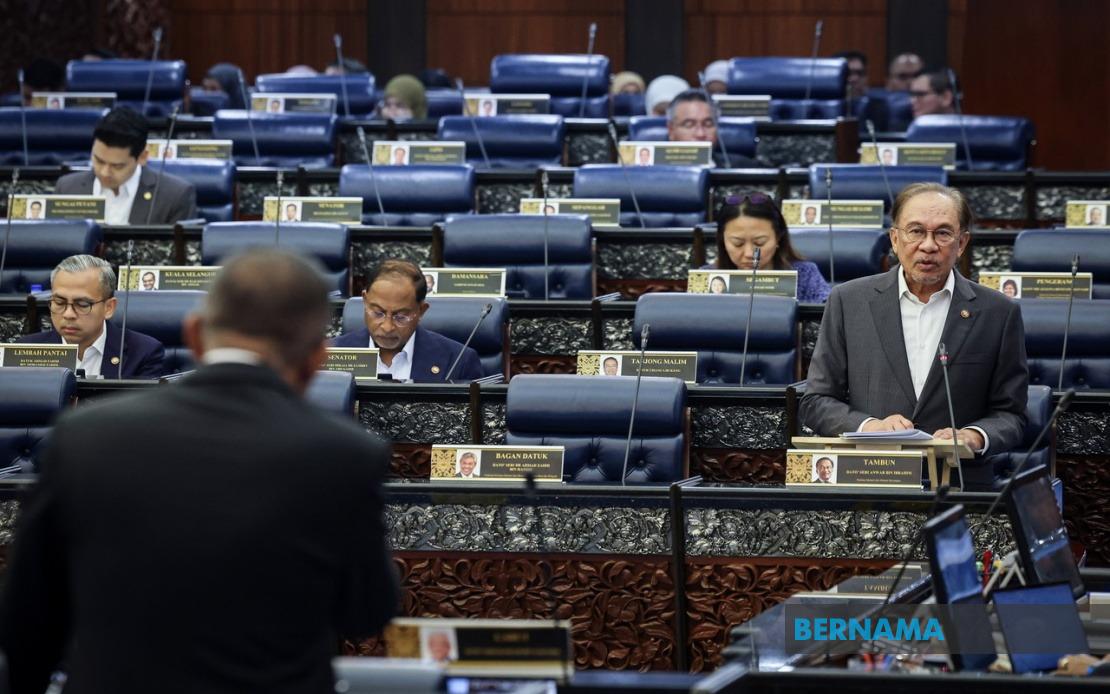
Prime Minister Datuk Seri Anwar Ibrahim announced that Syarikat Jaminan Pembiayaan Perniagaan (SJPP), the government-owned financing guarantor, has approved RM4.9 billion in financing facilities for over 6,000 micro, small and medium enterprises during the first half of 2026. Speaking in the Dewan Rakyat during Minister's Question Time, Anwar highlighted the approvals as a tangible demonstration of the MADANI government's resolve to strengthen the MSME sector amid a complex global economic backdrop.
The financing approvals underscore a deliberate policy initiative to expand credit accessibility for Malaysia's vast informal and formal MSME ecosystem, which collectively represents a significant employment generator and contributor to domestic economic activity. By reducing barriers to working capital financing, the government aims to enable these businesses to sustain operations, invest in growth, and weather volatile international market conditions. Anwar, who also holds the Finance Ministry portfolio, characterised the initiative as part of a comprehensive strategy to tackle mounting operational pressures facing business owners at all scales.
The SJPP, a wholly owned subsidiary of the Minister of Finance (Incorporated), functions as a credit guarantor that mitigates lender risk and encourages financial institutions to extend loans to MSMEs that might otherwise face stringent collateral or credit history requirements. By absorbing a portion of default risk, the scheme facilitates lending to segments of the business community that traditional banking channels sometimes find difficult to serve profitably. This institutional arrangement reflects international best practice in MSME financing support and has proven particularly valuable in emerging markets where informal enterprises dominate employment and output.
Anwar fielded the question from Lee Chuan How, the Ipoh Timor member of parliament from the Pakatan Harapan coalition, who inquired whether the government recognised the acute challenges confronting the business community, especially MSME proprietors grappling with currency volatility, supply chain disruptions, and shifting consumer demand in the current global environment. The query underscored parliamentary concern that MSME sustainability remained under pressure despite economic recovery efforts, prompting the government to articulate its multi-faceted support architecture in response.
Beyond the first-half 2026 approvals, the government has mobilised a substantially larger ecosystem of lending and guarantee mechanisms totalling more than RM15 billion to shore up working capital availability across the MSME landscape. This broader financial commitment reflects the administration's recognition that capital scarcity, rather than entrepreneurial capability or market demand, frequently constrains MSME expansion and resilience. By deploying guarantee schemes and direct lending instruments, the government seeks to unbind the working capital constraint that hobbles growth for many otherwise viable business operators.
Within the broader RM15 billion financing envelope, RM5 billion has been specifically reserved for Bumiputera-owned enterprises, underscoring the government's commitment to advancing economic participation and wealth accumulation among indigenous communities. This targeted allocation acknowledges historical imbalances in access to credit among different demographic groups and reflects policy priorities enshrined in constitutional frameworks and long-standing affirmative action doctrines. For Bumiputera entrepreneurs, access to preferential financing terms and guarantee coverage can prove transformative, enabling business launches or expansions that might otherwise require prohibitive collateral or down-payment thresholds.
The RM4.9 billion in first-half approvals, when annualised, suggests a robust trajectory of financing deployment and signals confidence within the SJPP apparatus regarding MSME demand for working capital and growth financing. The volume of approvals indicates that the scheme remains operationally efficient in processing applications and that participating financial institutions continue to view MSME lending, when backed by government guarantees, as a profitable and acceptable segment. This sustained lending activity provides crucial oxygen to an MSME sector that has demonstrated resilience but faces headwinds from global economic uncertainty.
For Malaysian readers and particularly MSME proprietors, these financing announcements carry practical significance. Access to government-backed financing reduces borrowing costs relative to unguaranteed lending, extends repayment horizons, and permits smaller enterprises to fund operational needs and strategic investments without depleting owner equity or resorting to informal lending. The scale of the SJPP programme means that most MSMEs operating in mainstream sectors ought to find the scheme accessible, though awareness and application processes remain implementation challenges in reaching all eligible operators.
The broader context reflects the government's understanding that MSME health directly correlates with employment stability, regional economic vitality, and household income resilience across Malaysia. By systematically improving access to affordable financing, the MADANI administration aims to sustain business formation rates, reduce unemployment, and reinforce middle-class growth. This contrasts with growth models overly dependent on large corporations or foreign direct investment, which may generate GDP gains without proportionate gains in distributed household incomes or regional economic decentralisation.
Regional observers monitoring MSME support mechanisms across Southeast Asia will note that Malaysia's SJPP financing volumes compare favourably with peer economies' guarantee schemes, suggesting institutional maturity and policy commitment. However, the effectiveness of such programmes ultimately depends on complementary initiatives: digital capability building, market access platforms, supply chain integration support, and regulatory simplification. Financing remains a necessary but insufficient condition for thriving MSME ecosystems.
The government's continued emphasis on MSME financing support also signals recognition of the sector's vulnerability to external shocks, a lesson reinforced by pandemic-era disruptions. By proactively maintaining liquidity channels and guarantee mechanisms during periods of global uncertainty, policymakers aim to prevent cascading business failures and labour market deterioration that would necessitate costlier social support measures downstream. This preventive approach to MSME resilience represents a maturing understanding of economic policy within the MADANI framework.

