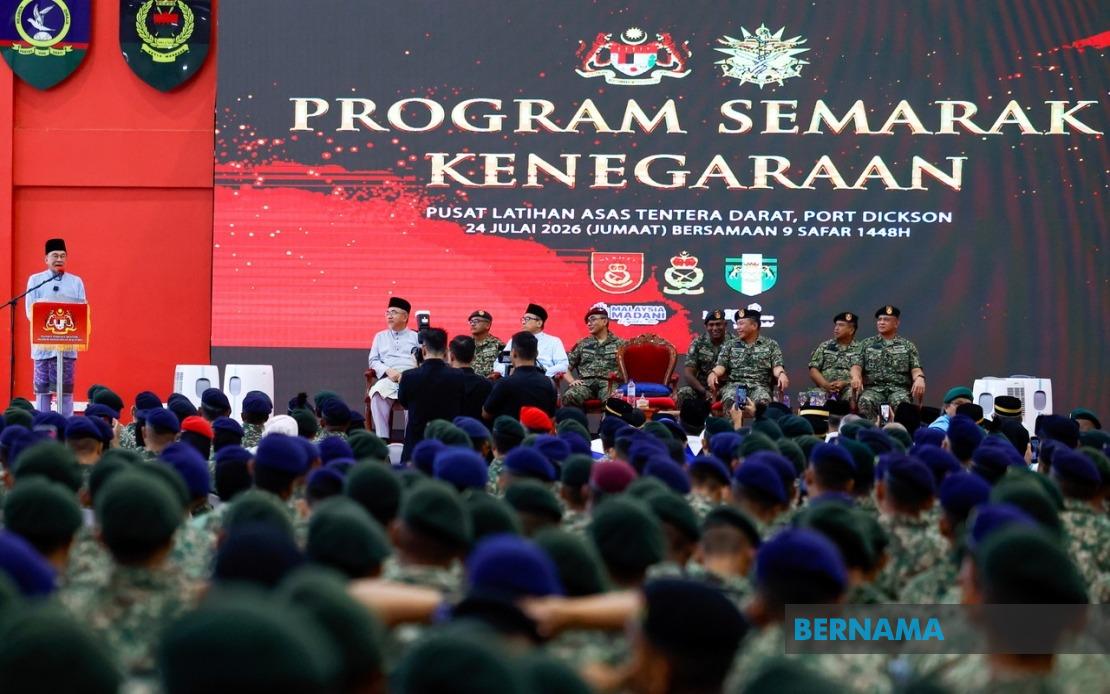
Prime Minister Datuk Seri Anwar Ibrahim announced in Port Dickson on July 24 that the Malaysian government has committed an additional RM2 million toward this year's Warriors' Day celebration, a significant boost meant to honour the enduring contributions of the nation's Armed Forces veterans. The extraordinary funding reflects what Anwar described as exemplary financial stewardship within the defence establishment, warranting enhanced support beyond the customary annual disbursement of between RM1 million and RM1.5 million.
The decision to double the standard allocation carries broader messaging about the administration's priorities regarding military personnel and their families. Anwar, who holds the dual portfolio of Prime Minister and Finance Minister, personally directed the Finance Ministry to expand Warriors' Day resources this year, signalling executive-level attention to defence welfare matters. This move comes as the government faces ongoing pressure to balance fiscal constraints with mounting demands from multiple constituencies, making the approval particularly noteworthy in demonstrating where spending priorities lie.
Warriors' Day, observed annually on July 31, functions as Malaysia's designated moment of national reflection on the contributions made by security personnel in preserving the country's sovereignty and territorial integrity. The observance has been organised on a rotating basis between the Malaysian Armed Forces (MAF) and the Royal Malaysia Police (PDRM) since 1968, creating an institutional framework through which successive governments acknowledge the sacrifices demanded by national defence. The choice to enhance funding during this specific commemoration underscores acknowledgment of the profession's essential role in maintaining domestic stability and public confidence.
Beyond the Warriors' Day allocation, the government's broader commitment to military welfare extends into infrastructure and housing development. An existing budget of RM844 million has been approved for Armed Forces Family Housing (RKAT) improvements, encompassing both repair work at existing facilities and construction of entirely new residential units. The Syed Sirajuddin Camp in Gemas, Negeri Sembilan, represents a major component of this expansion, with 1,300 newly planned housing units designed to accommodate military families and enhance their living standards. These initiatives address longstanding concerns about military accommodation quality and adequacy, which have periodically surfaced in public discourse about defence personnel retention and morale.
Educational support for military families also features prominently in the government's welfare framework. An allocation of RM3 million targets school maintenance at institutions in Negeri Sembilan, specifically benefiting Sekolah Kebangsaan Sungala and Sekolah Kebangsaan Si-Rusa in Port Dickson. These funds support physical improvements intended to enhance the educational environment for children of military personnel, recognising that defence personnel contributions extend to maintaining family stability and supporting the next generation. Such targeted spending acknowledges the interconnected nature of military welfare, encompassing not just direct personnel benefits but also the broader ecosystem supporting service members and their dependents.
The announcement reflected broad representation from Malaysia's defence establishment, with attendance from Chief Secretary to the Government Tan Sri Shamsul Azri Abu Bakar, Deputy Defence Minister Adly Zahari, Chief of Defence Forces General Tan Sri Malek Razak Sulaiman, and Army Chief General Tan Sri Azhan Md Othman. This high-level presence underscores the institutional significance attached to military welfare discussions and suggests coordinated messaging across government and defence structures regarding personnel support priorities.
For the broader Southeast Asian context, Malaysia's funding decisions regarding defence personnel carry implications beyond domestic politics. Regional security dynamics, including maritime challenges and internal stability considerations, remain heavily dependent on the professionalism and readiness of armed forces. Investment in personnel welfare, housing, and morale-building serves not merely as social policy but as an operational consideration affecting force readiness and capability. Other regional governments monitor neighbouring defence spending and welfare commitments as indicators of relative military preparedness.
The government's emphasis on transparent defence asset acquisition, mentioned alongside these welfare measures, attempts to address a historically contentious issue in Malaysian defence procurement. Military spending transparency has long concerned parliament and public observers, with periodic controversies over acquisition decisions and cost overruns. Coupling welfare improvements with assurances about transparent asset procurement suggests an attempt to present a comprehensive defence investment strategy balancing personnel welfare with technological modernisation.
For Malaysian military families and veterans' associations, the additional allocation represents concrete recognition of service contributions, though questions may emerge about whether the RM2 million expansion adequately addresses all pressing welfare needs. Housing shortages, healthcare quality, and post-retirement support systems remain persistent concerns within defence communities. The 1,300 new housing units at Gemas address supply constraints but may represent incremental progress rather than comprehensive solutions to long-standing accommodation demands across multiple military installations nationwide.
Looking forward, the government's positioning of defence welfare as a priority within broader fiscal allocation decisions establishes a framework that may influence future budgeting cycles. Successive governments will face expectations regarding continued enhancement of military personnel support, potentially creating budgetary commitments extending beyond this single financial year. The political returns from demonstrable military welfare improvements support government claims regarding national security commitment, though actual implementation and delivery of promised facilities will ultimately determine the credibility and effectiveness of these policy announcements.
The Warriors' Day funding announcement ultimately reflects convergence between policy symbolism and material resource allocation. By marking the traditional commemoration day with enhanced spending, the government performs patriotic duty while simultaneously advancing tangible personnel welfare improvements. Whether this represents sustainable strategic investment in military welfare or episodic spending tied to specific commemorations will become clearer as implementation proceeds and future budget cycles unfold.

