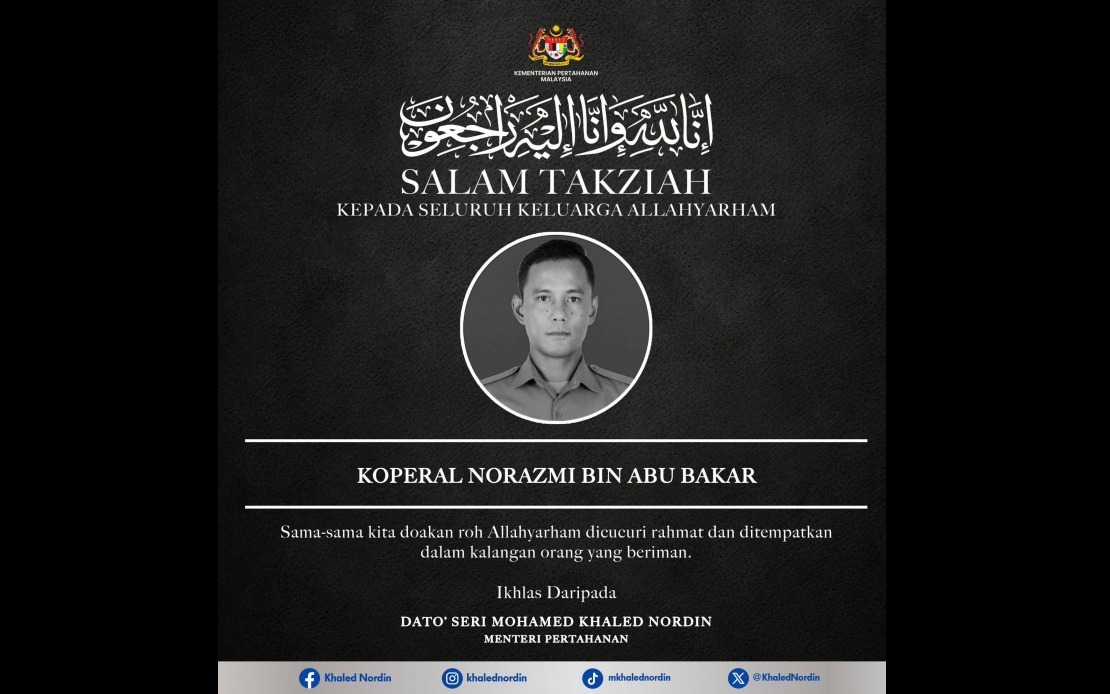
A tragic accident at a military training facility in Kedah has claimed the lives of two Malaysian Army personnel, prompting expressions of condolence from the highest levels of government. Corporal Norazmi Abu Bakar, attached to the 6th Battalion of the Royal Malay Regiment, and Private Siti Khadijah Sungip, serving with the 1st Squadron of the Royal Army Engineers Regiment, died following a blast that occurred during a grenade-throwing exercise at Hobart Camp firing range in Gurun. The incident unfolded in the mid-morning hours, with the explosion happening at 10.57 am, and both servicemen succumbed to their injuries while being transported to medical facilities.
Defence Minister Datuk Seri Mohamed Khaled Nordin released a statement expressing the ministry's deep sorrow over the loss. In his address, the minister acknowledged the gravity of the incident and extended prayers on behalf of the government and Defence Ministry to support the bereaved families during this difficult period. The sentiments conveyed emphasised the need for divine mercy and strength for those left behind to cope with their loss. This official acknowledgment underscores the significance with which the incident has been received at the ministerial level, reflecting the government's recognition of the sacrifice made by military personnel in the line of duty.
The explosion occurred at Hobart Camp's firing range, a military training facility designed for weapons qualification and live-fire exercises. Both casualties were transported immediately to Sultan Abdul Halim Hospital in Sungai Petani following the blast, but despite medical intervention, their injuries proved fatal. The swift transport to hospital indicates that emergency response protocols were activated promptly, though the severity of injuries sustained in the explosion ultimately could not be overcome. The incident raises questions about safety procedures during such inherently dangerous training activities, which form an essential part of military preparation but carry considerable inherent risk to personnel.
The Malaysian Army moved quickly to formally identify the deceased and release information to the public and media. This transparency in acknowledging the identities and details of the incident demonstrates the military's commitment to keeping the public informed during such sensitive matters. The confirmation of identities and basic facts surrounding the explosion came through official army channels, ensuring that accurate information reached families and the broader public before speculation could take hold. Such timely disclosure is crucial in maintaining public confidence in institutional responses to crisis situations.
General Tan Sri Azhan Md Othman, the Chief of the Malaysian Army, has ordered a comprehensive investigation into the circumstances surrounding the blast. This directive represents the military's commitment to understanding what went wrong during the training exercise and identifying any contributory factors that may have led to the tragedy. The investigation will likely examine training protocols, equipment maintenance, safety procedures, and adherence to established guidelines during the grenade-throwing exercise. The findings from such investigations are crucial not only for determining accountability but also for implementing corrective measures to prevent similar incidents in the future.
Grenade-throwing exercises form a fundamental component of infantry training across the world's militaries, providing soldiers with practical experience in handling explosives under controlled conditions. These exercises are inherently hazardous, as they involve live explosive devices and unpredictable outcomes. Malaysia's armed forces, like those of many nations, must balance the necessity of realistic training with the imperative to protect personnel from unnecessary harm. The incident at Hobart Camp underscores the delicate nature of this balance and the potential consequences when procedures, equipment, or execution falter during such high-risk activities.
The deaths of Corporal Norazmi and Private Siti Khadijah represent a loss felt across the Malaysian military establishment and the broader defence community. Both personnel were engaged in legitimate training activities when the tragedy occurred, highlighting that military service carries inherent dangers even during peacetime operations. The loss of trained personnel also carries implications for unit readiness and operational capability, as the military must absorb the departure of experienced personnel and manage the emotional and operational impact on their respective units.
For the families of the deceased, the coming weeks and months will bring the challenging process of grieving while investigating the circumstances of their loved ones' deaths. Government and military support systems, including financial compensation, counselling services, and recognition of their family members' service, typically accompany such tragic incidents. The broader military community will also grapple with the implications of the accident, with personnel across all services reflecting on safety practices within their own training regimens.
The incident carries particular significance given that one of the deceased was a female soldier, reflecting the expanding role of women in Malaysia's armed forces. Private Siti Khadijah's service with the Royal Army Engineers Regiment highlights the integration of female personnel across various military specialisations. Her death in a training accident brings visibility to the risks that all military personnel, regardless of gender, face in their professional duties.
As the investigation proceeds, military leadership will likely review training protocols, safety equipment, and supervision practices to identify any deficiencies that contributed to the explosion. Such reviews often result in modified procedures, additional training for instructors, or equipment upgrades designed to mitigate risk without compromising the effectiveness of military preparation. The outcome of the inquiry will provide insight into whether the incident resulted from isolated human error, systemic issues, or equipment failure.
The Malaysian public, meanwhile, will observe how the military and government respond to this tragedy through their investigation, any disciplinary or corrective actions taken, and support extended to the families involved. Transparency and accountability in such matters reinforce public confidence in institutional competence and commitment to the welfare of those who serve in uniform. The incident serves as a sobering reminder that despite all precautions and training, military service remains inherently risky, and the personnel who accept these risks deserve recognition and remembrance when tragedy strikes.