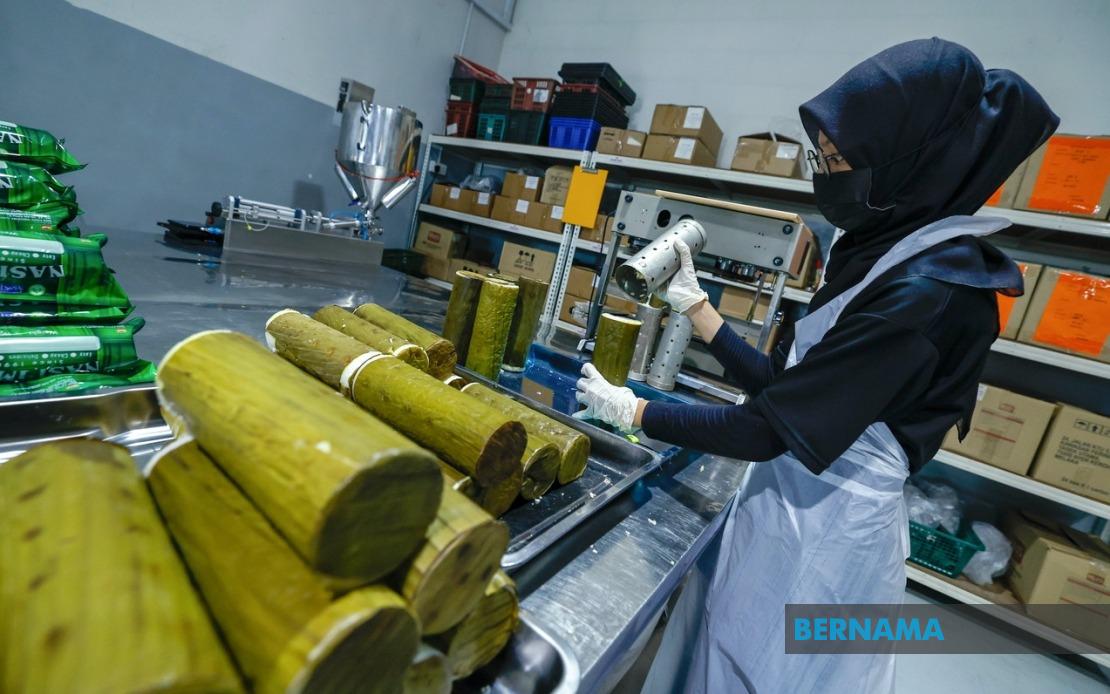
Malaysia's government is taking concrete action to remove bottlenecks in MSME financing, with Prime Minister Datuk Seri Anwar Ibrahim pledging faster loan approvals to unlock the sector's potential for growth and job creation. Speaking in Parliament, Anwar, who simultaneously serves as Finance Minister, emphasised that expanding capital allocations counts for little unless small business owners can actually access these funds within reasonable timeframes.
The urgency reflects a fundamental tension in Malaysia's small business landscape: generous government programmes frequently fail to reach their intended beneficiaries because approval processes remain lengthy and cumbersome. Anwar framed the issue clearly—billions in potential support sitting idle in banks' approval pipelines defeats the purpose of economic stimulus. This recognition suggests the administration is moving beyond rhetorical commitment to address systemic friction in financial services delivery.
Several state-owned and government-linked institutions have already demonstrated that faster turnarounds are achievable. TEKUN Nasional now processes financing applications within five days, Bank Rakyat has trimmed its approval window for micro-enterprises to six working days, and SME Bank has established a 15-day ceiling for loans between RM100,000 and RM1 million. These concrete improvements establish benchmarks that private commercial banks are expected to match, creating competitive pressure for industry-wide acceleration.
The government has injected over RM15 billion into financing facilities and loan guarantees aimed at MSMEs, with RM5 billion specifically ringfenced for Bumiputera entrepreneurs. Beyond headline figures, recent performance data underscores meaningful uptake: since May, Bank Negara Malaysia approved nearly RM1 billion under the SME Stabilisation Relief Facility, benefiting more than 1,500 enterprises, while the Business Financing Guarantee Scheme unlocked RM4.9 billion for over 6,000 MSMEs in the first half alone. These numbers suggest growing awareness among business owners about available support.
Bank Negara Malaysia occupies the critical enforcement position within this framework. While individual commercial banks retain final authority over lending decisions—a cornerstone of Malaysia's financial system—the central bank wields oversight powers to ensure that institutions comply with government policy objectives and that capital actually flows to qualifying entrepreneurs. This division of responsibility places BNM in a powerful position to nudge the banking sector toward more customer-friendly approval procedures without directly undermining institutional independence.
Anwar's comments on trade financing with Iran and Russia reveal another dimension of the MSME challenge. Some businesses have encountered stringent conditions when attempting transactions with sanctioned nations, partly reflecting international compliance requirements and partly reflecting banks' risk aversion. The Prime Minister acknowledged that historically, American and allied sanctions complicated Malaysian-Iranian and Malaysian-Russian trade considerably. However, he indicated the government is actively negotiating with both countries to streamline payment mechanisms and expanding bilateral economic ties despite heavy international sanctions—a policy shift that could ease pressure on domestic firms seeking to engage these markets.
The government's engagement with Russia during recent diplomatic meetings has already begun addressing practical obstacles. Direct flight routes, previously disrupted by sanctions-related complications, are being restored through ongoing negotiations between Malaysian and Russian authorities. Such facilitation at the macro level should eventually translate into clearer regulatory guidance and reduced friction for businesses conducting legitimate transactions, though the pace of change remains constrained by international pressure.
A supplementary question about expanding Amanah Ikhtiar Malaysia financing revealed another policy refinement underway. Although AIM traditionally serves female entrepreneurs—roughly 98 per cent of its borrowers—the scheme technically permits male applicants. Recognising this gap, the government has committed to broadening outreach to eligible male borrowers and creating tailored products for younger entrepreneurs. These tweaks acknowledge that overly narrow targeting, however well-intentioned, can inadvertently exclude segments of the entrepreneurial population that may deserve support.
The emphasis on youth financing with stronger repayment oversight mechanisms suggests policymakers recognise that young people often lack collateral and credit histories that older businesses possess. By bundling microfinance with business mentoring and structured support, the government hopes to improve both approval rates and loan performance—addressing a concern among traditional banks that youth-focused lending carries elevated default risk. This mirrors best practices in development finance globally.
For Malaysian entrepreneurs, particularly those in rural areas or underrepresented communities, these initiatives represent tangible progress toward democratising access to capital. Regional context matters significantly: small business owners across Southeast Asia routinely face similar financing bottlenecks, making Malaysia's efforts to streamline approvals a potential model for neighbours. Countries within ASEAN confronting sluggish MSME credit expansion might learn from the institutional innovations being tested here.
Yet substantial implementation challenges remain. Banking sector culture, shaped by decades of risk-averse compliance practices, does not transform overnight through ministerial pronouncements alone. Frontline loan officers and credit committees require explicit incentives and new procedural guidelines to accelerate decision-making without sacrificing asset quality. Training programmes and performance metrics linked to approval speed will prove essential to translating policy ambition into operational reality across hundreds of branch offices nationwide.
The sustainability argument that Anwar emphasised carries particular weight for long-term competitiveness. MSMEs represent the backbone of Malaysia's economy, generating employment, absorbing young workers, and providing resilience against shocks that devastate larger, more specialised corporations. When MSME access to financing improves, productivity rises, innovation accelerates, and employment expands—benefits that ripple through entire supply chains and communities. This economic logic increasingly drives developed nations' commitment to small business support, and Malaysia's government appears determined to close the gap between policy intent and lived reality for entrepreneurs.

