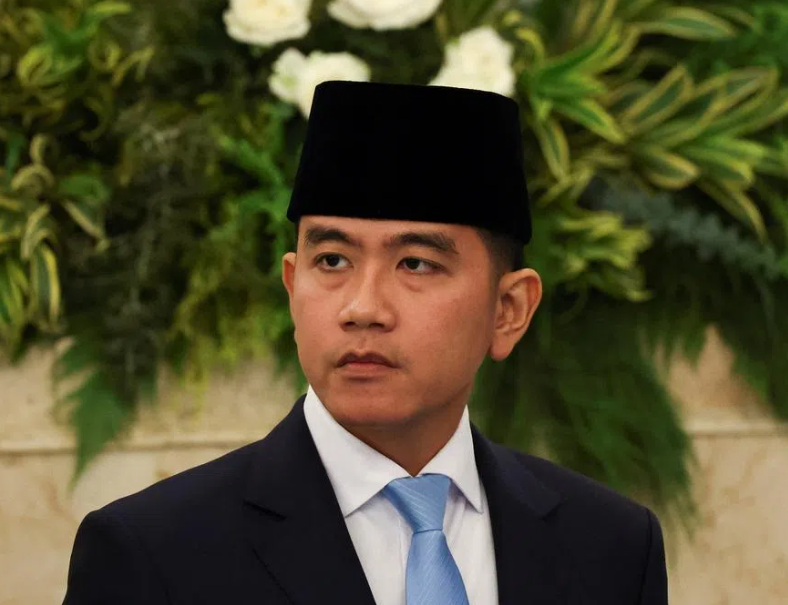
Vice-President Gibran Rakabuming Raka has stepped into the midst of mounting student unrest by personally engaging with young critics of two signature government initiatives, an manoeuvre that political analysts interpret as calculated positioning rather than substantive policy reform. Just three days after meeting with university representatives who had protested against the free meals programme and the Red and White Cooperative scheme—both flagship Prabowo administration projects—Gibran invited five student leaders to accompany him on a working visit to eastern Indonesia on June 18, signalling a departure from typical vice-presidential remoteness.
The Red and White Cooperative programme represents one of President Prabowo Subianto's most ambitious undertakings, aiming to establish thousands of village-run businesses nationwide. The free meals initiative, meanwhile, has become a focal point for public controversy following corruption allegations that led to the arrest of National Nutrition Agency chief Dadan Hindayana and two former deputies in June over suspected procurement irregularities. By inserting himself into these debates, Gibran has thrust himself into the national conversation during a period when student-led protests have gathered momentum across the archipelago.
Official statements emerging from the palace meeting struck a conciliatory tone. According to a statement from the Vice-President's Office, student representative Muhammad Abdi Maludin characterised Gibran as "open and receptive" to research findings on both programmes, pledging that the vice-president would audit the students' evidence and report to President Subianto. Yet this carefully crafted narrative quickly unravelled on social media, where sceptical observers questioned both the selection of participating students and the authenticity of the engagement. Critics noted that inviting representatives from Indonesia's largest and most prominent universities would have lent greater credibility to the exercise, with one commenter dismissing the effort as theatrical.
The timing and nature of Gibran's moves have prompted scholars to identify a deliberate electoral calculus. At 38 years old, the eldest son of former president Joko Widodo appears to be cultivating a public persona as a communicative bridge between popular discontent and government policy—a positioning that becomes particularly significant when viewed against the backdrop of Indonesia's 2029 presidential election cycle. Researchers at the Centre for Strategic and International Studies note that Gibran is unlikely to precipitate major policy shifts given the structural constraints of his office, but the visibility he generates may prove instrumental in raising his profile and accumulating political capital for potential future candidacy, which he has not publicly declared.
Since taking office alongside Prabowo in October 2024, Gibran has struggled to carve out a clearly defined institutional role. Despite nominal associations with high-profile initiatives such as Papua's development and the construction of the new capital city Nusantara, he has remained largely peripheral to major policy decisions. Unlike several of his predecessors, he has not been assigned a substantial policy portfolio. The free meals programme reports directly to the presidency through the National Nutrition Agency, whilst the Red and White Cooperative initiatives are coordinated through multiple ministries and agencies as a presidential priority programme—administrative arrangements that leave the vice-president with minimal substantive influence.
This structural reality renders the scope of Gibran's actual authority particularly narrow. Experts emphasise that his engagement with student critics, however visible it may be, does not translate into meaningful decision-making power over the contested programmes. Rather, these initiatives remain firmly under presidential control and, according to some analysts, significantly influenced by military and police structures. The vice-president's recent visibility therefore represents less a demonstration of genuine influence and more an exercise in demonstrating relevance to both the public and within the administration itself.
Questions about the authenticity of the outreach intensified when investigative reporting revealed financial transactions between Gibran's office and participating students. On June 23, news outlet Kompas reported that one student leader from Bung Karno University had received 20 million rupiah (approximately S$1,444) following the palace meeting. Separately, Tribunnews revealed that other attendees had acknowledged receiving sums ranging from 2 million to 2.5 million rupiah. The Presidential Palace stated it was investigating these claims, but the disclosure substantially undermined the narrative of organic student engagement, lending credence to critics who characterised the meeting as orchestrated theatre designed to simulate democratic engagement.
Academic observers have pointed to the calculated nature of student selection as further evidence of choreography rather than genuine dialogue. The students invited to the palace did not represent Indonesia's largest university campuses, suggesting a deliberate attempt to curate a more malleable discussion partner rather than confronting the most influential voices within the protest movement. This selectivity, combined with the subsequent financial disclosures, supports interpretations that the entire exercise constituted a low-cost public relations manoeuvre designed to generate media attention without substantively altering policy direction or genuinely addressing students' documented concerns.
The strategic logic underlying Gibran's approach becomes clearer when examining the contemporary political environment. With public criticism directed broadly at the government and its various agencies, the vice-president appears to be adopting what researchers term "low-cost" attention-generating tactics. Rather than attempting to influence actual policy outcomes—a task rendered difficult by his limited institutional authority—Gibran is leveraging the student protests as an opportunity for performative engagement that signals responsiveness without requiring substantial policy concessions. This approach allows him to appear proactive in addressing public discontent whilst maintaining alignment with the presidency and its flagship programmes.
Gibran's acknowledgement of shortcomings in the free meals programme during his June 18 school visit in East Nusa Tenggara represented another layer of this strategy. By publicly calling for improved governance in the wake of the National Nutrition Agency scandal and instructing officials to accelerate implementation in certain areas, he positioned himself as a problem-solver and advocate for reform—a persona that becomes politically valuable during election cycles. The promise to follow up on local concerns, whilst non-committal in nature, creates an impression of executive engagement without binding him to specific policy reversals.
For Malaysian observers monitoring regional political trends, Gibran's tactical repositioning offers instructive parallels regarding how subordinate executive officials in large Southeast Asian democracies navigate structural constraints and electoral cycles. The case illustrates how institutional weakness can be compensated through calculated public engagement and media management, particularly when surrounding a leader appears capable of capturing public attention through performative responsiveness. It also demonstrates the enduring tension within majoritarian political systems between substantive institutional authority and symbolic visibility, a dynamic that shapes elite behaviour across the region.
Looking forward, analysts suggest that Gibran's visibility around the free meals and cooperative programmes is unlikely to translate into major policy reorientations, given the programmes' entrenchment within the presidential agenda and their administration through structures beyond his control. However, the consistent public engagement may gradually accumulate political credibility that could prove valuable should he contest the 2029 presidential election. Whether such visibility represents a foundation for future electoral viability or merely a holding pattern whilst he awaits clearer institutional assignment remains to be seen, though the strategic calculation underlying his recent moves appears evident to most political observers tracking Indonesia's shifting factional dynamics.

