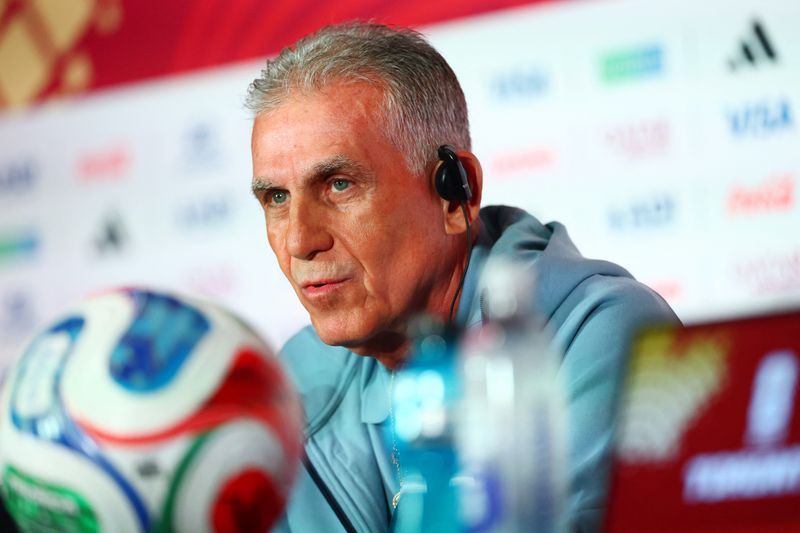
Ghana's coaching staff has signalled unwavering readiness to contest their World Cup Group L fixture against Panama at Toronto Stadium, with head coach Carlos Queiroz adopting a pragmatic stance on the ongoing legal uncertainty surrounding midfielder Thomas Partey. Speaking to journalists on Tuesday, just one day before the scheduled contest, Queiroz emphasised that his tactical preparations remain comprehensive and adaptable, capable of proceeding with or without the Villarreal player, whose entry into Canada remains contested following official refusal earlier this week.
The dispute centres on allegations of rape and sexual assault that Partey faces in Britain, charges he has categorically denied. Canadian authorities declined to permit the footballer's admission to the country, prompting Ghana's federation to launch an appeal that received a hearing before a Canadian federal court on Tuesday. The timing creates considerable uncertainty for both the player and the national team, with less than 24 hours between the court's decision window and Ghana's scheduled kickoff. Queiroz's measured public response reflects the delicate balance required in managing media expectations whilst protecting his player's privacy and legal position.
When questioned directly about Partey and the allegations, Queiroz declined to elaborate, describing such commentary as tangential to his core responsibilities. His statement—that adding further discussion of "issues that are nonsense" falls outside his purview—reveals a coaching philosophy focused narrowly on tactical execution and team preparation rather than peripheral controversies. This deflection strategy, whilst potentially frustrating to journalists seeking clarification, underscores the complexity facing modern sporting administrators navigating the intersection of legal proceedings, media scrutiny, and competitive obligation. Queiroz's invocation of working with "the cards that I have in front of me" encapsulates the necessity of maintaining squad focus despite external disruptions.
Beyond the Partey situation, Queiroz offered substantive analysis of Ghana's upcoming opposition, characterising Panama as a well-organised and tactically disciplined unit with considerable tournament experience. However, the 73-year-old coach projected confidence in his team's capacity to exploit vulnerabilities within Panama's system, suggesting Ghana possesses the technical attributes and physical tools necessary to succeed in direct confrontations. His assessment reflected neither underestimation nor complacency, instead presenting a balanced evaluation acknowledging Panama's quality whilst articulating Ghana's competitive advantages in areas including pace, individual skill, and one-on-one situations. This framing provides crucial context for Southeast Asian observers following the tournament, as it illustrates how established international coaches assess emerging football nations.
Queiroz emphasised that Ghana's strength extends beyond tactical organisation into psychological readiness and squad depth. His reference to possessing "great experience, quality, speed, and skill" suggested confidence born from familiarity with elite competition rather than bravado. For Malaysian football analysts, Ghana's approach demonstrates how African confederations develop competitive squads capable of challenging established hierarchies within World Cup tournaments. The team's ability to remain focused despite institutional turmoil around a key player speaks to professional maturity within the Ghana Football Association.
A notable subplot emerged when Queiroz addressed FIFA's mandatory hydration breaks, a contentious new regulation that has generated debate throughout the tournament. Rather than dismissing the rule outright, Queiroz called for systematic evaluation of whether the regulation genuinely prioritises player welfare or instead serves commercial and marketing interests once the World Cup concludes. His demand for what he termed an "integrity report" reflects growing scrutiny of FIFA's decision-making processes, particularly regarding regulations that alter traditional match dynamics and potentially advantage certain playing styles or physical profiles over others.
The hydration break debate carries particular relevance for teams competing in climatic conditions where heat and humidity present genuine physiological challenges. Ghana, drawing players from a tropical climate, may paradoxically benefit from or struggle with such provisions depending on match circumstances and opponent adaptation. Queiroz's suggestion that FIFA should transparently assess whether the regulation serves pure health considerations or commercial imperatives mirrors broader concerns within global sport regarding governing bodies' competing obligations to player protection, competitive integrity, and financial stakeholders. His scepticism reflects experience accumulated across multiple international assignments where regulations have proven unevenly beneficial.
For regional observers, Ghana's tournament participation illustrates the widening depth of World Cup competition, with African nations increasingly competing as sophisticated, professionally-managed organisations rather than participants grateful simply for qualification. The squad's response to institutional adversity—maintaining tactical focus despite uncertainty surrounding a key player—demonstrates professional standards increasingly expected at the international level. Queiroz's calm demeanour and strategic focus, despite significant external pressures, provides a template for crisis management in high-stakes sporting environments where legal, ethical, and competitive dimensions intersect.
The coming hours would prove determinative for Ghana's preparation, as the Canadian federal court's decision on Partey's appeal remained pending. Regardless of outcome, Queiroz's statement that Ghana would be "ready" when the decision arrived suggested contingency planning and tactical flexibility. His refusal to construct narratives around potential scenarios—instead emphasising present readiness—reflects coaching maturity and an understanding that public speculation regarding legal proceedings serves neither team interest nor fairness to the affected individual. As Ghana prepared for Panama, the squad's capacity to maintain competitive focus amidst institutional turbulence would test not merely tactical acumen but psychological resilience under genuine pressure.