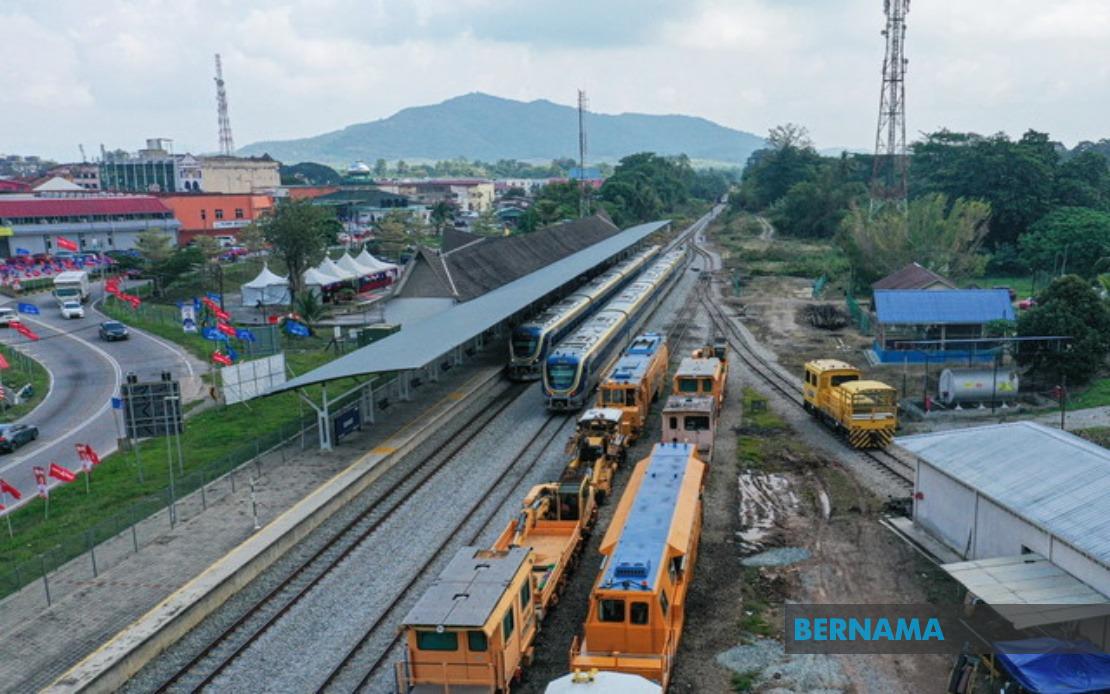
The restoration and upgrade of railway tracks spanning Gemas in Negeri Sembilan through to Mentakab in Pahang reached completion on June 19, having consumed RM41.7 million in total expenditure. Transport Minister Anthony Loke announced the milestone at KTMB Bahau station, marking the finish of a project that faced considerable setbacks since its 2016 launch. The original contractor's failure to meet scheduled deadlines, compounded by catastrophic flood damage to infrastructure along the East Coast, extended the delivery timeline well beyond the initial 2019 target date.
The Gemas-Mentakab corridor holds strategic importance within Malaysia's broader rail network architecture, functioning as a vital connecting point between the country's East and West Coast rail systems. This railway artery traverses three states—Negeri Sembilan, Pahang, and Kelantan—making it essential for maintaining continuity of service across the peninsula's eastern corridor. For Malaysian readers, the completion represents not merely the conclusion of infrastructure work but a restoration of connectivity that had been compromised during recent years.
With the track restoration complete, Loke outlined plans to enhance service quality and expand connectivity options between the two coasts whilst strengthening access for communities situated along the route. The minister emphasised that Gemas has emerged as a pivotal interchange hub within the national rail system, functioning as the natural junction where East Coast and West Coast rail corridors converge. This positioning places Gemas at the intersection of two major transport arteries, potentially reshaping regional movement patterns.
The upgraded infrastructure now permits carriages to operate at loads reaching 20 tonnes, a capacity increase directly supporting the government's road-to-rail policy initiative. This enhancement aims to shift freight movement away from highway congestion towards rail infrastructure, potentially reducing wear on road networks and lowering transportation costs for commercial operators. For regional logistics and supply chain operations, the elevated load capacity opens opportunities for more efficient bulk transportation across the peninsula.
The Gemas-Mentakab completion represents one component within a broader rail modernisation strategy. Running parallel to this project are the Gemas-Johor Bahru double-track railway initiative and the expansion of Electric Train Service operations into Johor Bahru Sentral, together forming what Loke described as important reinforcements to the national rail network. These complementary projects suggest a coordinated approach to rail development extending beyond this single corridor.
However, the project faced uneven progress across its three packages. Package B, encompassing the Mentakab-Gua Musang segment, actually surpassed its schedule, completing ahead of target. By contrast, Package C, covering the Gua Musang-Tumpat stretch, continues experiencing delays attributable to contractor implementation difficulties. This eastern section represents among the most demanding construction environments in Malaysia, having endured severe flood devastation alongside natural hazards including landslide-prone terrain and challenging forested topography across interior regions.
The Gua Musang-Tumpat segment emerged as particularly problematic due to the intensity of flood damage it sustained, far exceeding typical wear. The East Coast flooding events left extensive damage requiring not simple repair but substantial reconstruction work. Combined with the geographical challenges—dense forest coverage, remoteness of sections, and geologically unstable slopes—this portion demands specialised construction methodologies and extended timelines compared to more accessible stretches.
Looking forward, Loke directed Keretapi Tanah Melayu Berhad to examine possibilities for increasing service frequency along the restored corridor. The minister emphasised the importance of coordination with ETS timetables to better serve passenger demand and minimise waiting periods. Currently, the Gemas-Kuala Lipis service operates only three return journeys daily, a frequency that limits its attractiveness for commuters and leisure travellers.
A critical aspect of the restoration's utility lies in Gemas's role as an interchange point. Loke highlighted that passengers can now transit between services at Gemas with typical waiting periods of ten to fifteen minutes before continuing journeys on ETS services towards Johor Bahru Sentral. This relatively brief connection window makes the facility functional as a true hub rather than merely a geographical location. The ability to coordinate services effectively between slower regional trains and faster ETS services creates a more seamless travel experience across the peninsula.
For Malaysian and Southeast Asian observers, the project's completion signals renewed investment in rail infrastructure at a moment when regional nations increasingly prioritise railway development. The eight-year journey to completion, whilst lengthy, demonstrates the substantial commitment required for meaningful rail restoration across tropical terrain vulnerable to seasonal flooding. The project encapsulates broader infrastructure challenges facing the region: balancing ambition with geographical reality, managing contractor accountability, and building resilience into systems vulnerable to climate-related disasters.
The financial commitment of RM41.7 million, whilst representing significant public expenditure, must be contextualised within the corridor's strategic value to national transport policy. The capacity upgrade to support 20-tonne loads transforms the route's commercial utility, making it viable for freight operations previously dependent on road transport. This economic dimension extends beyond passenger convenience into logistics efficiency affecting manufacturing, agriculture, and trade operations throughout the East Coast and beyond.
The restored corridor also carries implications for regional development. Improved rail connectivity between East and West coasts potentially catalyses economic activity along intermediate stations, particularly in smaller towns and rural areas previously underserved by transport infrastructure. Communities in Negeri Sembilan, Pahang, and Kelantan gain improved access to broader economic networks, a factor increasingly significant as Malaysia pursues more geographically balanced development patterns.
With the Gemas-Mentakab section now operational, attention shifts to accelerating the problematic Gua Musang-Tumpat package and optimising the integrated performance of completed sections. The completion represents progress, yet the incomplete eastern extension reminds that Malaysia's rail modernisation journey remains ongoing. As regional infrastructure integration deepens across Southeast Asia, the strength and reliability of Malaysia's domestic rail system becomes increasingly consequential for broader connectivity objectives.

