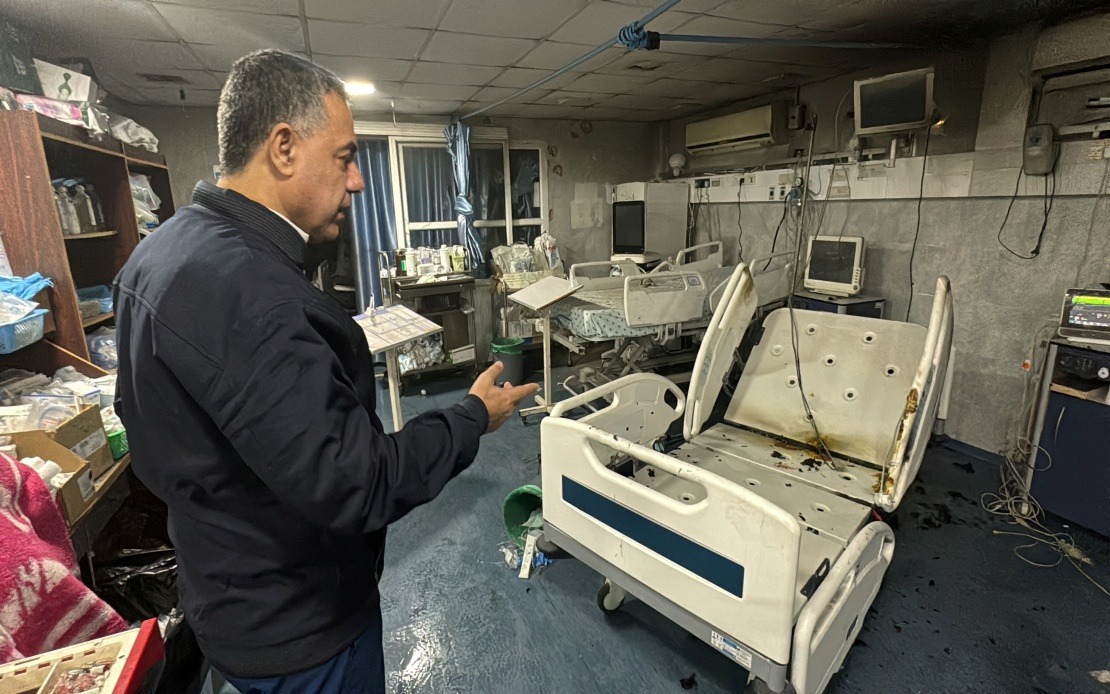
International human rights advocates have raised urgent alarm about the wellbeing of Dr Hussam Abu Safiya, director of Kamal Adwan Hospital in northern Gaza, following his detention and transfer to Israel's Nitzan Prison. According to documentation by Physicians for Human Rights, the respected medical administrator's condition has deteriorated markedly since his incarceration, with a legal representative observing severe physical trauma during a recent prison visit that has prompted calls for his immediate release.
The concerned observations came from Nasser Odeh, the legal counsel representing the detained physician, who visited Dr Abu Safiya on July 2. Odeh documented a troubling medical picture: the hospital director exhibited significant respiratory difficulties, experienced repeated bouts of unconsciousness, and bore visible evidence of what the rights group characterises as physical assault. The account proves particularly striking given the hospital administrator's previous standing as a senior healthcare official responsible for managing one of Gaza's crucial medical facilities.
The physical evidence of mistreatment was unmistakable. According to the legal representative's testimony, Dr Abu Safiya presented with fresh injuries and extensive bruising concentrated around his head, facial region, eyes, ears, and neck. The extent of these marks was severe enough that the visiting lawyer found the detainee difficult to identify, suggesting the trauma went beyond minor contusions. Throughout this encounter, security personnel kept the hospital director shackled at both wrists and ankles, with masked guards maintaining a presence during the entire interaction.
Naji Abbas, who directs the Prisoners and Detainees Department at Physicians for Human Rights Israel, characterised the lawyer's account as among the most troubling testimonies the organisation has received throughout the broader conflict. Abbas stated that the documented observations raise immediate and serious concerns for Dr Abu Safiya's physical survival while in custody. The hospital director himself reportedly expressed fears that he would not leave prison alive, a statement that underscores the psychological and physical trauma accompanying his detention.
The deterioration in Dr Abu Safiya's condition appears correlated with his legal actions, according to the rights group's analysis. His health appears to have worsened following his attempt to challenge his continued detention through judicial proceedings, a sequence that Abbas suggested warrants scrutiny. The pattern of events—aggressive physical response following a legal challenge—raises questions about whether his deteriorating circumstances represent punishment for legal resistance or consequences of the interrogation process itself.
Physicians for Human Rights has joined other civil society organisations in demanding Dr Abu Safiya's release, emphasising that he remains detained without formal charges or judicial trial. This absence of legal proceedings represents a significant concern for international observers monitoring detention practices in conflict zones, particularly given the medical professional's prominence in Gaza's healthcare sector. The detention of a hospital director without apparent due process raises broader questions about the treatment of civilian medical personnel in conflict situations.
The rights organisation has placed direct responsibility upon Israeli authorities for the safety and health of all individuals in their custody, invoking international humanitarian law obligations. Abbas stated that the documented evidence requires immediate and independent investigation by appropriate authorities to determine accountability for the injuries and conditions Dr Abu Safiya has suffered. Such an investigation, the group contends, would establish whether systemic mistreatment has occurred or whether specific individuals bear responsibility for the alleged assault.
For Malaysian and Southeast Asian readers, this situation illustrates the vulnerabilities that medical professionals face during armed conflict, particularly when detained by military or security forces. The case raises important questions about how international humanitarian law protections for healthcare workers are implemented in practice, and whether neutrality in medical roles provides adequate protection during detention. The allegations also underscore why international monitoring and documentation of detention conditions remains crucial, even in complex security environments.
The broader context involves Gaza's healthcare system, which has faced severe strain throughout the conflict, making the detention of hospital leadership particularly consequential for civilian populations requiring medical care. Kamal Adwan Hospital represented one of the functional medical facilities in the northern territory, and the absence of its director due to detention has implications for the institution's operational capacity and the patients depending upon its services.
Physicians for Human Rights' advocacy reflects a wider international pattern of concern regarding detention practices in the region. Multiple humanitarian organisations have documented allegations of abuse against detainees, though investigations into such claims often proceed slowly or remain inconclusive. The public documentation of Dr Abu Safiya's condition serves to create a record and apply diplomatic pressure for improved treatment, a strategy commonly employed by rights groups lacking direct enforcement authority.
The case also highlights tensions between security interests and humanitarian obligations. Authorities may contend that detention represents a security measure necessary for conflict management, yet international law simultaneously requires that such detention maintain standards protecting detainees' physical integrity and health. Reconciling these competing imperatives remains one of the central challenges in conflict-affected regions, with civilian detainees like Dr Abu Safiya often caught between these conflicting demands.

