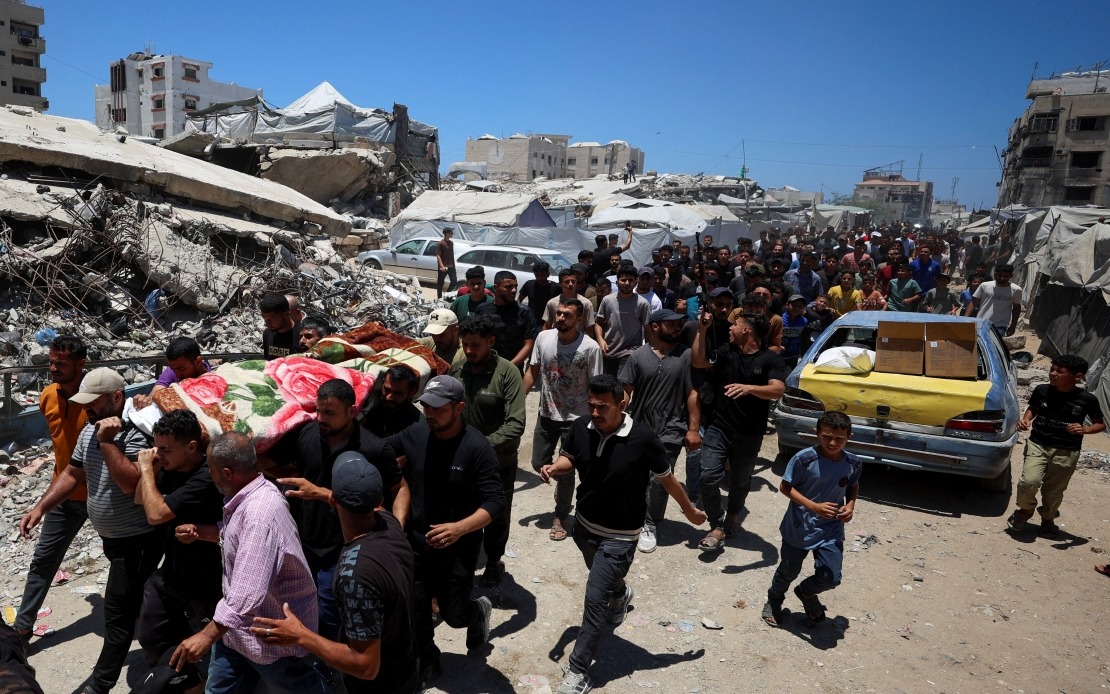
The humanitarian catastrophe unfolding in Gaza has reached a critical juncture despite the implementation of a ceasefire agreement. According to the latest Situation Report issued by the Palestinian Prime Minister's Office on Tuesday, Israeli military operations have claimed 1,021 Palestinian lives since the ceasefire took effect, raising the cumulative death toll since October 2023 to 73,032. The figures underscore the scale of destruction that continues to plague the enclave even as formal hostilities have been curtailed, presenting a sobering picture of a region struggling to recover from sustained conflict.
The destruction of civilian infrastructure has created a humanitarian emergency of staggering proportions. The Government Communication Centre reports that Israeli bombardments have destroyed or damaged 76.6 per cent of Gaza's housing stock, leaving nearly one million Palestinians without permanent shelter and forcing them to live in tent camps. This unprecedented displacement has compounded existing challenges, as residents struggle to access basic services and clean water remains critically scarce. The combination of physical destruction and ongoing restrictions on humanitarian aid delivery has created a perfect storm of suffering, with most inhabitants dependent on limited supplies that international organisations can funnel into the territory.
Civilian casualties continue to mount despite the ceasefire framework. UNICEF data reveals that 265 Palestinian children have been killed and more than 400 wounded since the ceasefire was announced, indicating that violence remains endemic even as major combat operations have supposedly ceased. These figures carry particular resonance for regional observers, as they demonstrate the vulnerability of the most defenceless members of society and raise questions about the effectiveness and enforcement of ceasefire agreements in protecting non-combatants. The targeting of children, whether deliberate or incidental, represents one of the most troubling aspects of the ongoing situation.
Air and drone strikes continue across multiple population centres despite the supposed cessation of hostilities. Recent military operations have been recorded in Nuseirat, Al-Mawasi, Khan Younis and Gaza City, each incident adding to the civilian death toll and perpetuating the cycle of trauma and displacement. The persistence of these attacks suggests fundamental disagreements over ceasefire terms and implementation protocols, or alternatively, a deliberate expansion of the definition of what constitutes permissible military activity under ceasefire conditions. Malaysian observers monitoring the situation should note that these ongoing strikes undermine international confidence in the durability of any agreement and suggest that a durable political settlement remains elusive.
Humanitarian organisations have become vocal critics of obstacles hampering relief efforts. Oxfam has told the United Nations Security Council that Israeli restrictions continue to block humanitarian access and prevent the delivery of life-saving assistance to vulnerable populations. This obstruction of aid flows represents a form of collective punishment that compounds the effects of military operations and raises concerns about compliance with international humanitarian law. The inability of organisations to deliver assistance freely suggests that humanitarian access remains contested and subject to political calculations rather than neutral need-based allocation.
Beyond the Gaza strip, the West Bank faces its own escalating crisis characterised by forced displacement and settler violence. The Office of the United Nations High Commissioner for Human Rights has documented a significant increase in the forced displacement of Palestinians across the occupied West Bank, including East Jerusalem, driven by a combination of settler attacks, home demolitions, movement restrictions and forced evictions. This expansion of the conflict beyond Gaza's borders indicates that the ceasefire has not arrested the broader dynamics of territorial expansion and Palestinian dispossession that characterise the occupation.
The deliberate targeting of Palestinian agricultural assets reflects a strategic dimension to the conflict often overlooked in discussions focused purely on military casualties. The Palestinian Ministry of Agriculture has documented the destruction of 7,258 trees, including 1,270 olive trees, representing an estimated loss of approximately US$5.17 million. These attacks by Israeli settlers and occupation forces aim to deprive Palestinians of economic resources and ancestral connections to the land. Additionally, arson attacks have targeted two mosques in the villages of Jiljilya and Mazra' al-Nubani, indicating that cultural and religious sites have become subject to violent destruction alongside agricultural infrastructure.
Refugee camps in the West Bank have become focal points of military operations resulting in mass displacement. Israeli military operations in Jenin, Tulkarem and Nour Shams refugee camps have displaced more than 33,000 Palestinians since January 2025, creating secondary waves of displacement that cascade through Palestinian communities. These operations suggest that the ceasefire applies primarily to Gaza while military activities in the West Bank continue without restraint, creating a two-tier situation that fragments Palestinian territories and compounds the overall humanitarian crisis.
Detention practices have emerged as a serious human rights concern, with international attention focusing on conditions within Israeli facilities holding Palestinian prisoners. Prisoners' institutions have raised alarming concerns regarding deteriorating conditions, severe overcrowding and the spread of diseases within Israeli detention facilities. These conditions represent potential violations of international humanitarian law and suggest that the treatment of detained Palestinians remains a contentious issue requiring urgent attention from international bodies.
Improbably, amid the devastation and ongoing violence, Palestinian educational institutions are attempting to maintain continuity of learning. The Palestinian government has completed preparations for this year's General Secondary Education Examination, which involves approximately 91,000 students, including around 37,000 in Gaza who will sit for examinations electronically for the third consecutive year. This determination to preserve educational continuity despite extraordinary circumstances reflects Palestinian resilience and commitment to maintaining institutional functions even as the physical and security environment deteriorates.
For Malaysian policymakers and observers, the situation in Gaza and the West Bank underscores the humanitarian costs of prolonged conflict and the inadequacy of ceasefires that fail to address underlying political disputes. The figures emerging from Palestinian sources paint a picture of sustained crisis in which military operations continue under the guise of security operations, humanitarian access remains politically contested, and the civilian population bears the overwhelming burden of conflict. Southeast Asian nations with historical commitment to human rights and international law should monitor developments closely and consider appropriate responses through available diplomatic and multilateral channels.

