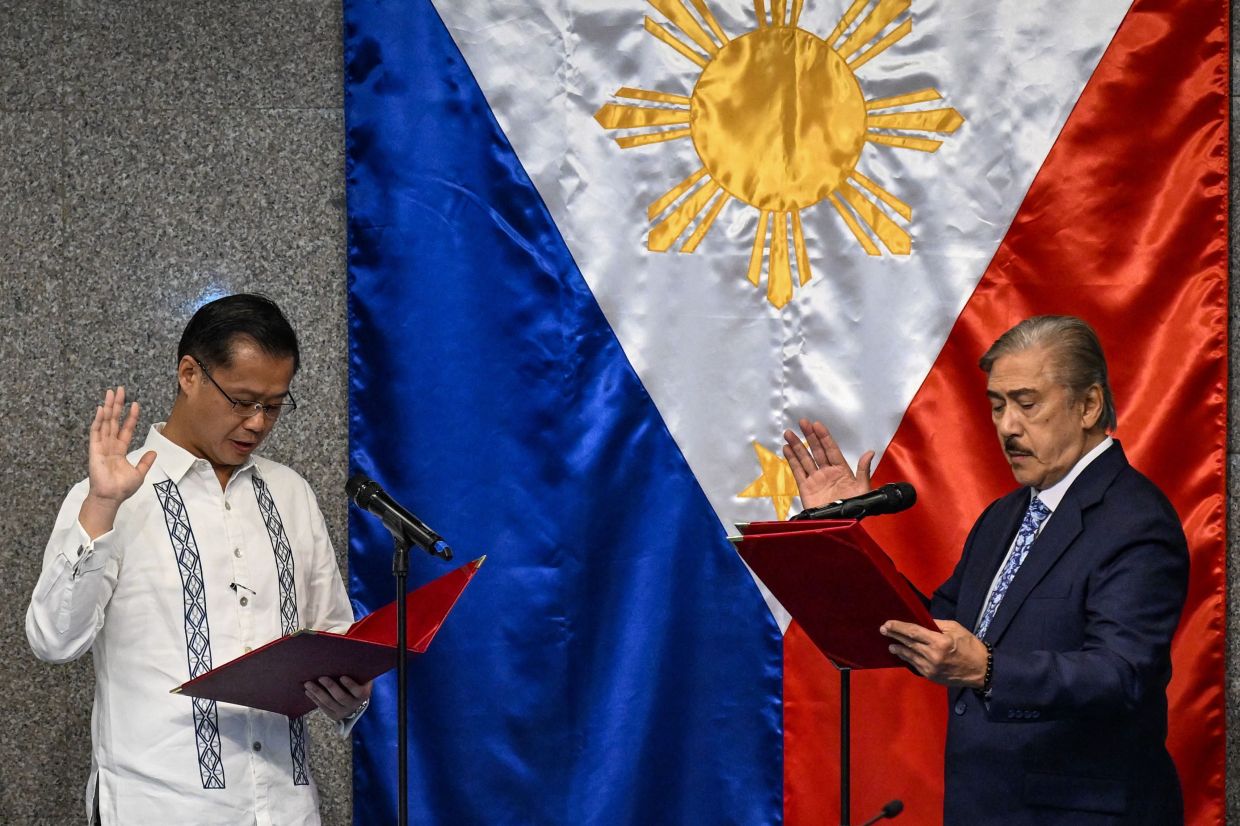
The Philippine Senate has undergone a significant shift in leadership with the election of Senator Sherwin Gatchalian to the position of Senate president on Wednesday, marking a dramatic reversal in the chamber's power dynamics. The vote took place during a special session attended by exactly thirteen senators—the bare minimum threshold needed to conduct such proceedings and elect a new presiding officer of the upper house.
Gatchalian's ascent to the presidency represents a substantial career progression for the seasoned legislator. Prior to his current Senate tenure, he served as Mayor of Valenzuela City, a key urban centre in the Metro Manila region, and previously held a House Representative seat. His background in local and national government positions has prepared him for the institutional responsibilities that now accompany his election as head of the 24-member Senate chamber.
The pathway to Gatchalian's presidency proved unexpectedly convoluted, revealing deep factional tensions within the Philippine legislature. On June 3, a different coalition of twelve senators had already moved to install Gatchalian as Senate president pro tempore—a position distinct from the full presidency—while simultaneously declaring that Alan Peter Cayetano had vacated the Senate presidency that he had assumed on May 11. This earlier action suggested coordinated opposition to Cayetano's leadership, though it fell short of the thirteen-vote majority necessary for a complete change of command.
Cayetano initially resisted this challenge to his authority, publicly asserting that he maintained his position as Senate president and arguing that displacing him would require the participation of at least thirteen senators. His assertion of procedural requirements highlighted the constitutional and institutional mechanics governing Senate leadership transitions, underscoring that a simple plurality would be insufficient to dislodge an incumbent officer. For nearly two weeks, this procedural dispute created ambiguity about who genuinely held the presidency.
The critical turning point emerged when Senator Joel Villanueva switched his allegiance from Cayetano's faction to Gatchalian's bloc. Villanueva's defection proved decisive in reshaping the arithmetic within the chamber, effectively tipping the balance toward Gatchalian's supporters. On Tuesday, the day before the formal election, Cayetano publicly acknowledged that his political position had eroded following conversations with Villanueva about his likely departure from the Senate presidency. This candid assessment suggested Cayetano recognised that the numbers no longer favoured his continued tenure in the role.
The instability in Senate leadership reflects broader challenges confronting the Philippine upper house at present. The Senate's active membership stands at only twenty-two sitting senators, considerably below the full complement of the chamber. Two high-profile senators are absent from their duties: Jinggoy Estrada turned himself in to police earlier in June and subsequently faced a suspension order from the Sandiganbayan anti-graft court, which mandated a ninety-day suspension from office related to graft allegations against him. Separately, Senator Ronald Dela Rosa remains a fugitive, with the International Criminal Court having issued charges and his current whereabouts unknown to the public.
These absences create cascading complications for Senate operations and legislative productivity. With reduced membership, achieving the quorum necessary for meaningful legislative action becomes more challenging, and the distribution of power among remaining senators takes on heightened significance. The departure or unavailability of senators with substantial constituencies of supporters can rapidly reshape coalitional mathematics, as the Villanueva defection demonstrated.
Gatchalian's election as Senate president also carries implications for legislative priorities and committee assignments within the chamber. As the presiding officer, he will exercise considerable influence over the flow of bills, the scheduling of debates, and the composition of Senate committees—institutional mechanisms through which many policy initiatives either advance or languish. His background in municipal governance may inform his approach to provincial and local government concerns that frequently come before the Senate.
The leadership transition reveals persistent challenges within Philippine democratic institutions, particularly the fluidity of coalitions and the absence of stable party discipline that characterises many legislatures globally. Unlike some regional counterparts, the Philippine Senate lacks the binding party mechanisms that would prevent sudden realignments around individual personalities or factional interests. This dynamic creates opportunities for unexpected political manoeuvres but also generates uncertainty about sustained policy direction.
For regional observers, the Senate presidency contest illustrates broader patterns within Southeast Asian democracies where institutional frameworks operate within environments of significant political contestation. The episode underscores how even routine procedures like electing a legislative presiding officer can become venues for substantive power struggles, reflecting deeper disputes about policy direction and factional influence. Gatchalian's presidency will be closely watched to determine whether he can stabilise Senate operations amid these prevailing tensions or whether further realignments will occur.