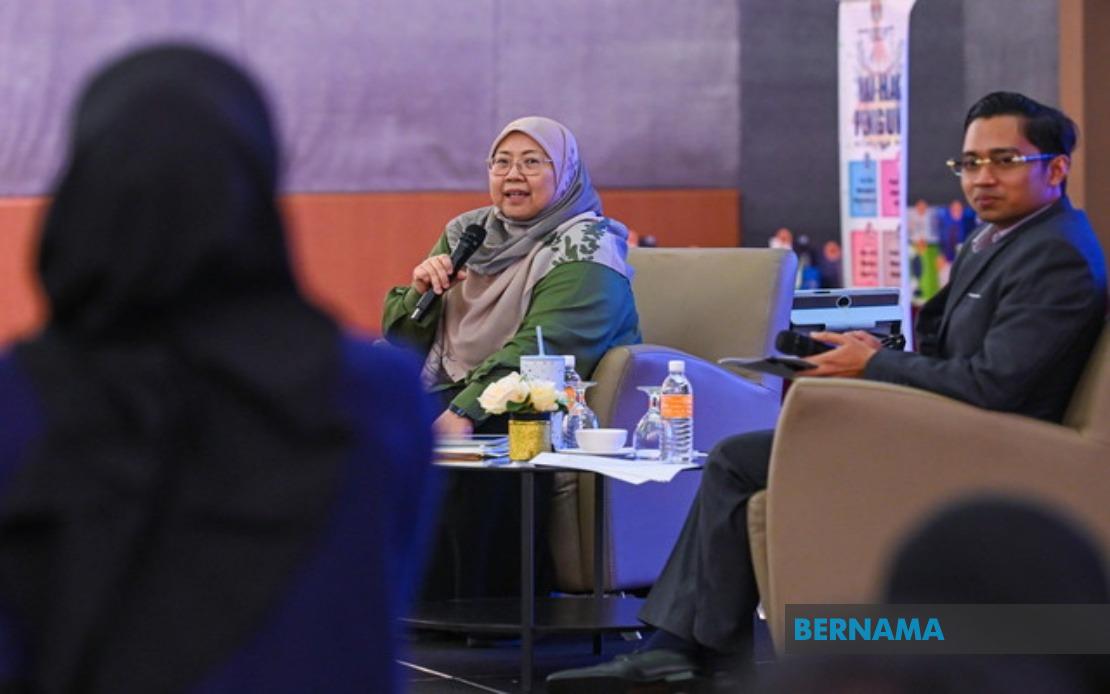
Pakatan Harapan's campaign apparatus in Negeri Sembilan has gained momentum with less than two weeks remaining before the state election, buoyed by what party leadership describes as an encouraging groundswell of voter support. PKR secretary-general Datuk Dr Fuziah Salleh underscored the coalition's satisfaction with how its candidates and campaign teams have connected with constituents across the state, reflecting a coordinated effort that appears to be resonating across demographic divides.
The PKR official's assessment comes as voting preparations advance toward their conclusion, with early polling scheduled for July 28 and election day set for August 1. This timeline compresses the remaining campaign window considerably, making the current momentum particularly significant for determining how the final stretch might unfold. Fuziah's remarks were delivered in Seremban following an engagement session with university students, a constituency that traditionally plays an influential role in state-level contests.
According to Fuziah, Pakatan Harapan's ground strategy has proven flexible enough to address the distinct priorities of different communities. In rural constituencies, campaign messaging emphasizes agricultural concerns, infrastructure development, and service delivery issues that directly affect farming communities and smaller towns. Urban areas, meanwhile, have seen the coalition pivot toward quality-of-life matters including public transportation, environmental quality, and economic opportunities for younger voters—issues that tend to dominate local political discourse in state capitals and larger towns.
The coalition's confidence rests partly on the track record of the incumbent Menteri Besar, Datuk Seri Aminuddin Harun, who carries the Pakatan Harapan banner into this election as the party's candidate for the Linggi state seat. Eight years of governance under Aminuddin's administration have provided Pakatan Harapan with a substantial platform of achievements to highlight—a considerable advantage when seeking to retain voter confidence in incumbent-dominated elections. Fuziah suggested that voters have grown accustomed to the current administration's approach to governance, and renewal of the mandate appears achievable if campaign momentum continues.
This election represents a critical moment for Pakatan Harapan's regional standing. Negeri Sembilan, as a state with significant political weight and a relatively balanced electorate, has historically served as a barometer for broader political trends in the Peninsula. A strong performance here could reinforce perceptions of coalition strength ahead of potentially more contested contests elsewhere, while an underwhelming result might trigger strategic reassessments within coalition ranks.
The emphasis on coordination that Fuziah highlighted suggests internal discipline within the PKR apparatus specifically and across Pakatan Harapan more broadly. Campaign coordination failures—particularly misalignment between candidate messaging and party headquarters—have occasionally undermined coalition efforts in previous contests. The apparent coordination in this instance may reflect lessons learned from earlier electoral experiences, where internal communication breakdowns occasionally created openings for opposition parties to exploit contradictions in messaging.
Voter sentiment as reflected in Fuziah's observations appears to centre on tangible governance outcomes rather than ideological positioning. Rural and urban voters alike appear focused on whether their communities have benefited from current policies, suggesting that this election will hinge substantially on incumbent performance rather than broader political narratives. This orientation favors Pakatan Harapan, given the incumbent's ability to point to specific projects and programmes implemented during the current term.
The university town hall session that preceded Fuziah's remarks carries particular significance for coalition strategy. Young voters, while not necessarily determinative in state-level contests, represent a swing constituency capable of shifting outcomes in closely contested marginal seats. Engagement with student populations also generates cascading effects through social networks and family discussions, potentially amplifying campaign messages beyond the immediate audience.
For Malaysian political observers, this election functions as a testing ground for Pakatan Harapan's capacity to maintain and build upon recent electoral gains. The coalition's performance in Negeri Sembilan will inevitably influence calculations about coalition viability in other states where elections may be called in coming months, making these final two weeks of campaigning particularly consequential for the broader opposition alignment.
The confidence Fuziah expressed reflects what appears to be genuine organizational momentum rather than mere political rhetoric. Whether this translates into electoral success will become apparent once voting concludes on August 1, but the clarity of Pakatan Harapan's campaign narrative and the apparent coordination of its machinery suggest the coalition enters the final phase in a considerably stronger position than it might have occupied in earlier campaign stages.

