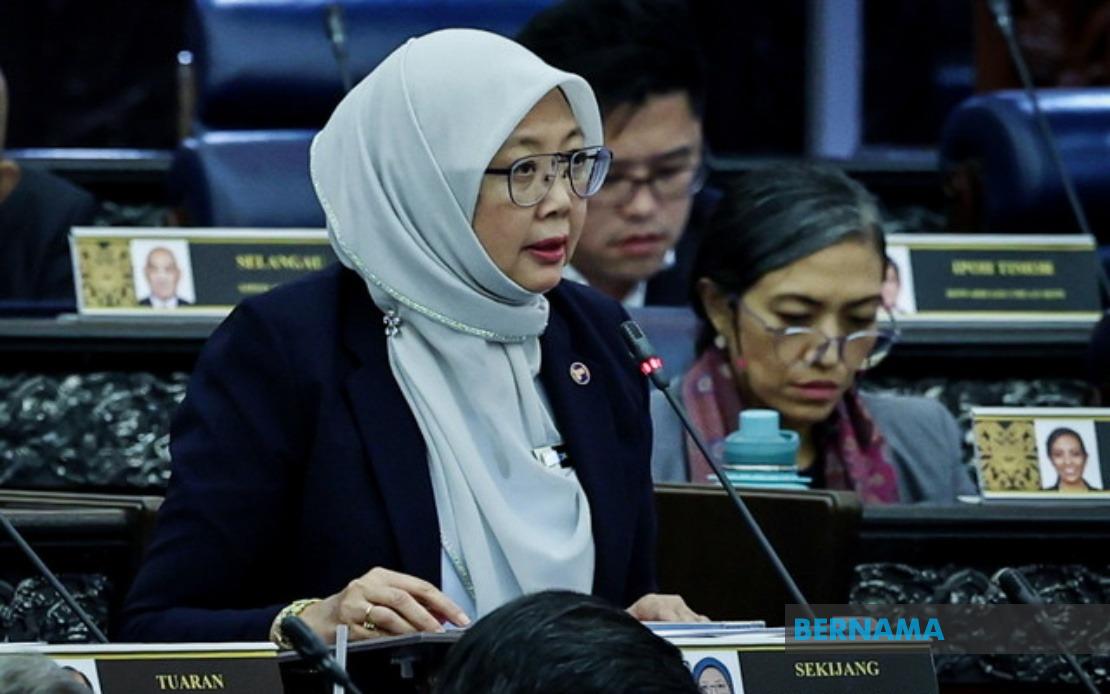
The need for greater public accountability over Lembaga Tabung Haji's (TH) recovery efforts has emerged as a pressing concern, with Government Backbenchers Club chairman Datuk Seri Dr Zaliha Mustafa urging full disclosure of reform progress to rebuild confidence among the institution's depositors. Speaking during parliamentary debate on the Royal Commission of Inquiry report at a special Dewan Rakyat sitting, the Sekijang MP emphasised that transparency was essential given TH's significance as a custodian of Muslim savings earmarked for pilgrimage to Mecca.
The push for greater openness reflects growing public unease over the scandal that engulfed Malaysia's largest Islamic financial institution. TH's financial crisis, which came to light several years ago, shook public trust in an organisation responsible for managing the life savings of nearly 9 million depositors. The 211-page RCI report, which was only recently made publicly available despite being presented to the Yang di-Pertuan Agong on August 30, 2022, documented widespread management failures and operational weaknesses spanning the 2014-2020 period. The delayed release of the commission's findings itself raised questions about government handling of the matter.
Dr Zaliha's proposal centres on transforming the current update mechanisms into a comprehensive public account. She has specifically recommended that Parliament receive detailed information on which of the 25 RCI recommendations have been fully implemented, which remain under way, and crucially, what timelines govern those still pending completion. Such granular disclosure would move beyond the relatively high-level progress indicator that TH had implemented 75 per cent of recommendations as of July 30. This incremental approach, she argues, would allow lawmakers and the public to properly assess the pace and quality of institutional reform.
Equally significant in her parliamentary intervention was Dr Zaliha's call for separate reporting on loss recovery efforts. She contended that the public deserves to know precisely what measures have been taken to recoup losses, what initiatives are currently in motion, and what future strategies the institution and government are pursuing. This transparency requirement acknowledges a fundamental concern: without clarity on recovery mechanisms, depositors cannot assess whether their eroded savings stand any realistic chance of restoration. The distinction between immediate corrective actions, ongoing recovery programmes, and forward-looking strategies would provide a more nuanced picture than summary statements alone.
The RCI's identification of political pressure related to electoral cycles as a contributing factor to TH's collapse has added another layer of complexity to the reform conversation. Dr Zaliha directly confronted this finding, noting the apparent contradiction between calls for Muslim unity and the mismanagement of assets entrusted by the Muslim community. Her framing challenges the notion that institutional loyalty should supersede accountability, particularly when significant financial damage has occurred. By raising these tensions explicitly in parliament, she has forced the government to engage with uncomfortable questions about institutional governance and political influence.
Central to Dr Zaliha's scrutiny is the role played by former chairman Datuk Seri Abdul Azeez Abdul Rahim. While formally designated a non-executive chairman, she highlighted evidence suggesting his involvement extended far beyond ceremonial duties. His concurrent positions in multiple TH subsidiaries and related companies created potential conflicts of interest, particularly regarding major investment decisions in which he allegedly played an active negotiating role. The multiplicity of his institutional positions, she argued, warrants closer examination and public clarification from the government regarding the precise nature and scope of his involvement in operational matters.
Dr Zaliha has also pursued a specific allegation concerning cash holdings linked to the former chairman's accounts. She referenced claims that funds accumulated in accounts associated with him reached approximately RM170 million at one point, a figure that raises serious questions about financial controls and transaction oversight within the institution. Her demand that the government either confirm or refute this allegation reflects the broader concern that key details remain insufficiently explained in public discourse, leaving room for speculation and eroding confidence further.
The three-pronged analytical framework Dr Zaliha applied to her parliamentary intervention—examining TH's financial position and dividend distributions, scrutinising investment decisions, and assessing governance accountability—provides a comprehensive lens for evaluating whether reforms address root causes or merely superficial symptoms. By separating these dimensions, she underscores that TH's recovery cannot be viewed monolithically but requires specific remedies tailored to distinct categories of institutional failure. Investment decisions that proved disastrous demand different corrective mechanisms than dividend distribution policies or governance structures.
For Malaysian depositors and the broader Muslim community, Dr Zaliha's advocacy for transparency carries practical implications. The uncertainty surrounding TH's financial trajectory and the government's commitment to recovery directly affects millions of households' retirement and religious pilgrimage plans. Many depositors have already absorbed losses; clarity on recovery prospects would enable better financial planning and risk assessment. Furthermore, restoring institutional trust—which remains TH's most valuable but damaged asset—requires demonstrable progress, not merely bureaucratic assurances.
The parliamentary debate has also highlighted timing considerations. The RCI was established in 2021, its members appointed in January 2022, and the report presented to the Yang di-Pertuan Agong in August 2022. Yet public release occurred only recently, nearly two years after submission. This temporal gap raises questions about whether delayed disclosure was intentional or reflected administrative processes. Going forward, Dr Zaliha's proposals for regular public reporting would create accountability mechanisms that prevent similar information bottlenecks.
The government's response to these parliamentary calls will test its commitment to institutional reform and public accountability. Providing the detailed implementation matrices and recovery progress reports Dr Zaliha has advocated would represent a meaningful shift toward transparency. Conversely, maintaining opacity or offering only aggregated figures would likely intensify public skepticism and potentially weaken the legitimacy of reforms undertaken. For TH to genuinely recover, institutional credibility must be rebuilt alongside financial metrics.
Beyond TH itself, the debate reflects broader questions about governance in Malaysian public institutions. The interplay between political considerations and institutional decision-making, the extent of executive accountability for operational failures, and the mechanisms through which public disclosure serves the broader community interest all extend across Malaysia's institutional landscape. How policymakers respond to Dr Zaliha's advocacy for transparency in TH's case may establish precedents for accountability across the public sector.

