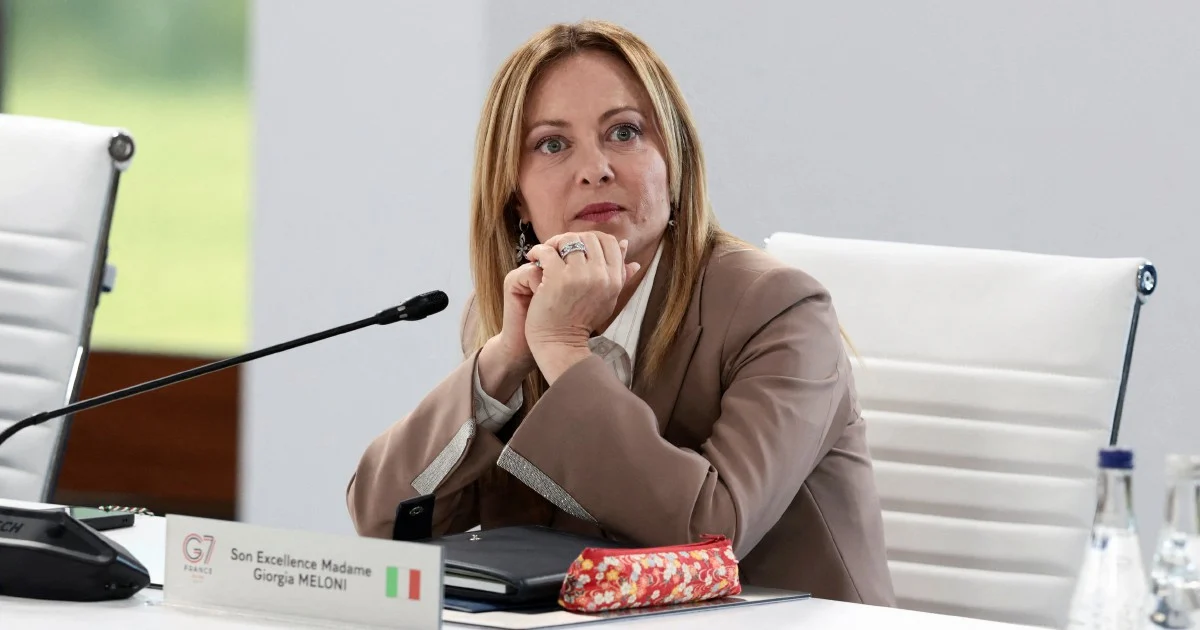
Italian Prime Minister Giorgia Meloni's relationship with United States President Donald Trump has undergone a dramatic transformation since his second inauguration in 2025. What began as a strategically cultivated partnership—symbolized by Meloni's singular invitation to attend Trump's presidential swearing-in ceremony, a privilege extended to no other European leader—has deteriorated into public disagreement and mounting tension between Rome and Washington. The reversal underscores the volatile nature of diplomatic alignments in contemporary international relations, where personal rapport and ideological affinity can shift rapidly when competing national interests emerge.
Meloni's initial positioning as Trump's favored European counterpart reflected a genuine convergence of political values. Both leaders championed nationalist agendas, opposed immigration liberalization, and advocated for stronger sovereignty vis-à-vis multilateral institutions. The Italian premier's presence at the inauguration symbolized Washington's preference for working with right-wing populist governments rather than traditional center-left European establishments. This alignment appeared to promise a recalibration of transatlantic relations, potentially sidelining France and Germany in favor of Rome as Washington's primary European interlocutor.
The promising beginning masked underlying tensions that would eventually surface. Trump's track record of unpredictable policy shifts and demands for loyalty created an unstable foundation for sustained partnership. Meloni, meanwhile, operated within constraints that Trump—uncumbered by coalition partners or constitutional checks—did not face. Italy's position within the European Union and NATO meant that divergence from collective European positions carried significant diplomatic costs. What worked in opposition rhetoric rarely survives unmodified contact with governing realities.
Meloni's transition from Trump whisperer to Trump critic reflects her attempt to balance competing pressures. As a European leader, she remains embedded within continental institutions and must maintain relationships with other member states. The Trump administration's policies—whether on trade, security arrangements, or multilateral commitments—increasingly conflicted with Italian interests and European consensus positions. Publicly aligning with Washington's unilateral initiatives risked isolation within the European Council and weakening Italy's negotiating position on matters directly affecting Italian citizens.
The deterioration accelerated when Trump administration policies directly threatened Italian economic or strategic interests. Trade disputes, security withdrawals, or demands for NATO burden-sharing increases disproportionately affecting European members created fissures in what had appeared a solid working relationship. Meloni discovered that proximity to power in Washington provided less leverage than she had anticipated. Trump's transactional approach to alliances meant that yesterday's favored partner could become tomorrow's target if circumstances shifted.
Meloni's public criticism of Trump policies represents a calculated recalibration of Italy's international positioning. By distancing herself from unpopular Trump initiatives, she protects her credibility with European counterparts while maintaining channels to Washington. This middle-ground posture—closer to Trump than Berlin or Paris, yet clearly independent—allows Italy to preserve its diplomatic flexibility. For a medium-power nation like Italy, such positioning offers advantages that exclusive alignment with any single superpower cannot.
The Italian prime minister's shift also reflects deeper structural realities in European-American relations. Even right-wing populist governments discover that their citizens remain embedded in European economic and security frameworks. Spanish, Polish, or Italian voters benefit from EU membership, NATO protection, and integrated supply chains regardless of their leaders' ideological preferences. When Trump policies threaten these structures, even aligned leaders face domestic pressure to object.
Meloni's evolution from Trump advocate to critic carries implications for Trump's broader European strategy. If his most ideologically sympathetic European leader cannot sustain alliance, prospects for cooperation with mainstream European governments appear limited. The episode suggests that populist internationalism offers fragile foundations for durable partnerships. Personal relationships between leaders, however cordial, provide insufficient glue when material interests diverge.
For Malaysia and Southeast Asian nations, Meloni's experience offers instructive lessons regarding great power alignment. The temptation to align exclusively with a rising or resurgent power—whether Trump's America or any other actor—must be weighed against long-term institutional interests and relationships. Nations benefit from maintaining multiple partnerships and avoiding exclusive dependency. Meloni's journey from privileged outsider at Trump's inauguration to public critic demonstrates the risks of betting too heavily on any single relationship.
The significance extends beyond bilateral Italian-American dynamics. Meloni's repositioning signals how European leaders, even those ideologically sympathetic to Trumpism, will ultimately prioritize European cohesion and their domestic constituencies. Trump's second term will likely encounter greater European resistance than he anticipated, precisely because leaders like Meloni discovered that ideological affinity provides insufficient compensation for policies damaging national interests. The Italian prime minister's transformation from Trump whisperer to Trump basher illustrates the limits of personality-driven diplomacy in an interconnected world where structural interests ultimately prevail.

