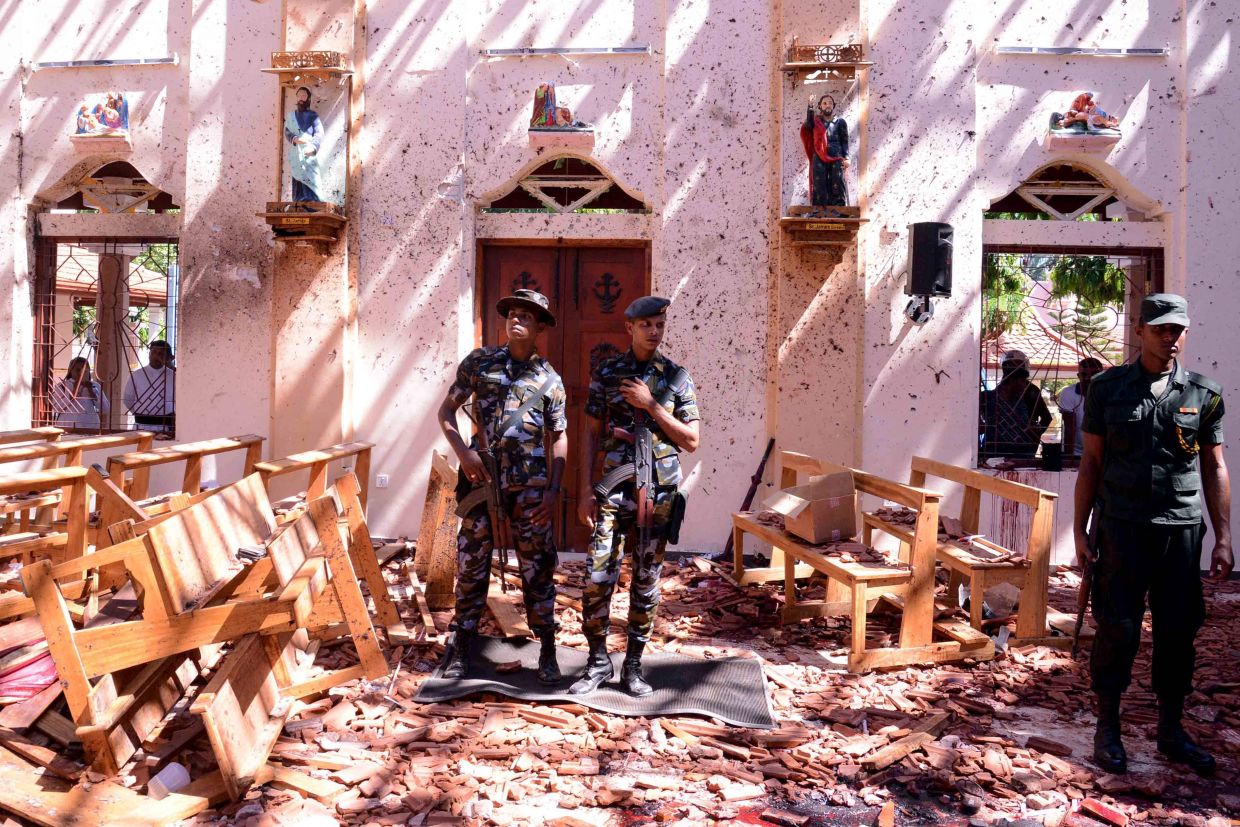
The arrest of Major General Suresh Sallay in February represents one of the most extraordinary reversals in Sri Lanka's recent political history. Once celebrated as a counterterrorism expert who addressed audiences at the Pentagon and the United Nations, the retired military officer now languishes in detention accused by his own government of masterminding the deadliest terrorist attack against civilians in the island nation's history. With his court hearing scheduled for Friday, Sallay maintains his innocence while the government continues to build a case against him—a case that fundamentally challenges the official narrative surrounding the devastating events of April 21, 2019.
On that Easter Sunday four years ago, coordinated suicide bombings across three luxury hotels and three churches in Colombo and Negombo killed 279 people and injured more than 500. The victims included 45 foreigners—tourists from Australia, Britain, China, Denmark, the Netherlands, Japan, and the United States among others—transforming what might have been categorised as a localised security failure into an international tragedy. At the time, Sri Lankan authorities blamed the attacks on seven Sunni Muslim suicide bombers acting in concert with the Islamic State group, a narrative that dominated global media coverage and shaped international responses to the crisis.
Yet serious questions about this account surfaced almost immediately. Intelligence agencies in neighbouring India had issued warnings prior to the attack that went unheeded, raising uncomfortable questions about whether the security establishment had simply failed to connect crucial dots. How did seven bombers coordinate such sophisticated simultaneous strikes across multiple locations without detection? Investigations into these inconsistencies have since spiralled into accusations of something far more sinister: that elements within Sri Lanka's own intelligence apparatus may have either enabled or actively orchestrated the attacks themselves.
The transformation from classified security concern into courtroom drama accelerated dramatically when Public Security Minister Ananda Wijepala made unprecedented public accusations in parliament. Wijepala declared that Sallay was the "mastermind" who "conspired with and strategically directed Islamic extremists until they carried out the attacks." According to the minister, just three weeks before the bombings, Sallay met with Muslim men to extract information about specific locations—a detail that, if substantiated, would place him at the operational centre of the conspiracy. Government inquiries have since uncovered verifiable links between the bombers and at least two state intelligence agencies, lending credence to theories of deep state involvement.
The shifting narrative points toward an extraordinary allegation: that the attacks were orchestrated not by external terrorist networks but by internal security actors working to engineer a political outcome. According to court investigators, the alleged plot aimed to create sufficient chaos and fear that voters would turn to strong-man leadership capable of crushing militant threats. The timing and beneficiary of this alleged plot appear clear. Gotabaya Rajapaksa, running for president in 2019 on a platform of security and national unity, won election shortly after the attacks. His administration had promised to restore order through hardline measures similar to those his family had employed against Tamil separatists during the 1983-2009 civil war.
British broadcaster Channel 4's 2023 investigation added another dimension to these allegations, reporting claims from a whistleblower that the attack was deliberately permitted to proceed to bolster Rajapaksa's electoral prospects. The argument, controversial though it remains, follows a logic that previous Rajapaksa governments had already acknowledged: the security establishment had deliberately cultivated relationships with Islamist militants during the civil war to gather intelligence on Tamil rebel movements. These handlers apparently believed they controlled their assets, but the logic unravels once the Easter Sunday attacks occurred—were the handlers truly incompetent, or were they complicit?
Sallay's trajectory before his arrest illustrates the complexity of modern Sri Lankan society and the deep fault lines running through its institutions. A Muslim man married to a Buddhist woman with a Catholic mother who has appealed to the Pope for his release, Sallay embodies the multicultural fabric of Sri Lanka's 22 million population, where Buddhists comprise nearly 70 percent, with Hindus, Muslims, and Christians sharing the remainder. His international credentials were impeccable. He had served in Sri Lankan diplomatic missions in France and Malaysia, studied at New Delhi's prestigious National Defence College, and trained at universities in India and Britain. His intellectual contributions to counterterrorism discourse were seemingly substantial—a 2003 Pentagon address titled "Suicide Terrorism and its Impact" and a 2023 United Nations speech warning of social media's role in radicalising vulnerable populations.
Yet these credentials did not insulate him from suspicion. Sallay prospered significantly under the Rajapaksa administrations, achieving the distinction of becoming the first military officer appointed to head the State Intelligence Service following Gotabaya Rajapaksa's 2019 election victory. This proximity to power may have ultimately undermined him. In 2020, Sallay himself ordered the arrest of Muslim human rights lawyer Hejaaz Hizbullah, whom he accused of being the Easter bombings' mastermind. Hizbullah spent 22 months in detention before authorities, unable to produce credible evidence, secured his release. The symmetry is striking and troubling: an accusation made without substantiation, followed by incarceration without charges, a pattern now repeating with Sallay himself as the accused.
For Malaysian readers, the implications of Sri Lanka's unfolding tragedy merit careful attention. The island nation's descent into accusations of state-orchestrated terrorism reflects the vulnerability of security institutions when political actors treat intelligence agencies as instruments of factional power rather than as guardians of national security. Malaysia's own experience with civil conflict, communal tensions, and security operations provides relevant cautionary lessons. The principle that security apparatuses must remain politically accountable yet professionally independent—neither politicised tools nor unaccountable shadows—remains as vital in Southeast Asia today as it has ever been.
Moreover, the Easter bombings and their aftermath illuminate how terrorism, whether real or alleged, becomes weaponised within domestic political struggles. If Sallay is indeed the mastermind, it would represent an unprecedented betrayal by a senior intelligence officer. But if the allegations prove baseless, Sallay's detention without charges demonstrates how the machinery of national security law can consume even those who help construct it. Without transparent judicial proceedings and credible evidence presented in open court, Sri Lanka risks allowing these doubts to fester indefinitely, corroding public trust in both security institutions and the legal system itself. The case carries broader significance for how Southeast Asian democracies navigate the tension between security imperatives and the rule of law.
Sallay's continued detention pending trial remains remarkable primarily for its political dimensions. He has not been formally charged with any offence despite months in custody, and he categorically denies any involvement in the bombings. The government has presented its allegations through parliamentary statements and court submissions, but the full evidentiary case remains opaque to public scrutiny. As his July hearing approaches, the questions multiplying around Sallay's arrest demand answers: What concrete evidence exists? How reliable are the sources implicating him? And what does his detention without charges signal about the state of rule of law in post-Rajapaksa Sri Lanka? The answers will resonate far beyond Colombo, shaping regional perceptions of how Southeast Asian states treat their own security institutions when political fortunes shift.

