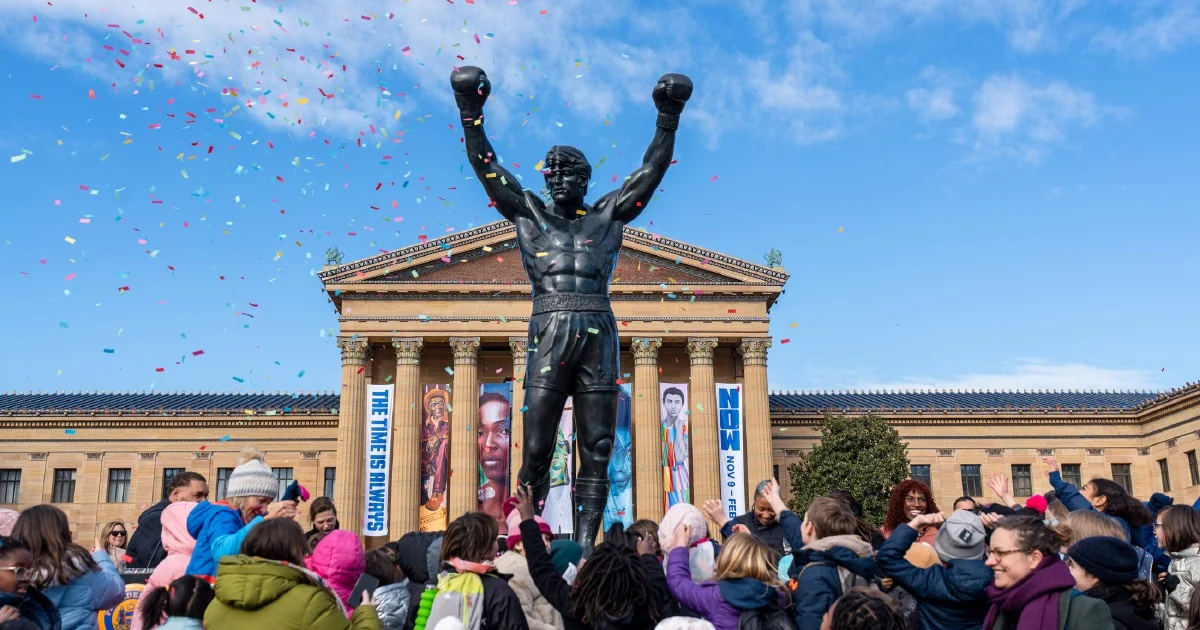
The City of Philadelphia issued a pointed advisory to France's World Cup contingent on Saturday, urging supporters to refrain from adorning or otherwise disturbing the beloved Rocky Balboa statue that stands at the base of the Philadelphia Museum of Art. The warning comes amid a growing pattern of sporting disappointments that have befallen national teams whose fans have previously dressed the monument in their colours.
Philadelphia's Rocky statue has transcended its origins as a film prop to become one of America's most recognisable cultural landmarks. The bronze sculpture, depicting the fictional boxer in his triumphant post-fight stance, draws millions of visitors annually and has evolved into a symbol of perseverance and athletic achievement. Yet in recent years, the monument has acquired an unexpected reputation—one that suggests calamity may follow those who attempt to claim it as their own through costuming or decoration.
The phenomenon has not gone unnoticed by sporting observers and superstition-minded fans across the globe. Multiple international teams have experienced disappointing tournament performances in the weeks or months following incidents where their supporters dressed the statue in national colours or otherwise modified its appearance. While correlation does not necessarily imply causation, the frequency of these coincidences has been sufficient to capture public attention and spawn the notion of a genuine "Rocky curse."
For France, a nation with formidable World Cup credentials and aspirations in the current tournament, the timing of this warning carries particular significance. The French squad enters the competition as one of the tournament favourites, having established themselves as a dominant force in international football over the past decade. Any suggestion that superstitious factors might impede their progress—however unlikely such concerns may be from a rational standpoint—warrants serious consideration among the fan base.
The advisory represents an unusual instance of municipal authorities intervening in matters typically considered beyond the scope of official city governance. However, Philadelphia officials clearly recognised the symbolic importance of the statue to the city's identity and determined that protecting it from potential misadventure served the broader public interest. The message to French supporters was unmistakable: veneration of the monument should be appreciated from a respectful distance.
Sporting superstitions have long occupied a prominent place in the psychology of international competition. From players refusing to wash their clothes during winning streaks to teams adopting specific pre-match rituals, the borderline between logical strategy and magical thinking frequently blurs in the context of high-stakes athletics. World Cup tournaments, given their immense cultural significance and the enormous investment—emotional and otherwise—that supporters place in their national teams, create particularly fertile ground for superstitious beliefs to flourish.
The Rocky statue curse, whether genuine or merely coincidental, taps into deep psychological currents within supporter culture. It embodies the notion that certain actions carry consequences that extend beyond the immediate moment, and that seemingly insignificant gestures might influence outcomes in ways beyond conventional understanding. For fans already invested in their team's success and anxious about competition outcomes, such beliefs provide both a sense of agency and a framework through which to interpret disappointments.
From a Southeast Asian perspective, the French team's World Cup performance carries particular interest given the region's growing engagement with international football and the substantial expatriate communities from various European nations. The broader question of how cultural symbols become embedded with sporting mythology also resonates across the region, where football traditions frequently intersect with local beliefs and customs.
The warning itself serves multiple functions beyond its literal advisory purpose. It generates media attention and keeps the Rocky statue in the public consciousness during a major international sporting event. For Philadelphia, the notice reinforces the monument's status as a protected civic treasure while simultaneously acknowledging its role within global sporting culture. For France's supporters, the caution injects an element of narrative tension into their World Cup campaign—one that exists independent of tactical considerations or player performance.
Whether French fans heed the warning remains to be seen. Some supporters may view the advisory as a lighthearted caution to be navigated with good humour, while others might take the purported curse with genuine seriousness. The distinction may ultimately prove immaterial, as the true determinant of France's World Cup success will almost certainly rest upon the familiar variables of player fitness, tactical execution, and mental resilience rather than the conditions in which the Rocky statue remains during the tournament.
Nevertheless, the episode illustrates how sporting events create moments where rational calculation and irrational belief converge, and where cities, teams, and fans all contribute to the mythology that transforms athletic competition into something approaching collective cultural ritual. Whether one regards the Rocky curse as genuine supernatural influence or merely a convenient narrative device, its existence in the contemporary sporting imagination remains undeniable.

