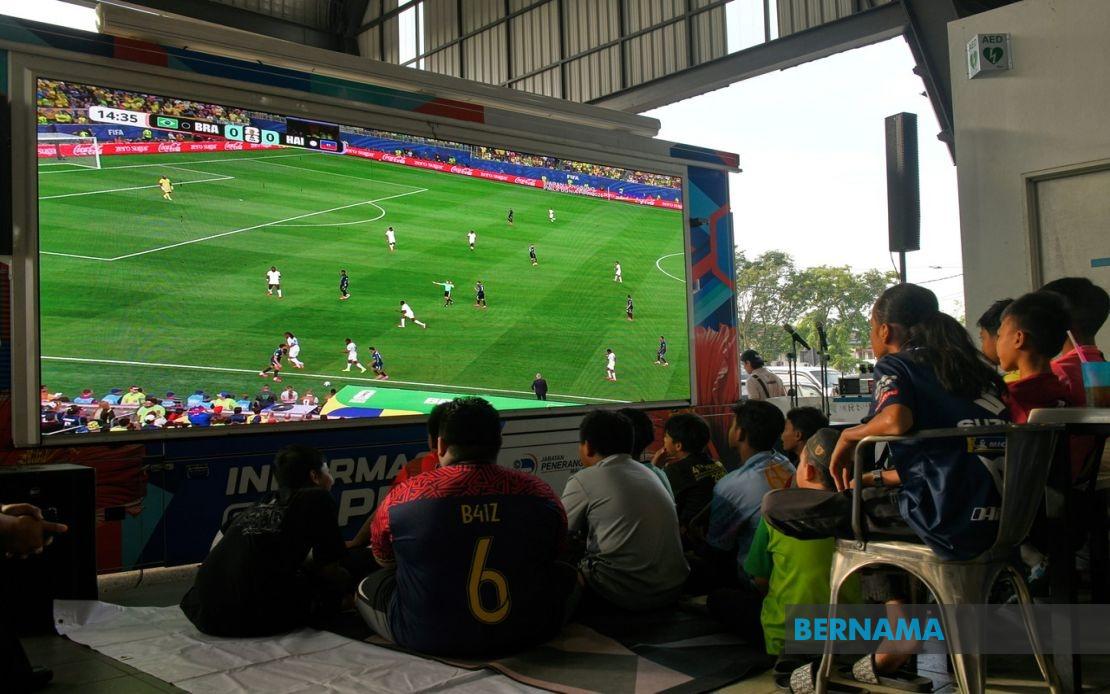
Communications Minister Datuk Fahmi Fadzil has highlighted the tangible benefits of the government's decision to provide free streaming of 2026 FIFA World Cup matches through Radio Televisyen Malaysia and Unifi TV, noting enthusiastic uptake among traders and cost-conscious consumers. The initiative represents a departure from previous tournaments where expensive pay-per-view licensing arrangements forced food establishment owners to absorb significant broadcast fees or pass costs to patrons.
The free broadcast model has resonated strongly within Malaysia's food and beverage sector, according to feedback the minister received from the Malaysian Muslim Restaurant Owners Association. Representatives from this significant business constituency emphasised that the savings generated through free access represent meaningful relief at a time when operational margins remain pressured by various external factors. One trader shared that this marks the first occasion in over twenty years that he can legally show World Cup content without incurring substantial licensing payments, underscoring just how significant a departure this policy represents from historical practice.
The availability of multiple viewing channels—RTM, the RTMKlik digital platform, and Unifi TV—ensures accessibility across different demographic groups and technological capabilities. This multi-platform approach reflects deliberate government consideration of equity, ensuring that rural communities with terrestrial television access, urban dwellers with broadband subscriptions, and households with bundled telecommunications packages can all participate without financial barriers. For restaurant operators, the elimination of costly broadcasting rights allows them to reinvest savings into product quality, staff wages, or customer experience enhancements that might otherwise prove impossible.
Fahmi's visit to the Seberang Jaya Public Market in Butterworth was characterised by direct engagement with both traders and consumers, an approach that generated valuable ground-level intelligence on current economic pressures affecting ordinary Malaysians. By watching the Brazil versus Haiti match alongside market patrons, the minister obtained unfiltered perspective on how ordinary citizens experience economic challenges and government initiatives. This hands-on methodology enabled him to gather specific concerns that traders wished escalated to higher government levels.
The economic headwinds facing Malaysian businesses, particularly in the food sector, extend beyond traditional operational costs. Traders highlighted concerns regarding rising commodity prices linked to geopolitical instability, specifically conflict in West Asia, which has driven up import costs for certain essential goods and ingredients. These inflationary pressures have compressed profit margins for many small and medium-sized enterprises that lack the scale to absorb increased input costs or negotiate favourable supplier contracts. The free World Cup broadcast initiative, while modest in scope, represents one concrete way government can ease business pressures without requiring new appropriations or regulatory changes.
Fahmi emphasised that this initiative carries strategic importance for the hospitality sector beyond mere cost savings. Free broadcast access potentially attracts additional foot traffic to food establishments, as consumers seeking affordable entertainment options congregate at venues offering World Cup viewing. This multiplier effect means that restaurants and food courts benefit not only from reduced licensing expenses but potentially from increased customer volumes during tournament matches, particularly high-profile fixtures involving major football nations. The economic stimulus generated through increased patronage could outweigh the original licensing costs traders previously shouldered.
The minister's suggestion that more elected representatives should spend time observing ground-level business conditions reflects recognition that policy decisions often unfold without adequate understanding of their practical implementation and lived experience. Direct ministerial and parliamentary engagement with traders provides windows into problems that might escape formal bureaucratic reporting channels. Such visibility also sends important political signals to business communities that their concerns receive high-level attention, potentially improving policy responsiveness and trust in government initiatives.
Malaysia's approach to World Cup broadcasting contrasts with regional practice in some neighbouring countries where commercial broadcasters retain exclusive rights and charge substantial fees. The government decision to partner with public broadcaster RTM and the telecommunications provider Unifi TV represents a deliberate choice to prioritise accessibility and equity over maximising licensing revenue. This policy orientation aligns with broader Malaysian goals of inclusive economic development and ensuring that cultural and sporting moments remain broadly accessible across social strata.
The implications of this initiative extend beyond the immediate 2026 World Cup tournament. It establishes precedent that major international sporting events can be made available to the public without necessarily requiring consumers or businesses to bear prohibitive costs. Should this model prove durable and sustainable, it could influence government approaches to broadcasting rights for other significant events, potentially creating expectations around equitable public access to major sports competitions and cultural moments. The success or failure of this initiative may shape Malaysian telecommunications and media policy discussions for years ahead.
Fahmi's commitment to conveying trader concerns to Prime Minister Datuk Seri Anwar Ibrahim and Penang Chief Minister Chow Kon Yeow represents a channel through which ground-level economic pressures can inform higher-level policy deliberations. The interconnected nature of Malaysian federal and state governance means that solutions to problems affecting traders often require coordinated action across multiple administrative levels. By serving as a conduit between business communities and senior leadership, Fahmi's ministry positions itself as responsive to constituent needs and engaged with real-world economic challenges beyond purely telecommunications sector concerns.

