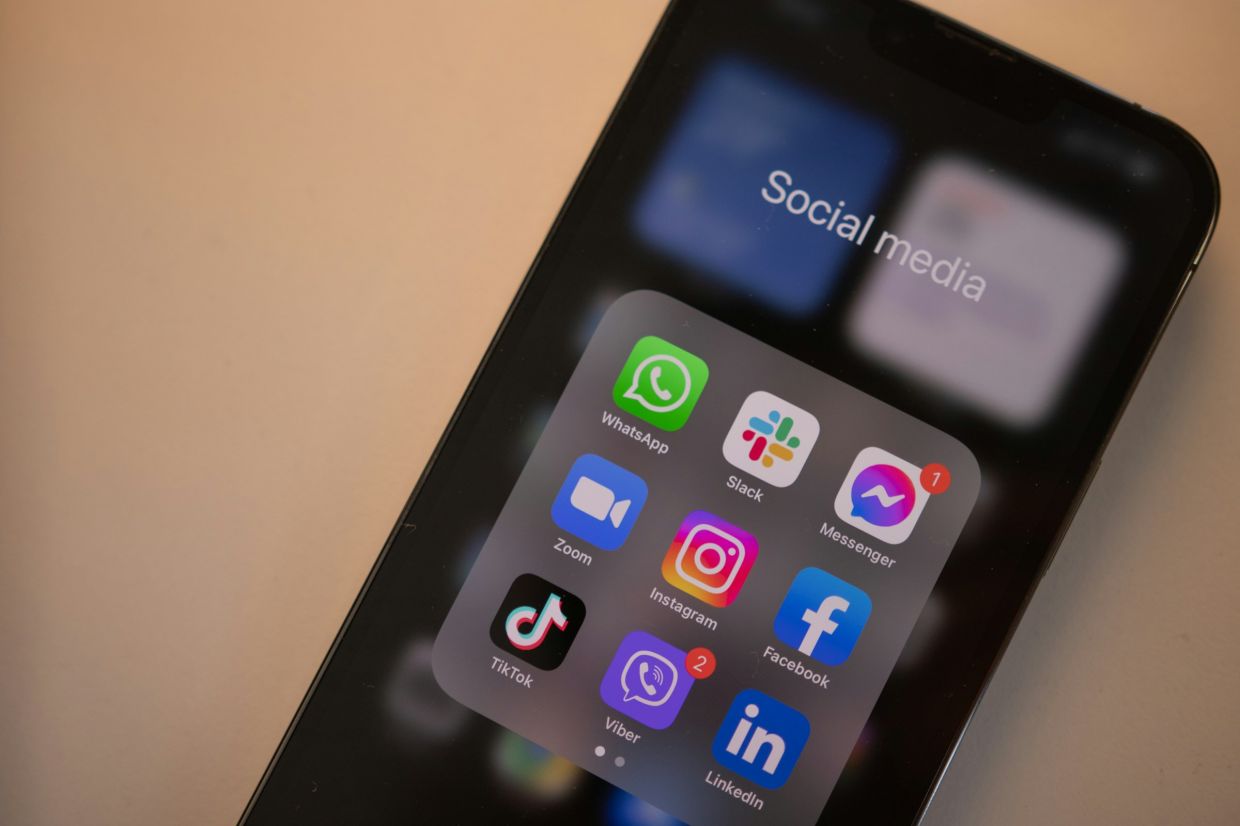
France's Constitutional Council has overturned the country's pioneering attempt to ban social media for children under 15, delivering a significant legal setback to President Emmanuel Macron just months before he leaves office. The court ruled that key provisions of the legislation disproportionately restrict freedom of expression and communication, while simultaneously failing to establish adequate legal protections for those fundamental rights. The decision effectively halts one of the final marquee legislative achievements of Macron's presidency and forces the government back to the drawing board to devise an approach that survives constitutional scrutiny.
The ban was groundbreaking in European terms when the French Parliament passed it last month, making France the first EU member state to implement such a sweeping restriction on digital platforms for minors. The legislation had cleared both chambers of Parliament with backing from lawmakers across the political spectrum, reflecting broad concern about the documented harms of social media on developing adolescents. The measure went further than merely restricting platform access, also prohibiting mobile phone use in secondary schools—a secondary component designed to reduce digital distraction during the school day. Macron had positioned the ban as a flagship policy protecting vulnerable young people from algorithmic manipulation and addictive platform design.
The government had explicitly sought to implement the ban by September 2024, hoping to enforce it when schools reopened for the new academic year. However, French constitutional procedure required the Council to review whether the legislation harmonised with the French Constitution before it could take effect. This mandatory review, though procedurally standard, created an opening for legal challenges that ultimately proved fatal to the bill's current form. The timing compounded the political difficulty: with Macron scheduled to depart office in 2026, the window for implementing his signature youth protection policy has contracted significantly.
In response to the court's decision, Macron committed to pursuing the goal through alternative legal mechanisms, instructing Prime Minister Sébastien Lecornu to develop a revised proposal that would withstand constitutional examination. The President explicitly set spring as the target for launching a new initiative, indicating that his administration intends to move swiftly despite the setback. Macron's statement acknowledged the need to balance child protection with constitutional guarantees of expression rights, suggesting the revised approach would be more narrowly tailored than the blanket ban.
The government's challenge now lies in crafting restrictions that satisfy two competing pressures: the Council's insistence on safeguarding freedom of expression, and mounting public and political pressure to address digital harms. A narrower ban targeting specific age groups or platform categories, or one incorporating exemptions and appeal mechanisms, might satisfy constitutional objections while still advancing protective objectives. Alternatively, the government could pivot toward regulations requiring parental consent, age verification systems, or algorithmic transparency rather than outright prohibition.
The court's intervention reflects broader tensions between digital regulation and civil liberties across Europe. The EU itself has charted a course of regulating platform behaviour through the Digital Services Act and Digital Markets Act rather than banning services outright for demographic groups. France's attempt to diverge from this approach collided with constitutional protections that many legal scholars argue should not yield entirely to child safety concerns, however compelling. The Council's decision suggests that blanket bans face structural legal vulnerabilities in rights-respecting democracies.
For Malaysia and other Southeast Asian jurisdictions grappling with social media regulation, France's experience offers cautionary lessons about constitutional constraints on state action. Many countries in the region have contemplated similar restrictions, particularly following academic research documenting mental health risks and screen addiction among young users. However, the French constitutional court's reasoning highlights how restrictions framed as protective measures can nonetheless violate fundamental rights if they lack proportionality and adequate safeguards. Policymakers seeking to regulate youth access to platforms must anticipate that courts may require alternatives to outright prohibitions.
The broader geopolitical dimension matters too. France's initial legislative push positioned European democracies as actively defending children against what some characterise as predatory platform design originating in the United States and China. The constitutional court's intervention, while legally necessary, slightly blunts Europe's regulatory assertiveness on digital matters at a moment when transatlantic and technological competition remains intense. Other EU countries watching France's experience may conclude that comprehensive bans are constitutionally fragile, even if politically popular.
Macron's determination to achieve some form of ban before his presidency concludes suggests the French government will likely pursue a more carefully constructed regulatory framework rather than abandon child protection efforts. This could involve age-gated access requiring parental verification, platform design modifications limiting algorithmic amplification, or enhanced transparency requirements. The revised approach may prove more durable legally while potentially less transformative in practice than an outright prohibition.
The coming months will reveal whether France can engineer a middle path satisfying both constitutional courts and voters concerned about digital harms to youth. The Constitutional Council's decision, while legally sound, leaves unresolved the underlying policy question: how democracies should balance protecting children against platform risks while preserving the expression rights that digital access enables. That tension will define European digital policy for years ahead, with France's next move setting an important precedent for other nations confronting identical dilemmas.

