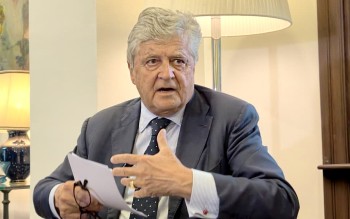
France has extended an offer to collaborate with Malaysia on civil nuclear energy development, contingent on Malaysian policymakers deciding to pursue the technology as part of broader decarbonisation efforts. French Minister Delegate for Foreign Trade and Economic Attractiveness Nicolas Forissier made the overture during his inaugural official visit to Kuala Lumpur, emphasising that any partnership would be built on mutual agreement and Malaysia's independent assessment of its energy needs.
Forissier's remarks come as Malaysia's government continues internal deliberations about nuclear power's role in its future energy portfolio. He characterised the ongoing national conversation as essential due diligence, noting that policymakers are actively studying the feasibility and implications of incorporating atomic power into Malaysia's electricity generation mix. The French envoy stressed that this consultative phase reflects responsible governance, allowing stakeholders and the public to understand the opportunities and responsibilities involved in such a significant energy transition.
France's credentials in nuclear energy are substantial and uncontested. The country derives roughly 60 per cent of its electricity from nuclear power stations, with the remainder sourced from renewable technologies including solar and wind installations. This energy portfolio has positioned France as one of Europe's lowest-carbon electricity producers and provides a practical foundation for the technical knowledge France could share with potential partner nations. Forissier indicated that France views nuclear energy as an essential tool for achieving deep decarbonisation targets, particularly in sectors where electrification alone cannot easily replace fossil fuels.
The French position reflects a broader strategic shift in global energy policy. As nations grapple with climate commitments and energy security, nuclear power has gained renewed credibility among policymakers previously sceptical of the technology. France's success in maintaining a large nuclear fleet while progressively increasing renewable energy contributions demonstrates that multiple decarbonisation pathways can coexist within a single national grid. For Malaysia, an equatorial nation with significant renewable energy potential through solar, hydroelectric, and biomass resources, the question is not whether to pursue renewables but how to optimally balance them with other low-carbon sources.
Crucially, Forissier framed any nuclear partnership as a long-term commitment spanning 50 to 80 years. This timeline reflects the capital intensity and operational longevity of nuclear infrastructure. Such a partnership would require substantial upfront investment, sustained technical capacity building, robust regulatory frameworks, and enduring political will across multiple electoral cycles. For Malaysia, accepting a nuclear partner like France would signal not merely a single infrastructure project but a fundamental reorientation of energy policy and governance structures.
Forissier's visit was accompanied by representatives from over 20 French companies, underscoring the commercial dimension of France's outreach. These firms span sectors including energy, aerospace, defence, and technology, reflecting French ambitions to deepen economic ties with Malaysia beyond nuclear energy alone. The breadth of business participation suggests that France views Malaysia as a strategically important market in Southeast Asia, where French influence and commercial presence remain secondary to that of other major powers.
The timing of France's nuclear overture aligns with accelerated high-level diplomatic engagement between Paris and Kuala Lumpur. The Malaysian Defence Minister's visit to the French aircraft carrier in March 2025 marked a notable expansion of bilateral military cooperation. Prime Minister Datuk Seri Anwar Ibrahim's recent visit to France on July 3 and 4, 2025, further cemented the warming relationship, creating political space for discussions on substantial infrastructure partnerships like nuclear energy development.
For Malaysia, considering nuclear energy involves weighing multiple technical, financial, and strategic factors. The country has consistently produced hydroelectric power and increasingly relies on liquefied natural gas imports and coal for baseload electricity. Solar energy capacity has expanded significantly, yet intermittency challenges persist. Nuclear energy could provide stable, carbon-free baseload power, but only following detailed cost-benefit analyses comparing it to alternatives such as large-scale energy storage, additional renewable capacity, and power grid integration technologies.
Regional considerations also matter. Southeast Asia has limited nuclear experience, with only Vietnam and Thailand having pursued civilian nuclear research and development programmes. Malaysia would face the challenge of building institutional capacity, establishing independent regulatory oversight, training a skilled workforce, and addressing public perception of nuclear technology. These prerequisites require years of groundwork before any power station could become operational. France's offer implicitly extends beyond hardware provision to encompass institutional capacity building.
The nuclear debate unfolding within Malaysia's government reflects global tensions between climate urgency and energy transition complexity. Decarbonisation cannot rely solely on renewables given their geographical and temporal variability in tropical regions. Yet nuclear development demands patient policy coherence and public acceptance. France's position—offering support without pressure—respects Malaysian sovereignty while signalling that partnerships are available should authorities determine nuclear energy serves national interests.
International precedent suggests that countries choosing the nuclear path typically require foreign partnership during the transition period. France's experience managing public concerns, regulatory frameworks, and technical operations positions it as a natural partner. However, Malaysia's decision will ultimately depend on comparative energy economics, political feasibility, and strategic alignment with broader regional energy cooperation initiatives involving ASEAN nations.
The French initiative represents an opportune moment for Malaysian policymakers to engage rigorously with nuclear energy's role in achieving the nation's climate and development goals. Whether Malaysia ultimately embraces nuclear power or continues relying on other decarbonisation technologies, the quality of present deliberations will shape energy security and climate outcomes for decades ahead.

