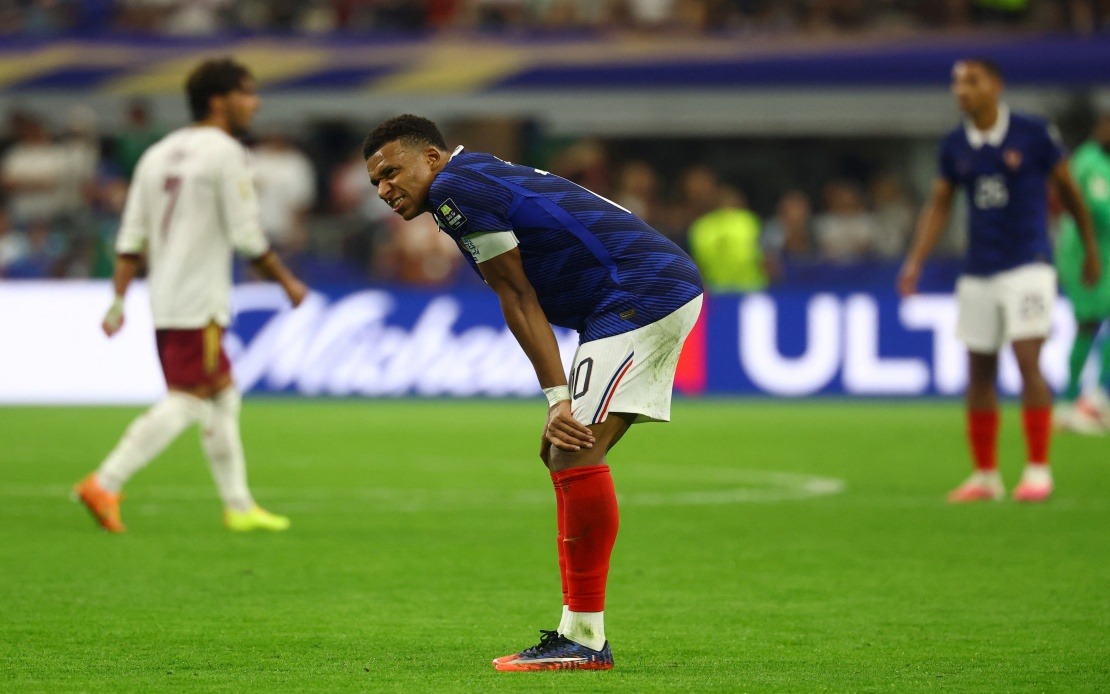
Tensions boiled over in major French cities on Tuesday evening after the national football team's elimination from the FIFA World Cup semifinals at the hands of Spain, resulting in mass arrests and scattered violence across multiple locations. According to the Paris Police Prefecture, the crackdown netted 141 detainees across the Paris metropolitan region alone, with an additional 20 arrests recorded in Lyon as authorities moved swiftly to suppress post-match disturbances that quickly spiralled beyond celebratory crowd control.
The incidents that prompted such an extensive law enforcement response centred predominantly on the deployment of firework mortars, which some individuals in the crowds reportedly aimed directly at police officers and emergency service personnel. This escalation from typical match-day exuberance into confrontational conduct marked a serious breach of public order, prompting riot police units to establish control and contain the disturbances before they could expand further through the urban centres. The focus on weaponised fireworks rather than random vandalism suggests that certain groups within the crowds came prepared for confrontation, rather than acting on spontaneous emotion alone.
Despite the scale of arrests and the aggressive nature of some conduct documented by law enforcement, the French authorities were fortunate in one respect: no serious injuries were reported from any of the incidents across either Paris or Lyon. Emergency services and police personnel, though targeted with projectiles, escaped without significant harm. This relative restraint—or perhaps good fortune—prevented what could have escalated into a far more serious public safety crisis, given the volatile environment created by national team disappointment at such a critical tournament stage.
The confrontations in the French capital demonstrated the particular intensity of football-related disorder in Paris, where crowds had gathered to witness the semifinal. Once Spain secured their 2-0 victory, the emotional weight of elimination channelled itself into public disorder concentrated in specific zones. The Paris Police Prefecture's detailed accounting of 141 arrests underscores the comprehensive nature of the security response, with officers working methodically to identify and apprehend those actively engaged in disruptive conduct rather than merely restricting the movements of passive bystanders.
Place Bellecour in Lyon witnessed its own dramatic shift in atmosphere as the match conclusion became clear. Several hundred spectators had assembled at this historic public square to follow the semifinal, transforming it into an informal gathering space for collective national engagement with the tournament. However, once the final whistle sounded and Spain's victory became certain, sections of the crowd fragmented into smaller groups animated by frustration and aggression. Projectiles, particularly fireworks, began flying toward police positions as riot units attempted to restore order and prevent the disturbances from spreading through surrounding neighbourhoods.
The age profile of those detained reveals an important demographic dimension to the disorder. Authorities reported that detainees were born between 2002 and 2011, indicating that the vast majority of those arrested were adolescents or young adults under the age of 22. This youthful composition suggests that the incidents may reflect broader patterns of youth engagement with football culture and public disorder, rather than representing the actions of hardened hooliganism networks. The relative immaturity of the arrested cohort raises questions about crowd dynamics, peer influence, and the amplifying effect of large gatherings on impulsive behaviour during emotionally charged sporting events.
Lyon authorities, managing their own response to disorder, arrested approximately 20 individuals—a substantially smaller number than their Parisian counterparts, yet still significant enough to warrant serious attention. The fact that no injuries or property damage of consequence was recorded in Lyon, despite the projectile exchanges, indicates either more effective police containment procedures or lower overall intensity of confrontation in that city. The contrast between arrest figures in the two cities may also reflect different crowd sizes, neighbourhood layouts, or variations in how law enforcement chose to respond to developing situations.
The incident highlights the relationship between national sporting disappointment and public order challenges in France, a country with deep football traditions and passionate support for the national team. World Cup performances carry significant emotional weight extending well beyond the stadium, particularly when elimination occurs in the later rounds when expectations have been elevated through successful earlier matches. The semifinal stage represents the threshold between genuine championship prospects and final elimination, making defeats at this point particularly difficult for supporters to process constructively.
For Malaysian observers and broader Southeast Asian readers, these events offer perspective on how football-related disorder manifests differently across cultural and geographical contexts. While Europe has developed extensive police protocols and legislative frameworks specifically addressing football-related violence, such incidents reveal that even well-resourced security responses cannot prevent all disorder when emotional intensity reaches sufficient levels. The prevalence of fireworks as weapons in this instance reflects the availability of pyrotechnic materials and the particular tactics adopted within European football disorder culture—dynamics that may differ considerably in Southeast Asian contexts where sporting passions run equally high but may express themselves through different mechanisms.

