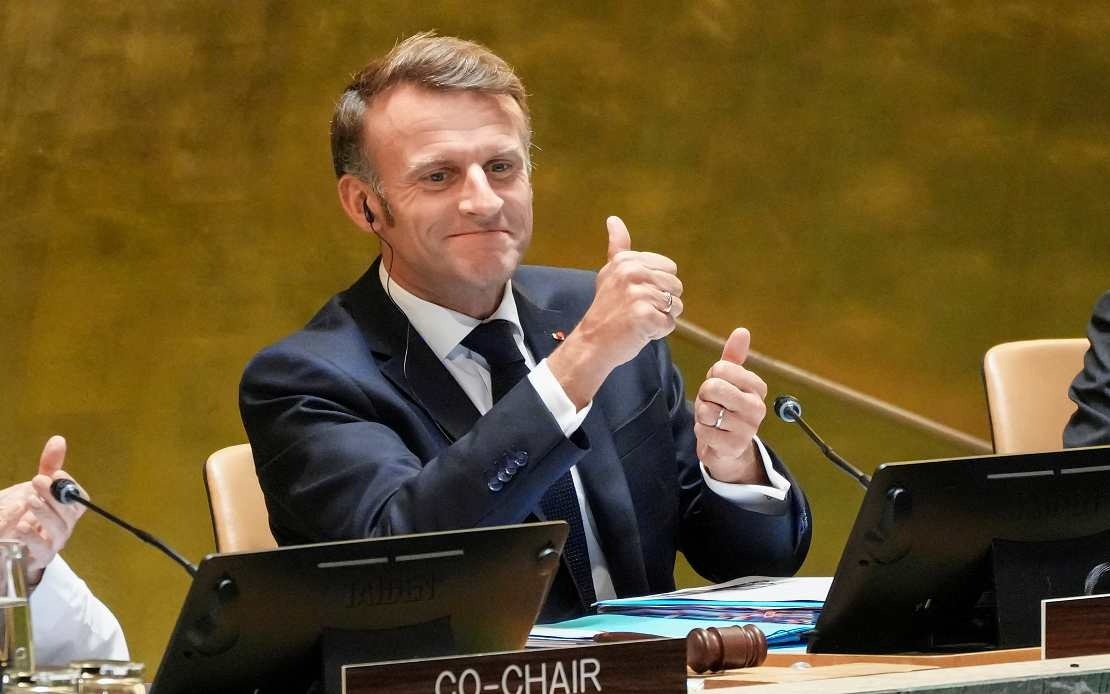
France is substantially reinforcing its border security infrastructure along the Spanish frontier, responding to escalating migration pressures that have destabilised the Spanish exclave of Ceuta in North Africa. The French government's decision to tighten controls represents a coordinated response to cross-border movement that European capitals have struggled to manage in recent years. President Emmanuel Macron has directed Interior Minister Laurent Nuñez to implement heightened screening procedures with immediate effect, signalling the seriousness with which Paris is treating the situation unfolding across the Pyrenees.
The crisis in Ceuta, Spain's strategically located territory on the Moroccan coast, has forced French authorities into direct action despite the considerable diplomatic and logistical demands such measures entail. Ceuta's geographical position makes it a natural transit point for individuals attempting to reach Europe from North Africa, and the recent surge in arrivals has created pressure that extends beyond Spanish borders. France's administrative machinery, through the Élysée Palace, has made clear that this situation demands urgent bilateral engagement with both Madrid and Rabat. Macron has publicly committed French resources to assist Spain in managing the humanitarian and security dimensions of this challenge, framing the issue as a shared European responsibility rather than a purely Spanish problem.
Interior Minister Nuñez outlined the scope of France's deployment on Thursday evening, initiating preparations that commenced from Saturday. The mobilisation represents one of Europe's more substantial recent efforts to reinforce a single border section, reflecting genuine concern about the potential for uncontrolled movement into French territory. The 334 police officers and gendarmes being activated will focus on systematic document verification and identity checks, creating multiple screening layers that extend beyond the immediate frontier. This staffing surge demonstrates France's commitment to preventing secondary migration flows, whereby individuals arriving in Spain might subsequently attempt to enter France seeking better economic prospects or to reconnect with established migrant communities.
France's Directorate General for Border Police has committed its rapid intervention unit, traditionally deployed along the Italian frontier where migration pressures have historically run high, to the Spanish operation. This versatile force comprises personnel from multiple agencies including national police, gendarmerie, customs officials and armed soldiers from the counter-terrorism unit Sentinelle. The inter-agency composition reflects modern border management philosophy, which recognises that migration control requires coordinated expertise spanning law enforcement, intelligence gathering and security operations. Transferring this unit from Italy indicates French policymakers view the Spanish situation as requiring comparable intensity of response to the Mediterranean route that has dominated European migration discourse for over a decade.
Airborne surveillance represents a significant dimension of France's enhanced border posture. Three dedicated aircraft will conduct regular reconnaissance flights along the frontier, supplemented by drone operations that provide persistent overhead monitoring with minimal personnel requirements. Such aerial assets allow French authorities to detect movement across terrain that ground patrols might miss, particularly in remote mountain regions where informal crossing points frequently develop. The deployment reflects advances in border technology that have become increasingly sophisticated, enabling real-time tracking and coordination that was impossible during earlier migration crises.
French railway authorities will increase patrols along the trans-Pyrenean rail corridor linking Spain and France, recognising that many migrants utilise passenger trains as part of onward journeys beyond Spain. Trains represent attractive transit options because they operate on established schedules with numerous boarding points, making individual identification more challenging than vehicle-based crossings. Enhanced railway security aims to disrupt this transit methodology, though border officials acknowledge such measures typically redirect rather than eliminate irregular movement patterns. The coordination between frontier controls, aerial surveillance, and railway monitoring reflects integrated security thinking that acknowledges migrants' adaptive behaviour.
France's diplomatic engagement with Spanish and Moroccan authorities demonstrates recognition that border enforcement alone cannot resolve underlying drivers of migration from North Africa. Both Paris and Madrid maintain significant strategic interests in Morocco, ranging from defence cooperation to economic relationships, giving weight to how migration questions are negotiated. France's consultations presumably address not only immediate security responses but longer-term burden-sharing arrangements and development initiatives that might reduce the desperation driving individuals northward. Such diplomatic dimensions often remain invisible to public discourse focused on enforcement hardware, yet they fundamentally shape policy sustainability.
Macron's public messaging through social media platform X served dual purposes—demonstrating decisive leadership to French domestic audiences concerned about border security, while simultaneously projecting solidarity with Spain's government. This rhetorical framing prevents migration from becoming a divisive bilateral issue, instead positioning it as a shared European challenge requiring coordinated response. French political discourse around migration remains particularly sensitive following years of electoral gains by far-right parties capitalising on border security anxieties. Macron's visible commitment to enforcement measures addresses these political sensitivities while maintaining France's liberal international positioning on refugee and asylum matters.
The broader European context underscores why Ceuta's migration surge resonates beyond Franco-Spanish relations. Schengen zone arrangements establishing border-free movement across much of Europe mean that migrants successfully entering France can subsequently reach Germany, Belgium, or Scandinavia relatively freely. This interconnected system creates incentive structures whereby countries sharing external borders bear disproportionate initial responsibility for controlling irregular crossings, generating periodic friction within European Union frameworks. France's response to Ceuta therefore represents not merely bilateral management but a strategic effort to maintain the integrity of Schengen arrangements that underpin European integration.
For Southeast Asian observers, France's border mobilisation illustrates how wealthy developed nations increasingly employ comprehensive technological and personnel-intensive approaches to migration management, deploying resources that developing countries in the region cannot match. ASEAN nations managing their own migration pressures lack equivalent financial capacity for drone surveillance, multi-agency rapid response units, or dedicated railway patrols. Yet the fundamental challenge remains universal—balancing humanitarian obligations with sovereignty concerns and public security considerations. France's Ceuta response will likely influence European policy discussions affecting Southeast Asian migrants seeking opportunities within the EU, potentially tightening pathways that currently exist through established networks.

