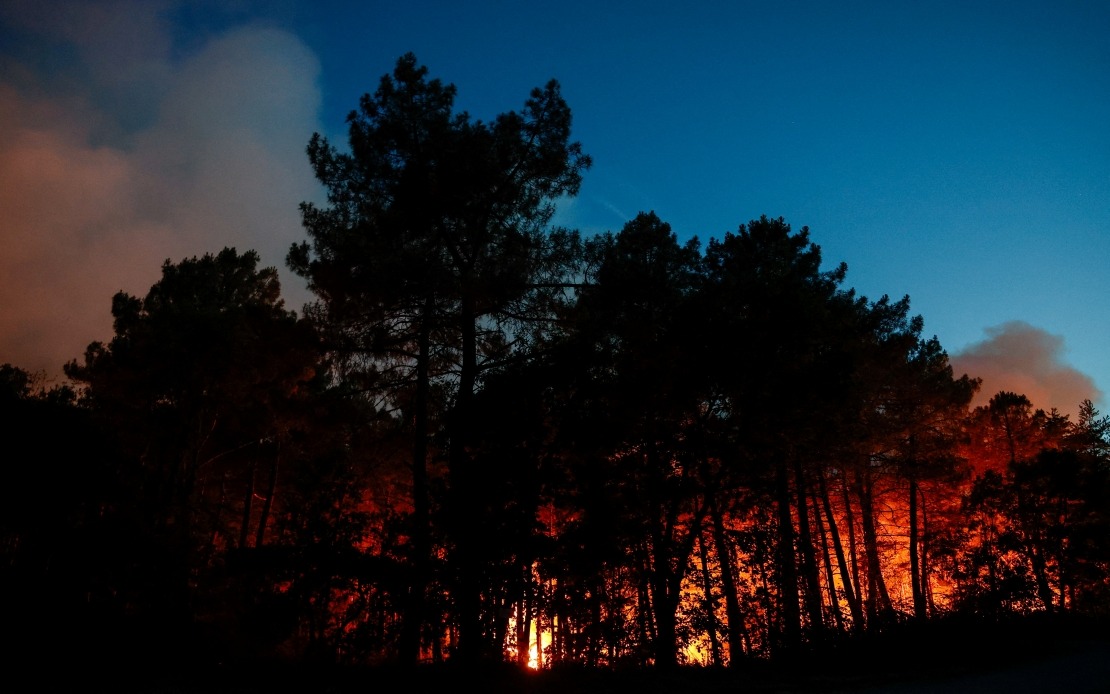
France is grappling with an exceptionally severe wildfire season, having lost 119,000 hectares of forest and vegetation to flames since the beginning of the year, according to Interior Minister Laurent Nunez. The scale of destruction underscores the magnitude of environmental and safety challenges confronting the nation as summer temperatures persist and weather patterns continue to favour rapid fire spread across susceptible regions.
The statistics paint a stark picture of the wildfire emergency unfolding across French territory. Authorities have documented 14,320 separate fire incidents since January, with the pace of ignitions showing no signs of abating. On Friday alone, firefighting personnel responded to 25 major blazes demanding substantial operational resources and coordinated emergency response. This frequency of large fires represents an extraordinary burden on national fire services and civil protection infrastructure, stretching personnel and equipment to their limits as multiple simultaneous incidents demand attention.
The Var department on the Mediterranean coast has emerged as a particular flashpoint for uncontrolled fire activity. A major wildfire reignited on Friday, consuming an additional 1,500 hectares and forcing the evacuation of several communities in the vicinity. The department, along with southern Corsica, has been placed under the highest warning classification of "very severe," indicating that environmental conditions favour rapid fire development and that emergency services are operating at maximum alert status. The reactivation of previously contained fires demonstrates the unpredictable nature of wildfire behaviour when atmospheric and ground conditions remain conducive to combustion.
Minister Nunez identified the persistent underlying factors driving the exceptional fire season, emphasising that despite occasional increases in regional humidity, the fundamental fire risk environment remains dangerously elevated. High ambient temperatures across much of France continue to drive evaporation of moisture from vegetation and soil surfaces. The widespread desiccation of vegetation means that any ignition source—whether natural or human-caused—can rapidly develop into a significant fire event capable of spreading across substantial distances before ground crews can establish containment measures.
Geographic vulnerability is concentrated in France's most climatically stressed regions. The Mediterranean coastline remains under intense threat, reflecting the characteristic fire season patterns of southern European zones. The Rhone Valley, a major geographical corridor running through central France, faces elevated risk from its Mediterranean influences. Additionally, portions of western France have entered dangerous fire conditions, suggesting that the threat extends beyond the traditionally high-risk Mediterranean belt. This broader geographical exposure multiplies the logistical challenges facing emergency coordinators attempting to maintain adequate response capacity across dispersed regions.
French authorities have marshalled substantial firefighting resources to combat the ongoing crisis. Approximately 1,500 additional firefighters were deployed overnight to the Var region following intensive aerial operations conducted throughout daylight hours. The nation has maintained maximum deployment of all available aerial firefighting assets—including water-bombing helicopters and fixed-wing aircraft—demonstrating commitment to overwhelming the fire threat through concentrated aerial suppression. An estimated 65 interdepartmental firefighter reinforcement columns have been mobilised nationwide, though this represents a reduction from the 72 columns deployed at the peak of recent operations.
The operational tempo has necessitated a strategic approach to personnel management. Some firefighting units have been temporarily withdrawn from active deployment to allow crews to rest and recover from the physical and psychological demands of extended wildfire operations. However, the withdrawal remains fluid, with units capable of rapid reactivation should meteorological conditions deteriorate or new major fire incidents develop. This adaptive management reflects the reality that wildfire suppression represents an endurance test requiring sustained effort across weeks or months of challenging working conditions.
Law enforcement agencies have taken action against the human element of fire causation. Security forces have completed 328 arrests connected to wildfire investigations, suggesting that a significant proportion of ignitions may be attributable to human behaviour rather than natural causes. This enforcement activity represents an attempt to deter both negligent and intentional fire-setting activities that contribute to the overall fire load affecting the nation. The investigation and prosecution efforts signal that authorities recognise the importance of addressing root causes of ignition alongside firefighting operations.
The implications of France's wildfire crisis extend beyond immediate suppression challenges. For Southeast Asian nations like Malaysia, the European experience offers instructive parallels regarding climate-driven fire risk management. Southeast Asia's own fire seasons—particularly in Indonesia and surrounding regions—have historically generated transboundary smoke affecting Malaysia and neighbouring countries. The scale of French operations and the degree of resource mobilisation required to address 119,000 hectares of burned territory in a single year provides a sobering reference point for assessing preparedness and response capacity in the region.
Minister Nunez's warning that conditions remain dangerous despite modest humidity improvements reflects the complex interplay of meteorological and hydrological factors determining fire risk. A temporary increase in atmospheric moisture in isolated regions provides limited relief when underlying soil moisture depletion and vegetation drying remain severe. This distinction between transient weather fluctuations and persistent structural fire risk conditions underscores the challenge of fire management in warming climates where baseline conditions shift toward increased flammability.
The continued emphasis on public vigilance and adherence to local authority directives indicates that authorities recognise the critical importance of community-level fire prevention. Evacuation orders, restrictions on outdoor activities involving potential ignition sources, and public awareness campaigns represent the preventive dimension of wildfire management. The urgency conveyed through the interior minister's statements reflects recognition that even with maximum firefighting resources deployed, preventing ignitions remains the most effective strategy for reducing fire impacts.
Looking forward, France's sustained high alert status and continued deployment of maximum civil protection resources suggest that authorities anticipate extended dangerous conditions extending through the remainder of summer. The preservation of aerial assets and firefighter columns in a state of readiness indicates that decision-makers judge the probability of additional major fire events as significant. The 119,000-hectare figure represents not a final tally but rather an intermediate count as the fire season continues, with subsequent reports likely revealing further increases in burned acreage and continued demands on emergency response systems.

