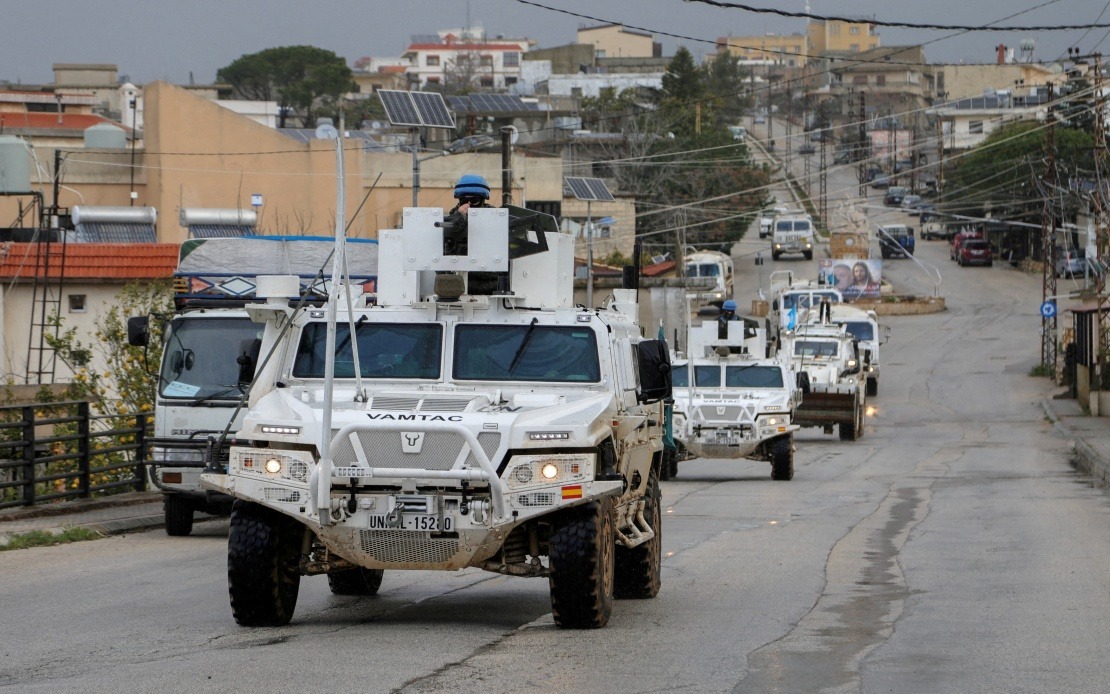
France and Italy have committed to building an international coalition aimed at buttressing Lebanon's stability once the United Nations Interim Force in Lebanon concludes its decades-long mandate at the end of this year. The two European powers unveiled the initiative during discussions in the French coastal city of Antibes, signalling a coordinated diplomatic push to maintain order in a strategically vital but chronically unstable nation.
French President Emmanuel Macron articulated the coalition's core objective: strengthening Lebanon's sovereignty and military capacity while working closely with the European Union and United Nations structures. The initiative reflects growing concern in Western capitals that abrupt withdrawal of international peacekeepers could trigger precisely the conditions that necessitated their deployment in the first place. With regional tensions perpetually simmering across the eastern Mediterranean and Middle East, the stakes of managing Lebanon's post-UNIFIL transition are considerable.
Italian Prime Minister Giorgia Meloni reinforced the rationale underpinning this proposal, characterising the potential security void as "extremely dangerous" without proper international engagement. Her concerns echo broader European anxieties about instability spilling across borders and destabilising neighbouring countries. Lebanon has long served as a flashpoint where rival regional powers contest influence, making the mechanics of any handover from UN forces to alternative arrangements critical to preventing renewed conflict.
Under Security Council Resolution 2790, UNIFIL's operations are mandated to terminate on December 31 of this year, with a full withdrawal timeline extending one year beyond that date. This compressed schedule demands rapid coordination among potential coalition members to ensure continuity of stabilisation efforts. The transition cannot be instantaneous; establishing credible alternative arrangements requires careful planning, resource commitments, and buy-in from Lebanese authorities themselves.
For Southeast Asian observers, the Franco-Italian initiative illuminates broader patterns in how established powers manage strategic withdrawals from troubled regions. Malaysia and other ASEAN nations have experienced comparable challenges when international peacekeeping missions wind down, particularly across the archipelago's maritime zones and disputed territories. The European approach—building successor coalitions rather than simply departing—offers instructive models for regional crisis management.
The proposed coalition's design reflects recognition that unilateral intervention proves ineffective in Lebanon's complex sectarian landscape. By involving multiple European nations, the arrangement distributes political risk and resources while reinforcing the multilateral character essential for legitimacy in the Lebanese context. This stands in contrast to historical periods when individual powers attempted domination, typically exacerbating rather than resolving underlying tensions.
Lebanon's institutional fragility renders external support architecturally important yet politically delicate. Any coalition must navigate the country's confessional political system, where power-sharing agreements constrain decision-making and external actors risk appearing to favour particular communities. Macron's emphasis on coordinating with both the United Nations and European Union suggests awareness of these complications, seeking to embed any coalition within established international frameworks rather than operating as an ad-hoc arrangement.
The timing of this announcement carries significance. With regional geopolitical competition intensifying across the Middle East and Mediterranean, the Franco-Italian initiative represents an attempt by established European powers to maintain strategic relevance and prevent vacuum-filling by less benign actors. It simultaneously reflects transatlantic continuity, as European security planning increasingly operates independently of American direction while remaining aligned on fundamental interests.
For Malaysia's strategic positioning, the European experience in Lebanon offers cautionary lessons about mission creep and open-ended commitments. However, it also demonstrates how structured multinational coalitions can provide more sustainable support frameworks than either unilateral intervention or complete disengagement. As Southeast Asia contemplates its own security architecture and involvement in regional stability operations, the Franco-Italian model merits careful study.
The coalition's success will ultimately depend on Lebanese political actors embracing the arrangement and international members maintaining sustained commitment despite competing domestic priorities. Neither condition is guaranteed. Nonetheless, by articulating a concrete plan for post-UNIFIL management rather than allowing drift toward instability, Macron and Meloni have signalled that Europe regards Lebanon's future as a legitimate European strategic concern—a positioning that underscores the interconnected nature of contemporary global security challenges and the persistence of European interests across the Mediterranean and Middle East regions.

