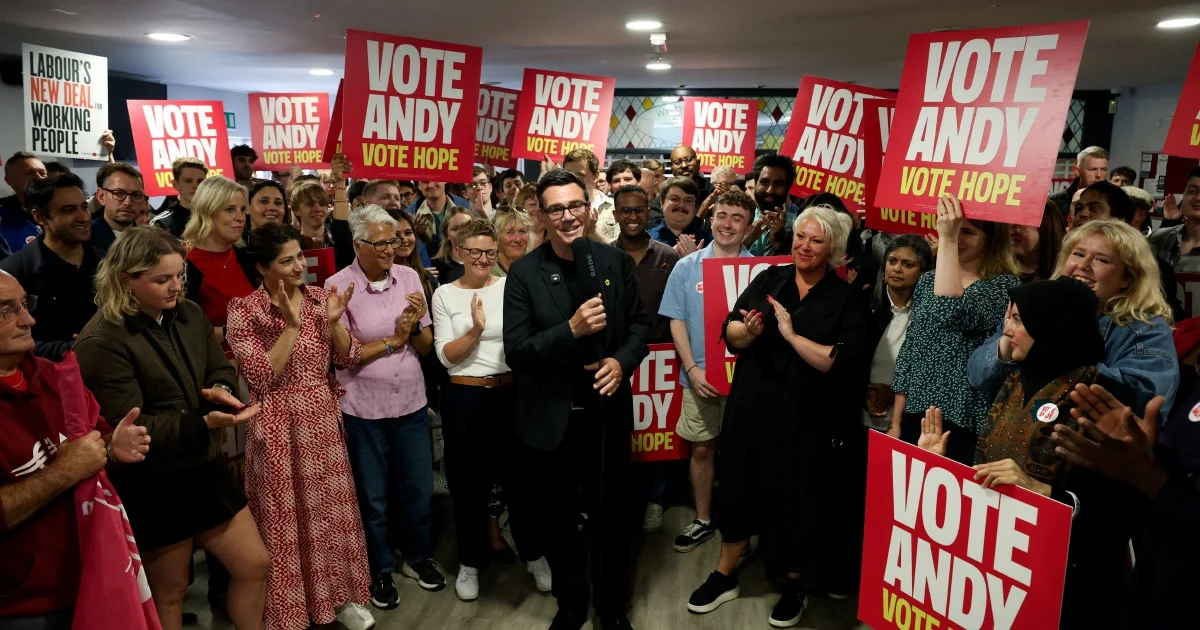
Andy Burnham's strategy to position himself as a potential successor to Prime Minister Keir Starmer may receive an unexpected boost from an intensifying power struggle within Britain's right-wing populist movement. Should the Labour politician successfully retain his Makerfield seat in Thursday's election, the victory could owe as much to his conservative opponents tearing into one another as to his own political standing with constituents. The fragmentation of the anti-establishment vote between competing populist forces represents a significant shift in British electoral dynamics, with implications that extend far beyond a single constituency.
The internal conflict within the right-wing populist camp reflects deeper ideological and strategic divisions that have been simmering for months. Rather than presenting a unified alternative to mainstream conservatism, these movements have become increasingly preoccupied with attacking each other, diverting resources and attention that might otherwise have been directed at Labour candidates. This intra-right warfare creates conditions where candidates like Burnham, despite potentially facing headwinds in their own party, can benefit from a splintered opposition that lacks coherent messaging or coordinated campaign machinery.
For Malaysian and Southeast Asian observers, this development offers instructive lessons about how political fragmentation can reshape electoral outcomes. In multi-party democracies across the region, similar patterns of vote-splitting have historically determined the balance of parliamentary power. The British situation demonstrates how even in established two-party systems, the emergence of populist challengers can create unexpected vulnerabilities for mainstream political forces, with consequences that ripple through the entire political landscape.
Burnham's position within the Labour Party has undergone significant evolution. Once a figure on the party's centre-left, his growing prominence in conversations about future leadership reflects both internal Labour dynamics and the party's broader repositioning after years in opposition. His potential path to the premiership depends not only on his ability to articulate a compelling vision for Britain's future but also on external factors beyond his direct control—including how effectively his rivals self-destruct through mutual antagonism.
The right-wing populist feud carries particular significance given how these movements have reshaped British politics since the Brexit referendum. Their earlier capacity to mobilise voters and challenge establishment narratives demonstrated genuine political power. However, their current trajectory suggests that without disciplined organisation and clear strategic direction, populist insurgencies can dissipate their energy through personality clashes and competing ego-driven power plays. This pattern has implications for populist movements globally, suggesting that anti-establishment sentiment alone proves insufficient for sustained political success.
Keir Starmer's position as sitting Prime Minister naturally positions him as Burnham's primary rival should the Labour leadership question emerge. However, the current electoral cycle and the dynamics of internal party politics suggest that Burnham's ascendancy depends on demonstrating both electoral viability and an ability to unite disparate elements within Labour. His Makerfield victory, potentially aided by right-wing vote fragmentation, would provide valuable momentum for such positioning, though it would not definitively settle the question of future Labour leadership.
The broader context of British politics reveals a electorate increasingly willing to abandon traditional party loyalties. This volatility creates openings for alternative political forces but also generates instability that can work against any particular candidate or movement. Burnham's potential beneficiary status from right-wing disarray does not guarantee his long-term political ascendancy, but it does illustrate how contemporary elections are shaped by complex interactions between multiple competing forces rather than simple head-to-head contests.
For understanding comparative political systems, the British case demonstrates how structural features of electoral competition interact with personality-driven politics. The feuding within right-wing populist circles reflects both substantive disagreements about policy direction and tactical disputes about who should claim leadership of anti-establishment sentiment. As these movements fragment, their former supporters may distribute themselves across multiple political options, potentially reshaping the overall partisan alignment.
Burnham's potential emergence as a leadership contender also reflects generational change within mainstream British politics. His background combining regional political experience with national profile positions him within a cohort of politicians seeking to bridge traditional Labour constituencies with broader electoral coalitions. Whether he can translate electoral success at the constituency level into viable claims for national leadership remains an open question that will likely occupy Labour strategists throughout the coming months.
The significance of Thursday's election extends beyond Makerfield's boundaries. The results will provide crucial data about how different voter segments respond to competing political appeals, how right-wing fragmentation affects overall electoral patterns, and how well Labour's broader electoral positioning resonates with the public. These findings will shape not only internal Labour dynamics but also broader strategic calculations for all major British political forces attempting to navigate an increasingly unpredictable electoral environment.