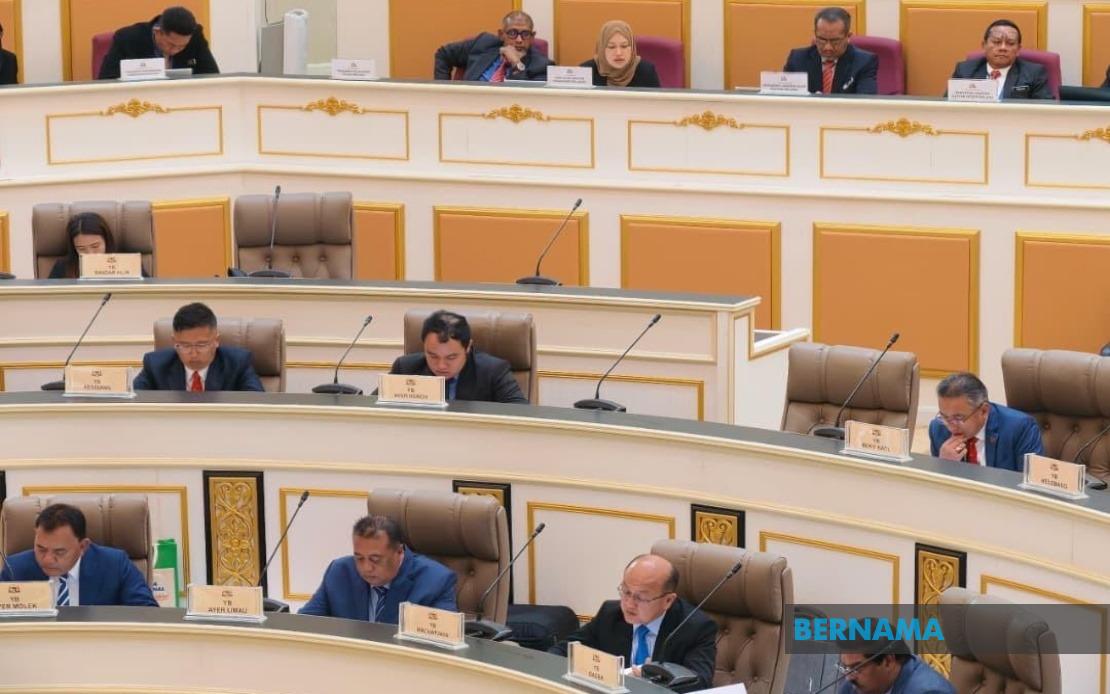
A significant political realignment unfolded in Melaka on July 15 when four Democratic Action Party assemblymen formally crossed the aisle to join the opposition benches in the State Legislative Assembly, marking a dramatic erosion of the Barisan Nasional-led government's parliamentary support. The relocation of Allex Seah Shoo Chin, Low Chee Leong, Leng Chau Yen, and Kerk Chee Yee came after they publicly withdrew backing for the state administration the previous day, citing principled objections to a constitutional amendment that the DAP contends undermines democratic norms.
The four assemblymen now sit alongside members of Perikatan Nasional and Independent lawmakers in the opposition section, a visible separation that underscores the deepening fracture within the governing coalition. Notably, Adly Zahari, the sole representative of Parti Amanah Negara and chairman of Melaka Pakatan Harapan, chose a different path by remaining in the government bloc rather than joining his DAP colleagues—a positioning that reflects internal disagreements within the opposition alliance about how to respond to the constitutional changes.
The precipitating event was Melaka's passage of amendments to the State Constitution that would permit the appointment of assemblymen rather than requiring all representatives to be elected. The DAP's objections to this mechanism appear rooted in a broader ideological commitment to electoral legitimacy and democratic representation principles that have long defined the party's political philosophy. Khoo Poay Tiong, the DAP's Melaka chairman, characterized the decision to withdraw as an expression of the party's fundamental opposition to what it characterizes as a violation of democratic and electoral principles, suggesting this was less a tactical maneuver and more a reflection of core party values.
Prime Minister Datuk Seri Anwar Ibrahim intervened on the matter, publicly urging Melaka DAP to reconsider their withdrawal timeline and preserve unity, arguing that attention should remain fixed on economic development and public welfare rather than internal coalition disputes. His appeal represented a significant attempt to salvage the ruling coalition, though ultimately unsuccessful in persuading the four assemblymen from proceeding with their planned departure. The fact that the Prime Minister felt compelled to make such a statement demonstrates the seriousness with which the federal leadership viewed the potential consequences of the defection.
The timing of these developments carries particular significance for Malaysia's political landscape, which has experienced considerable volatility in recent years marked by shifting coalitions and fluid parliamentary alignments. The Melaka situation exemplifies the fragility of consensus-based government, where ideological divisions within a nominally united coalition can trigger sudden fractures. For Malaysian observers, this incident reinforces questions about whether contemporary political arrangements can maintain stability when fundamental questions about the nature and quality of democracy are at stake.
From a governance perspective, the reduction in government assembly seats creates practical challenges for implementing policy and passing legislation without securing additional support from previously skeptical lawmakers or relying more heavily on other coalition partners. The Assembly Speaker, Datuk Ibrahim Durum, made a measured appeal for all representatives to maintain proper decorum and conduct themselves according to parliamentary standing orders—a procedural safeguard intended to ensure orderly debate despite the underlying political tensions.
The constitutional amendment itself represents a significant institutional shift in how Melaka's legislature would be composed, moving away from a purely elected assembly toward a hybrid model incorporating appointed members. Such changes typically generate controversy in Malaysian politics because they alter the fundamental compact between voters and their representatives, potentially diminishing the electoral principle that has underpinned democratic systems. The DAP's objection signals that not all ruling coalition partners shared enthusiasm for this institutional restructuring, revealing the limits of consensus within the governing arrangement.
For Southeast Asian observers monitoring Malaysia's democratic development, the episode illustrates how subnational legislatures sometimes become theaters where parties test different governance models and ideological commitments. Melaka's constitutional changes could theoretically serve as a blueprint for other states within Malaysia or inform debates about institutional design elsewhere in the region, making the DAP's opposition noteworthy for constituencies beyond Melaka itself.
The division within the Melaka opposition alliance, marked by Amanah's divergent response compared to DAP's swift withdrawal, reveals internal disagreements about strategy and principle within Pakatan Harapan structures. While the DAP prioritized principled opposition to what it saw as anti-democratic constitutional engineering, Amanah's continued support for the government suggests either different priorities or tactical calculations about maintaining influence within state administration. This disparity could shape future coalition dynamics and influence how Pakatan Harapan functions as a unified political force across Malaysia's fragmented electoral landscape.

