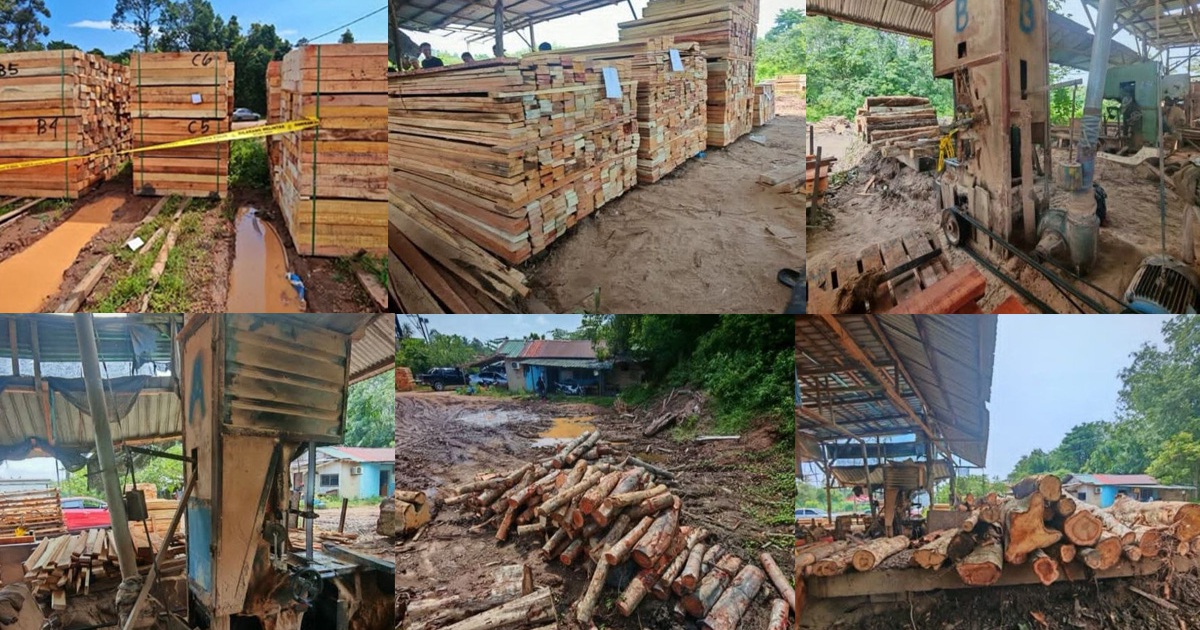
Authorities have intensified enforcement against illegal timber operations in Kelantan, with the arrest of four individuals operating an unlicensed sawmill in Kampung Bukit Kechik, Tanah Merah. The operation, which came to light during a coordinated raid, has raised fresh concerns about the prevalence of unregulated forestry-related activities across the state's rural hinterland.
The detainees include the sawmill proprietor and three workers engaged at the facility. The arrests mark part of a broader crackdown aimed at dismantling timber processing networks that operate without proper authorization from relevant environmental and forestry authorities. Such unlicensed operations have long posed enforcement challenges for Malaysian regulators, particularly in states like Kelantan where forest resources remain economically significant and logistical oversight can prove difficult.
Authorities seized approximately RM600,000 worth of assets during the operation, encompassing both processed timber stocks and heavy machinery used in the milling and processing workflow. The scale of confiscation indicates a substantial operation, suggesting the facility may have been functioning for a considerable period or processing significant volumes of raw material. The recovery of such substantial equipment underscores the capital intensity required to establish and maintain even unlicensed timber processing infrastructure.
The location in Kampung Bukit Kechik places the facility in a predominantly rural setting typical of timber-processing zones throughout the region. Such remoteness can facilitate illicit operations by limiting casual detection, though it also complicates logistics for both operators and enforcement authorities. The choice of such locations reflects the operational reality that unlicensed timber businesses frequently situate themselves away from urban monitoring, relying on road networks that penetrate agricultural and forested areas.
The raid reflects heightened regulatory vigilance regarding timber supply chains, an issue that has gained prominence within Malaysia's environmental governance framework. International scrutiny of illegal logging and timber trafficking has prompted domestic authorities to strengthen compliance mechanisms and enforcement capacity. The Kelantan operation demonstrates tangible progress in this direction, though the persistence of such facilities suggests enforcement remains an ongoing challenge requiring sustained resources and intelligence-gathering.
Unlicensed timber processing constitutes a multifaceted regulatory violation, encompassing breaches of forestry legislation, environmental protection statutes, and licensing requirements. The individuals detained face potential charges under relevant federal and state laws governing forest resources and business licensing. Investigations will likely determine whether the operation sourced timber legally but processed it without authorization, or whether the supply chain itself involved illegally harvested material—a distinction carrying significant legal implications.
The timber industry remains economically important for Kelantan and neighboring states, generating employment and contributing to state revenues through licensing fees and taxation. However, this economic significance creates incentives for illegal operators to circumvent regulatory frameworks, undercutting legitimate sawmill operators who invest in proper authorization and compliance infrastructure. The enforcement action thus serves broader interests in leveling competitive conditions and protecting the integrity of formal market participants.
Such enforcement operations typically involve coordinated planning between multiple agencies, including forest department officials, police, and potentially federal timber authorities. The successful execution of the raid and confiscation suggests effective inter-agency collaboration, though sustainability of such enforcement depends on consistent resource allocation and intelligence gathering. Rural enforcement capacity in Malaysia's Eastern states often faces constraints related to geography, staffing, and infrastructure, making coordinated operations particularly important.
The arrested individuals will undergo investigation to establish the precise nature of their violations and determine whether supply chain elements involved trafficking of illegally harvested timber. These investigations often reveal broader networks involving middlemen, transportation coordinators, and downstream buyers, meaning the immediate detentions may constitute entry points into larger regulatory inquiries. Such cascading investigations have proven instrumental in disrupting comprehensive illegal timber networks rather than addressing isolated operational instances.
For Malaysian stakeholders concerned with environmental governance and resource stewardship, the Kelantan operation reflects evolving enforcement capacity, though the ongoing existence of unlicensed facilities suggests substantial gaps remain between regulatory intent and operational reality across the state. Strengthening monitoring systems, particularly utilizing technology and community reporting mechanisms, could complement traditional enforcement approaches. Regional cooperation with neighboring states and federal coordination would further enhance capacity to address timber trafficking comprehensively.
The seizure of RM600,000 in assets represents significant disruption to the particular operation but signals broader market implications. Licensed processors compete with unregulated operators who avoid compliance costs, creating structural advantages for illegal facilities. The enforcement action removes a competitor to legitimate business, potentially benefiting licensed sawmill operators in the region who maintain proper licensing and operational standards throughout their supply chains.
The incident underscores persistent enforcement challenges within Malaysia's timber sector despite regulatory frameworks theoretically capable of controlling production and processing. Political will, resource allocation, and community engagement with reporting mechanisms determine practical effectiveness of such frameworks. Continued operations suggest either insufficient detection capacity or gaps in investigative follow-up after initial detection, both areas where Malaysian authorities have opportunities for systematic improvement in forest resource governance.

