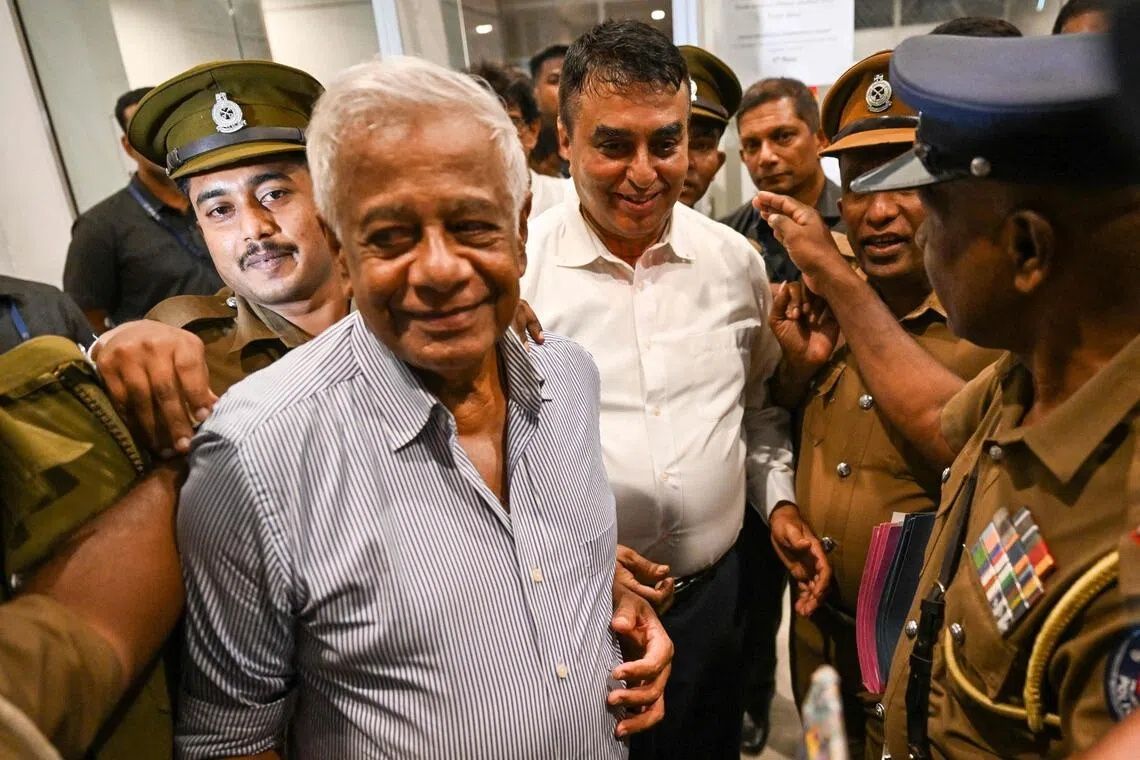
Two former Sri Lankan security officials have signalled their intention to challenge death sentences imposed for their failure to prevent the devastating 2019 Easter bombings, marking another twist in a case that has gripped the island nation for nearly five years. Hemasiri Fernando, the former defence ministry secretary, and Pujith Jayasundara, the country's former police inspector-general, received capital convictions from a three-judge panel at the Colombo High Court on Friday in a split 2-1 decision, with their legal team confirming Saturday they would pursue an appeal at the Supreme Court within the coming fortnight.
The coordinated attacks on April 21, 2019, remain one of South Asia's deadliest terrorist incidents in recent memory. Suicide bombers struck six locations across Sri Lanka's capital and coastal resort areas, detonating explosives at three Catholic churches during Easter Sunday services and three luxury hotels frequented by international travellers. The carnage claimed 279 lives, including 45 foreign nationals, whilst leaving more than 500 injured. Authorities attributed the violence to a homegrown Islamist extremist network, though the precise operational details and external connections remain subject to ongoing investigation and public debate.
Attorney Chaminda Athukorale, representing both men, emphasised the weakness of the prosecution's case in remarks to international media, highlighting that one judge's dissenting opinion concluded the accused possessed neither motive nor verifiable links to those who actually carried out the bombings. This observation strikes at the heart of culpability questions that have defined the legal proceedings: whether failing to act on security intelligence constitutes a criminal conspiracy deserving of capital punishment, or represents an administrative dereliction more appropriately addressed through lesser penalties.
The case has navigated a tortuous legal path marked by reversals and procedural complications. In February 2022, a different High Court bench discharged both men, determining insufficient evidence existed to prosecute them for murder or complicity in the attacks. The state's subsequent appeal to the Supreme Court overturned this acquittal, ordering a retrial that culminated in this week's convictions. This judicial back-and-forth has extended their ordeal and kept the nation's attention fixed on questions of institutional accountability in the security establishment.
Central to the proceedings was evidence that India's intelligence services provided specific warning to Sri Lankan authorities on April 4, 2019—seventeen days before the attacks—of credible threats of suicide bombings by Islamist extremists. Despite this alert, the state failed to implement preventive measures or heighten security readiness at vulnerable sites. The court heard testimony regarding the precise nature of these warnings and the reasoning behind the security establishment's apparent inaction, though interpretations of culpability diverged sharply between the majority and dissenting judges.
Sri Lanka maintains an unofficial but consistent de facto moratorium on capital punishment, having abstained from executing any death-row prisoner since 1976, nearly fifty years ago. Current government figures indicate 817 individuals remain under sentence of death, with judicial and executive practice typically commuting these sentences to life imprisonment. This historical context suggests Fernando and Jayasundara, now aged 76 and 66 respectively, face unlikely prospect of facing the gallows despite the formal verdicts, though the death sentences carry profound implications for their reputations, liberty, and remaining years.
Both men are currently detained in maximum-security prison facilities in Colombo, where conditions and treatment of high-profile former officials remain matters of public and international concern. The incarceration represents a dramatic fall from their positions of considerable authority and responsibility within the state apparatus. Fernando had overseen defence policy during a critical juncture in Sri Lanka's history, whilst Jayasundara had commanded the nation's police force, Sri Lanka's primary civilian law-enforcement agency.
Beyond the criminal proceedings, the two former officials face additional financial liability stemming from civil litigation by bombing survivors. A separate High Court ruling ordered Fernando and Jayasundara to compensate affected parties to the tune of 125 million rupees, equivalent to approximately US$372,464, acknowledging their institutional responsibility for the security failures that enabled the tragedy. This civil judgment operates independently of the criminal convictions and will persist regardless of the Supreme Court's eventual decision on the appeal.
The case reflects broader tensions within Sri Lankan society regarding accountability for institutional failures, the appropriate scope of criminal liability for officials, and the relationship between political authority and legal process. The split judicial opinion, with one judge dissenting from the death sentences, suggests substantive jurisprudential disagreement about whether security officials can or should bear criminal responsibility for attacks they did not orchestrate or directly facilitate. As the matter proceeds to Sri Lanka's highest court, the nation waits to determine whether the convictions withstand appellate scrutiny or whether the lower court's initial acquittal represents the legally sounder resolution of contested facts and applicable law.

