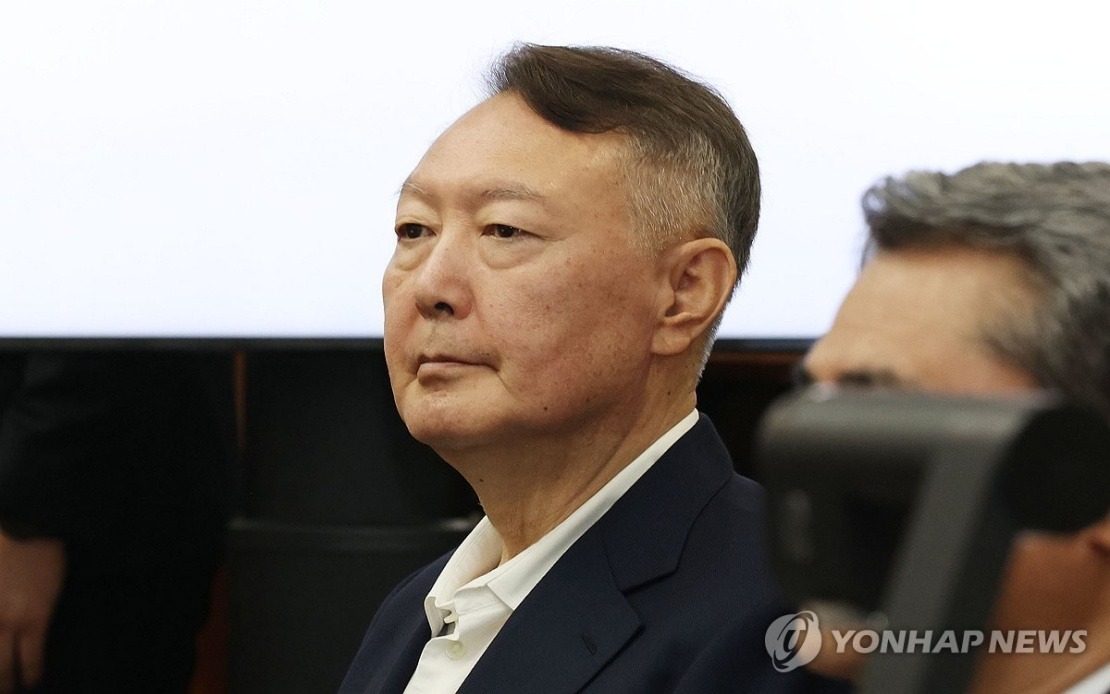
A Seoul district court has delivered a significant legal blow to former President Yoon Suk Yeol, sentencing him to two years imprisonment after determining that he unlawfully accepted political contributions disguised as complimentary opinion polls. The conviction marks another chapter in the former leader's legal troubles, which have intensified since his departure from office and his subsequent attempt to impose martial law in December 2024.
The Seoul Central District Court found Yoon partially culpable on charges of violating the Political Funds Act, establishing that the former president had received fourteen opinion surveys valued in aggregate at around 270 million won (approximately US$180,100) from political operative Myung Tae-kyun without payment. These polls were provided over a thirteen-month span from April 2021 through March 2022, during a crucial period when Yoon was positioning himself as a presidential contender and building political momentum ahead of his successful 2022 election campaign.
The court's ruling revealed a quid pro quo arrangement at the heart of the case. Prosecutors had contended that Yoon promised his political backing for former Representative Kim Young-sun's nomination as a parliamentary candidate in the People Power Party's June 2022 by-election campaign in direct exchange for receiving the cost-free opinion research. Rather than treating these polling services as independent investigations, the court classified them as illicit political contributions that circumvented regulations governing campaign finance and resource distribution.
Interestingly, this conviction represents a notable departure from a parallel case involving Yoon's wife, former first lady Kim Keon Hee. An appellate court in April had acquitted Kim of equivalent charges, reasoning that because Myung had distributed his opinion polls to multiple recipients, the couple could not be characterized as having personally profited from receiving them. Prosecutors have filed an appeal challenging that acquittal, seeking to establish consistent accountability across both cases. This divergence underscores the complexity of determining liability when in-kind contributions are distributed more broadly rather than provided exclusively to a single beneficiary.
Myung Tae-kyun, the self-styled political power broker who provided the polling data, received his own sentence of eighteen months imprisonment on related charges. The special counsel's office, led by Min Joong-ki, had pursued more aggressive penalties during the initial prosecution phase, requesting four years for Yoon and three years for Myung. The court's more moderate sentences suggest that judges may have weighed mitigating factors or determined that the evidence, while sufficient to establish a violation, did not rise to the severity prosecutors initially claimed.
The forfeiture component of the sentence adds another dimension to the ruling. Yoon has been ordered to forfeit 13.96 million won, representing a financial penalty calculated against the monetary value assigned to the opinion polls he improperly received. This combination of imprisonment and asset seizure represents a comprehensive approach to both punitive and corrective measures, intended to both deter future infractions and compensate the state for improper campaign practices.
This conviction emerges within the broader context of multiple legal proceedings Yoon currently faces. In February of this year, he received a life sentence after being found guilty of insurrection charges stemming from his brief and ultimately unsuccessful attempt to impose martial law across South Korea. That December 2024 declaration marked an extraordinary constitutional crisis and has prompted the most serious criminal charges brought against any sitting or former South Korean president in recent democratic history. The combination of cases demonstrates a comprehensive legal reckoning with Yoon's entire tenure and post-presidential conduct.
For Malaysian observers and Southeast Asian political analysts, the case illustrates how democracies with independent judiciaries handle accountability for former leaders who violate electoral finance laws and constitutional norms. South Korea's prosecutorial and judicial system has demonstrated capacity to investigate sitting and former presidents without intervention, a significant marker of institutional strength. The multiple convictions arising from different legal theories and different judicial panels suggest that checks and balances mechanisms, though sometimes contentious, are functioning to examine executive power retrospectively.
The opinion poll case specifically speaks to the difficulty of policing in-kind political contributions in an era where services and data have become as strategically valuable as cash donations. Traditional campaign finance regulations often struggle to capture the true value of unpaid consulting, research, or professional services provided to candidates. Myung's provision of free polling to multiple political figures, including Yoon, created a grey zone that regulators and courts must navigate, balancing between prosecuting obvious corruption and avoiding overly broad interpretations that could criminalize routine political advice and support networks.
The divergent treatment of Yoon and his wife under parallel judicial proceedings will likely generate ongoing debate about standards of evidence and the definition of personal benefit. While Kim's acquittal rested on the reasoning that widely-distributed services cannot constitute personal enrichment, prosecutors evidently believe that the specific arrangement with Yoon involved a targeted exchange distinct from Myung's general distribution to other political clients. The appellate challenge to Kim's acquittal indicates the state's commitment to achieving consistency across related cases.
Looking forward, the question of whether Yoon will serve any portion of his sentences remains unclear. South Korean legal procedures permit multiple layers of appeal, and with the former president simultaneously engaged in his insurrection trial and facing additional investigations, the ultimate resolution of his criminal liability could take years. The political reverberations of prosecuting a former president remain significant in South Korea, with supporters viewing the proceedings as a politically motivated persecution and critics arguing they represent necessary accountability for constitutional violations.
For broader implications across Southeast Asia and beyond, Yoon's cascading convictions demonstrate that democratic institutions can hold former executives accountable through criminal proceedings rather than simply transitioning them into retirement. However, the severity of sentences and the multiplicity of cases also illustrate the polarizing nature of such prosecutions, potentially establishing precedents that future administrations might weaponize against their predecessors. The balance between accountability and the risk of weaponizing the judiciary against political opponents remains one of the central tensions in post-presidential prosecution.

