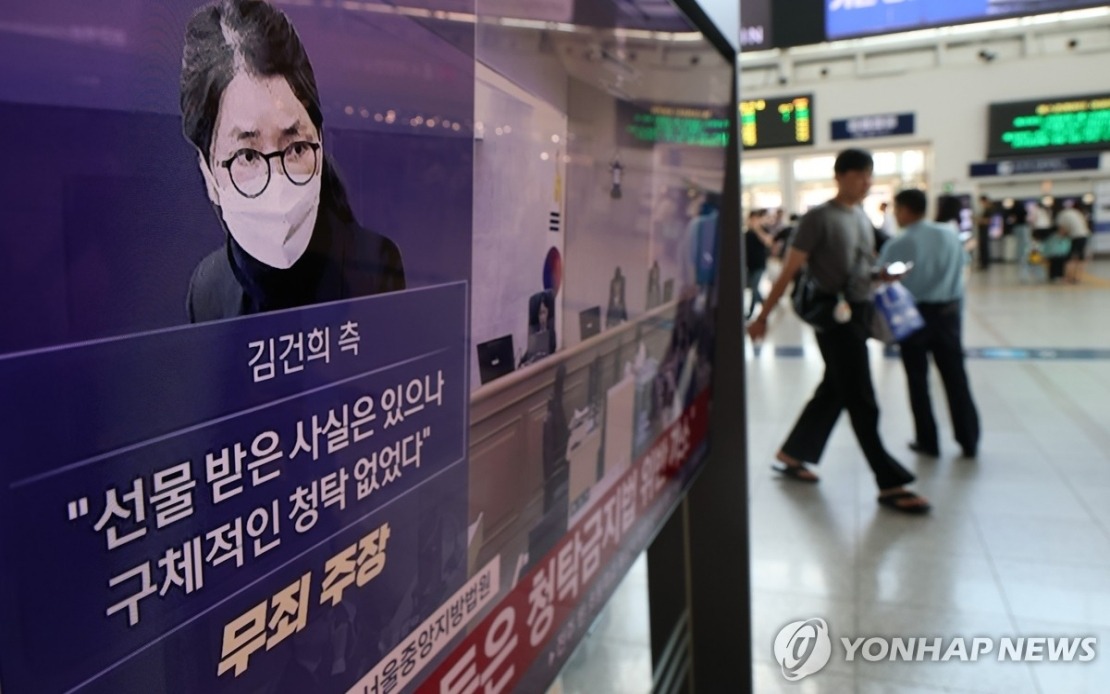
A Seoul court has convicted and imprisoned former South Korean first lady Kim Keon Hee, the wife of ousted President Yoon Suk Yeol, handing down a seven-year prison sentence for systematically accepting expensive gifts in return for government job placements and other political favours. The Seoul Central District Court's ruling on Friday culminated a corruption investigation that exposed how the country's highest-ranking woman abused her position for personal financial gain, drawing comparisons to similar scandals that have plagued presidential families across East Asia and warranting scrutiny from observers of governance standards in the region.
The scale of Kim's misconduct became apparent through the court's examination of approximately 300 million won worth of gifts she received between March 2022 and September 2022, a period largely coinciding with her husband's time in the Blue House. Among the items prosecutors documented were jewellery from a Van Cleef & Arpels collection gifted by a construction company chairman, a luxury Vacheron Constantin timepiece from a business associate, designer handbags from prominent religious figures, and valuable artworks. What distinguished these gifts from ordinary social exchanges was their explicit quid pro quo nature—each item corresponded to a specific political or business favour that Kim facilitated through her office.
The construction company chairman's gift of the necklace and additional jewellery was particularly significant in legal proceedings because it directly enabled him to secure a government position for his son-in-law, demonstrating a clear transactional relationship. Similarly, Lee Bae-yong, then heading the National Education Commission, provided Kim with a golden turtle ornament in April 2022 specifically to secure his appointment to his position. A pastor delivered a Dior bag worth 5.4 million won the same year, while another businessman presented a watch in September 2022, each gift tied to distinct political or administrative benefits. In February 2023, further evidence surfaced of Kim receiving an artwork by renowned artist Lee Ufan from a former prosecutor in exchange for assisting him with an election nomination.
Presiding Judge Cho Sun-pyo delivered a particularly scathing assessment of Kim's conduct, emphasising that she had fundamentally betrayed the institutional trust vested in the first lady position. The judge stated that Kim had transformed what should be a ceremonial and representational role into a vehicle for personal enrichment, demonstrating a profound disregard for the ethical obligations attached to such high office. His comments carried weight in the Southeast Asian context, where first ladies in countries including Indonesia, the Philippines, and Thailand have similarly faced scrutiny for perceived conflicts of interest and abuse of their proximity to presidential power.
The court found particularly damning evidence in Kim's attempts to conceal her activities once investigations commenced. She returned certain gifts and claimed she had purchased other items with her own funds, strategies the judge explicitly identified as consciousness of guilt. This pattern of obstruction demonstrated that Kim understood the illegality of her actions and actively sought to hide the extent of her bribery network. Such tactics often characterise corruption cases across Asia, where individuals of substantial means employ elaborate concealment methods precisely because they comprehend the legal jeopardy surrounding their conduct.
Special counsel Min Joong-ki's prosecutorial team had requested a sentence of seven and a half years, so the court's decision to impose exactly seven years fell marginally below their recommendation but still represented a substantial custodial penalty. The conviction also extended consequences to Kim's accomplices—the construction company chairman received a one-year suspended sentence, the businessman who provided the watch faced a 10-month suspended sentence, and the pastor incurred an 8 million won fine. These graduated penalties reflected the court's assessment of their respective roles in the corruption scheme, with the corporate figures bearing greater responsibility than the religious leader.
Kim's legal troubles extend far beyond this single conviction. An appeals court had previously sentenced her to four years imprisonment in a separate corruption case, creating the possibility of consecutive or merged sentences depending on how South Korean appellate law processes multiple simultaneous convictions. She faces an additional trial regarding alleged involvement in efforts to coerce Unification Church members into joining the People Power Party ahead of the 2022 presidential election, ostensibly to influence primary voting for her husband's nomination. These accumulating cases paint a portrait of systemic abuse of presidential power by the first lady across multiple fronts and extended timeframes.
The Kim Keon Hee case carries significant implications for governance and institutional integrity throughout East and Southeast Asia. South Korea's willingness to prosecute and convict a former first lady, despite her family's political prominence, demonstrates legal processes operating with relative independence from executive interference—a standard that distinguishes it from some regional counterparts where such prosecutions might face political obstruction. However, the very necessity of pursuing these charges indicates that presidential families across the region operate with assumptions of immunity and access to power that ordinary citizens cannot match, suggesting systemic vulnerabilities in oversight mechanisms.
The sentencing also reflects evolving public expectations regarding official conduct in democratic societies. South Korean voters had grown increasingly intolerant of the corruption patterns that characterised earlier presidencies, and prosecutors responded by pursuing even high-ranking individuals. This shift contrasts markedly with earlier decades when first ladies and presidential family members often escaped serious legal consequences for similar conduct. For Malaysian observers, the case underscores how institutional robustness ultimately depends upon courts and prosecutors willing to challenge powerful individuals regardless of their political connections.
Kim's defence team announced intentions to appeal the conviction, suggesting that higher courts will revisit both the factual findings and sentencing considerations. Appellate proceedings could potentially reduce the sentence or alter its framework, though reversals of guilt findings in bribery cases remain relatively uncommon in South Korean jurisprudence. The conviction's finality will ultimately determine whether Kim serves the full seven-year term or whether appellate intervention modifies her punishment.
Beyond the individual consequences for Kim, this case illuminates broader questions about how presidential systems can better constrain abuse by members of first families. South Korea's approach of aggressive prosecution represents one model, yet the very existence of multiple pending cases against Kim suggests that preventive mechanisms failed substantially. Regional governments contemplating stronger anti-corruption frameworks might consider whether structural reforms—such as explicit statutory limits on first ladies' access to official resources or mandatory financial disclosure requirements—could prevent similar abuses before prosecutorial intervention becomes necessary.

