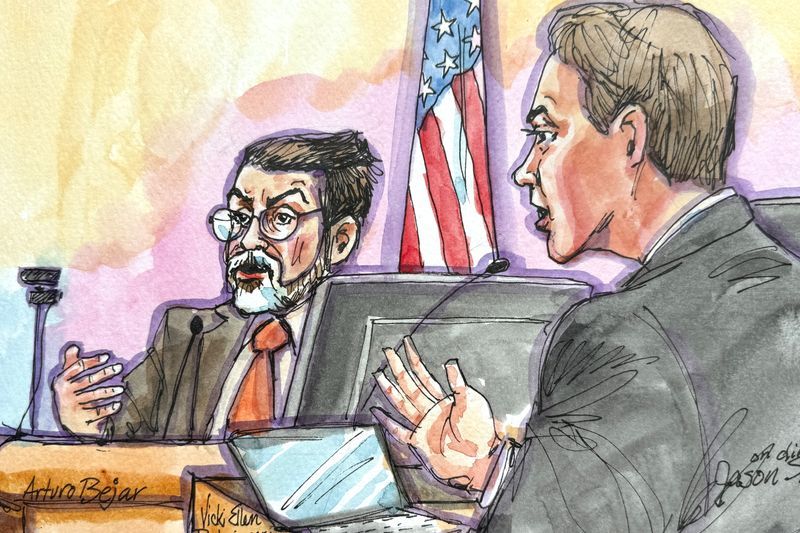
A former engineering director at Meta Platforms resumed his testimony on Wednesday in a pivotal legal battle that could fundamentally reshape how Facebook and Instagram operate. Arturo Bejar, who spent six years working directly within the company's engineering teams from 2009 to 2015 and later returned as an independent contractor until 2021, stands as a central witness in what legal experts characterize as the most significant court challenge yet to social media's documented effects on young users. His testimony marks the opening moves in a case that could result in sweeping changes to the platforms' design and operations across the United States.
The trial, proceeding in Oakland, California, pits Meta against a coalition of American states including California, Colorado, Kentucky and New Jersey, alongside 29 additional states pursuing separate claims of data violations. Collectively, the plaintiffs contend that Meta knowingly engineered its platforms to create compulsive usage patterns among adolescents, actively downplayed well-documented safety risks to the public, and improperly harvested personal information from children under thirteen without proper consent. Meta has categorically denied these allegations, asserting instead that it maintains robust safeguarding measures for young users. The trial is scheduled to run for six weeks, and Bejar's appearance as the opening witness underscores his critical importance to the states' legal strategy.
Bejar's insider perspective carries particular weight because of his direct involvement in examining teen welfare on Instagram between 2019 and 2021. During this period, he managed research initiatives and surveys aimed at measuring how the platform affected young people's experiences and mental states. Rather than simply describing the data collection process, Bejar has leveraged his position to offer detailed critiques of how Meta interpreted—and crucially, failed to act on—its own internal findings. His presence on the stand therefore represents not external speculation about Meta's practices, but firsthand knowledge of corporate decision-making at the highest levels.
One of Bejar's most pointed assertions concerns the fundamental inadequacy of Meta's internal safety monitoring systems. He contended that the company's surveillance mechanisms were structurally flawed because they measured only whether content violated Meta's explicit policy guidelines, rather than quantifying the actual psychological or emotional damage such content inflicted on vulnerable young users. This distinction proves crucial: a post might technically comply with Meta's rules yet still cause considerable distress to teenagers viewing it. By failing to track real harm rather than mere policy breaches, Bejar argued, Meta created a false impression of platform safety.
To illustrate this gap between reported metrics and ground-level reality, Bejar read aloud to jurors an email he had sent directly to Chris Cox, Meta's chief product officer, laying bare the discrepancy between prevalence figures the company publicly disclosed and the substantially higher rates of harm that young users themselves reported experiencing. This communication represents concrete evidence of knowledge at Meta's executive level—not speculation or inference, but direct communication from an engineer flagging urgent concerns to top leadership. Bejar's characterization of what he witnessed was stark: "Young people were experiencing harm at extraordinarily high rates," he testified, adding that parents deserved transparent information about these realities rather than reassuring public statements obscuring the true picture.
Bejar's willingness to become a vocal critic of his former employer extends well beyond this trial. In 2023, he appeared before the United States Senate to testify about Meta's knowledge of harassment, bullying, and other harms affecting teenagers on its platforms—harms he argued the company was aware of yet chose not to prioritize in meaningful ways. His Senate testimony established a public record of his concerns long before the current litigation, lending credibility to his current courtroom statements. He has now emerged as a key witness in multiple legal actions against Meta, including three cases that have proceeded to trial.
The stakes of these cases are enormous for Meta. One previous trial brought by New Mexico resulted in damages and penalties totaling $942 million, alongside mandatory changes to how the company operates its platforms within that state. This outcome signals that courts and juries are willing to impose substantial financial and operational consequences on Meta when presented with compelling evidence of harm. The current multi-state trial in Oakland, with its broader coalition and examination of nationwide practices, could trigger even more far-reaching remedies affecting Meta's business model across the country.
Meta had attempted to prevent Bejar from testifying in this trial by arguing that he had destroyed evidence—specifically, private communications with other former employees conducted through the encrypted messaging platform Signal. The company suggested this evidence destruction, coupled with comments Bejar made in an ongoing separate trial in Tennessee, disqualified him from the witness stand. However, U.S. District Judge Yvonne Gonzalez Rogers, who is presiding over the Oakland proceedings, rejected this effort decisively, characterizing Meta's attempt to eliminate Bejar as testimony as a "long-shot bid" to suppress a crucial witness. Her ruling allows Bejar's testimony to proceed, removing a significant obstacle to the states' case.
For Malaysian and Southeast Asian observers, this trial carries broader implications beyond the United States. Meta's platforms—Facebook and Instagram—dominate social media usage across the region, with hundreds of millions of users in countries like Malaysia, Indonesia, Philippines, Thailand and Vietnam. If the American courts impose operational changes on Meta's core platform architecture, those modifications will likely ripple across all markets where the company operates, potentially affecting how these platforms function for regional users. Additionally, the precedent established in Oakland may encourage similar litigation in other jurisdictions, including possibly within Southeast Asia itself, where regulators are increasingly scrutinizing social media companies' practices regarding young users.
The trial's focus on data collection from children under thirteen is also particularly relevant to Malaysian context, where questions about tech companies' compliance with local data protection laws remain contentious. Malaysia's Personal Data Protection Act contains provisions protecting minors' information, yet enforcement against multinational tech giants has proven challenging. The American litigation effectively demonstrates what happens when evidence of systematic violations emerges—Meta now faces not merely regulatory fines but civil liability and mandatory operational changes.
Bejar's testimony strategy appears designed to establish a clear chain of causation: Meta knew through its own research that its platforms caused documented harm to young users, yet the company deliberately chose not to redesign these features or adequately warn the public. This framing transforms the case from a general debate about whether social media is healthy for teenagers into a more specific allegation of corporate malfeasance—that Meta prioritized engagement metrics and advertising revenue over the demonstrated welfare of its youngest users, despite possessing internal knowledge that should have compelled different choices.
As the trial continues through its six-week schedule, Bejar will likely face vigorous cross-examination from Meta's legal team, which will attempt to undermine his credibility, challenge his interpretations of the data, and argue that his criticisms reflect personal disagreements rather than objective evidence of wrongdoing. However, his established track record as a credible insider witness, combined with the documentary evidence he is presenting to the jury, suggests he remains a formidable presence in the courtroom. The proceeding represents a crucial moment in which corporate accountability for social media's effects on young people will be tested with unprecedented intensity in an American court of law.

