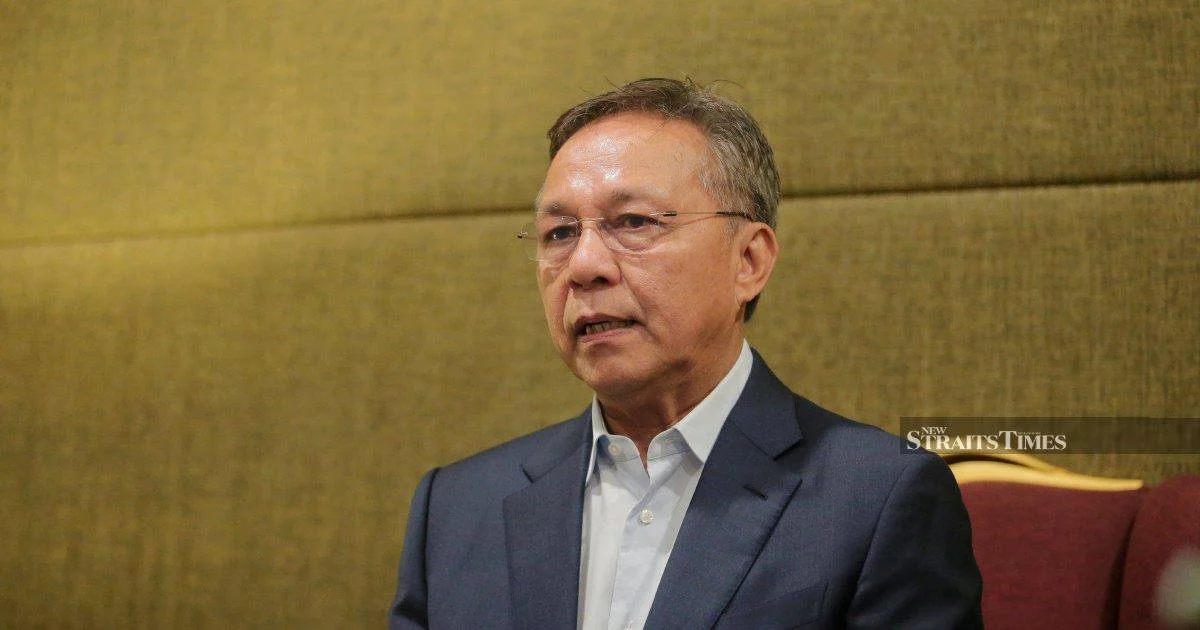
Datuk Seri Hasni Mohammad, who previously held the position of Johor menteri besar, has been notably absent from the Barisan Nasional's candidate roster for the forthcoming state election in Johor, a development that has triggered considerable speculation about his political future and possible strategic repositioning within the coalition.
The removal of Hasni from the state-level candidate lineup represents a significant shift in the political landscape of Johor, Malaysia's second-largest state by population and economic output. His exclusion from the slate comes at a time when there is heightened political activity across the country, with various movements and realignments occurring within both the ruling coalition and opposition blocs.
Observers and political analysts have begun to theorise that Hasni's departure from state-level politics may signal an intention to contest at the federal level in the next general election. Such a move would not be unprecedented in Malaysian politics, where senior figures sometimes transition between state and national arenas depending on political circumstances and party strategy. This pattern has been seen multiple times across different states and political parties over the past two decades.
The decision to exclude Hasni raises questions about internal coalition dynamics within Johor's Barisan Nasional chapter. The coalition, which has governed the state for decades, periodically undergoes candidate selection processes that reflect both party politics and electoral calculations. Such decisions often involve negotiations between component parties—UMNO, MCA, and MIC—each seeking to optimise their representation and electoral prospects.
Hashni's previous tenure as menteri besar would typically confer considerable influence and seniority within state political circles. His removal therefore suggests either a deliberate strategic choice by party leadership to redirect his energies elsewhere, or internal political dynamics that have resulted in his de-prioritisation for state-level contests. The timing and circumstances surrounding such decisions are rarely disclosed in full detail by party officials, leaving room for interpretation and speculation.
For Malaysian voters and observers interested in understanding coalition strategies, Hasni's repositioning exemplifies how political parties leverage their senior figures across different electoral levels. Some former state leaders eventually contest parliamentary seats where they may wield greater influence, while others step back from electoral politics altogether to assume advisory or party roles. The Johor situation mirrors similar patterns seen in other states, where experienced politicians have transitioned between state and federal representation.
The political implications for Johor itself are noteworthy. The state has historically been a battleground where coalition and opposition forces compete vigorously. The composition of the Barisan Nasional candidate list directly affects the coalition's prospects, and the inclusion or exclusion of high-profile figures like Hasni carries symbolic weight beyond individual constituencies. Voters in the state will be closely monitoring candidate announcements to assess the strength and direction of coalition campaigns.
From a broader Southeast Asian perspective, Malaysia's internal political movements continue to reflect the region's complex democratic traditions. Unlike some neighbours, Malaysia has established mechanisms for coalition building, candidate selection, and inter-party negotiation that, while sometimes opaque, generally function within constitutional and party frameworks. Hasni's situation illustrates these processes in action at the state level.
The speculation surrounding Hasni's future also underscores how Malaysian political careers can evolve unpredictably. A former state executive, particularly one who has held the menteri besar position, retains valuable networks and experience that can be deployed in different political contexts. Whether Hasni ultimately contests a parliamentary seat, accepts a different party role, or pursues alternative directions will become clearer as the general election approaches and parties finalise their campaign strategies.
For Malaysian politicians and analysts tracking coalition cohesion, such moves warrant attention. The Barisan Nasional has faced challenges in recent electoral cycles, and how it deploys experienced figures—whether at state or federal levels—contributes to overall electoral performance. Hasni's exclusion from the state list may therefore represent a calculated attempt to strengthen the coalition's position at the parliamentary level, where coalition fortunes have been more precarious.
The coming weeks will likely see further clarification as Barisan Nasional releases additional details about candidate placements and strategic positioning. Hasni's own statements or actions may provide additional insight into his political intentions. In the meantime, his removal from the Johor state candidate list serves as a reminder that Malaysian politics remains dynamic and subject to significant repositioning, even among established senior figures with substantial track records in public service.

