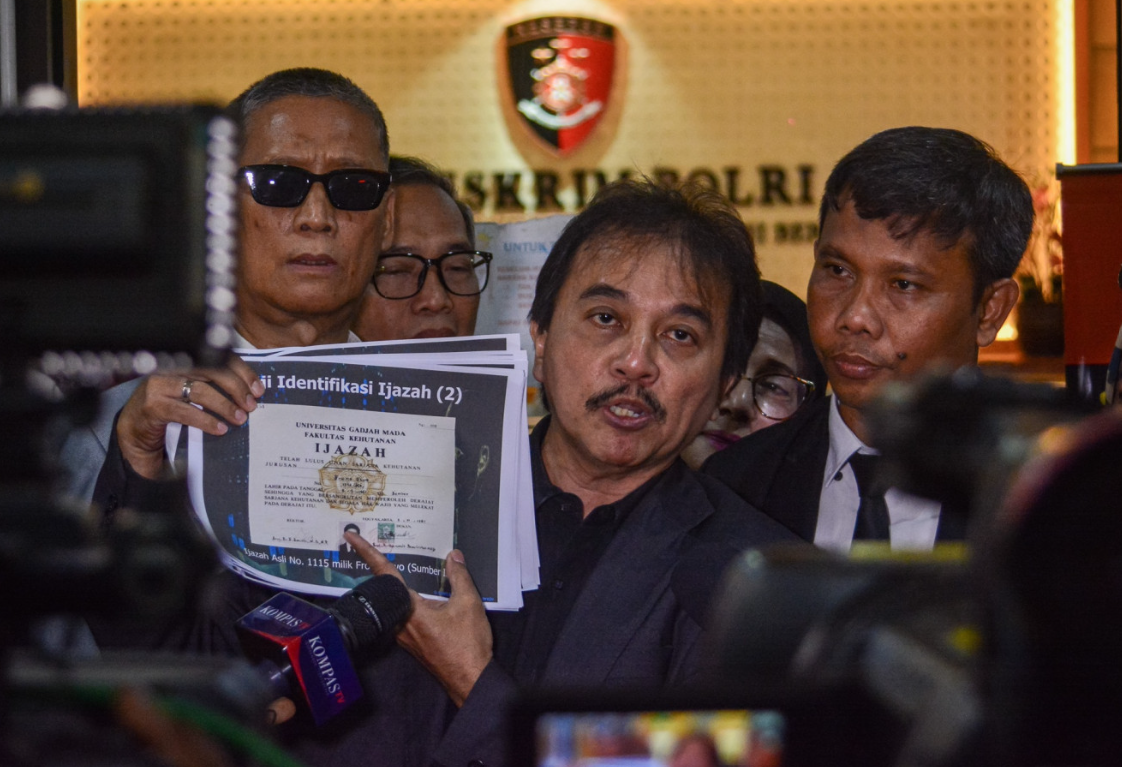
The Jakarta Police have escalated their investigation into allegations surrounding former president Joko Widodo's university diploma by detaining two prominent critics, including ex-youth and sports minister Roy Suryo and health activist Tifauzia 'Tifa' Tyassuma. Both individuals were apprehended at their homes on Friday morning, according to Roy's legal representative Ahmad Khozinudin. The detention marks a significant turn in what has become one of Indonesia's most contentious and prolonged political disputes, drawing international attention to questions about institutional accountability and free speech within the country's judicial system.
The General Crimes Directorate of Jakarta Police characterized the arrests as standard procedural steps necessary before transferring the investigation to prosecutors. Investigation director Sr Comr Iman Imanuddin explained during a Friday press conference that detaining suspects is routine when moving cases forward, designed to prevent administrative bottlenecks and ensure compliance with legal formalities. He outlined that the procedure includes completing health examinations, verifying evidence, and preparing comprehensive police dossiers for the Jakarta Prosecutor's Office. However, critics including the detainees' legal team questioned whether such detention was proportionate or necessary given their cooperation with authorities.
Roy Suryo and Tifa have been accused not merely of making defamatory statements but of manipulating electronic documents to substantiate their claims that Widodo's diploma was fraudulent. These additional charges invoke Indonesia's controversial Electronic Information and Transactions Law, which carries maximum sentences of six years imprisonment. The allegations stem from their public statements challenging the authenticity of Widodo's educational credentials, a matter that has consumed Indonesian political discourse since 2019 when diploma authentication questions first appeared on social media platforms.
The diploma controversy represents a remarkable saga in Indonesian politics, encompassing multiple legal iterations and shifting institutional positions. What began as social media rumours in 2019 evolved into a civil lawsuit filed in 2022 and subsequently triggered various police investigations and court proceedings. The National Police declared Widodo's diploma authentic in May 2025 following their investigation, effectively closing their earlier inquiry into forgery allegations. Yet critics remained unconvinced, and during a case review held in July 2025, skeptics including Roy Suryo continued articulating objections to the police's conclusions and methodology.
Roy Suryo brings significant political standing to his role as critic. He previously served as youth and sports minister under former president Susilo Bambang Yudhoyono, providing him with institutional credibility and media platform that amplified his allegations. Conversely, Tifa Tyassuma represents the activist and civil society dimension of the controversy, mobilizing grassroots concern about institutional transparency and educational integrity. Together, their detention signals that challenging official narratives regarding prominent political figures carries serious legal consequences in contemporary Indonesia.
The defense team expressed immediate concern about the proportionality of detention. Refly Harun, representing both suspects, questioned the logic of holding his clients when the prosecutor's office was not expecting the case transfer until Monday. He emphasized that both individuals had consistently appeared for all police summonses and complied with reporting requirements, rendering detention punitive rather than investigatively necessary. This argument reflects broader concerns within Indonesian civil society about potential abuse of detention powers to silence political opposition and suppress critical examination of government officials.
The case initially involved eight suspects before authorities narrowed the focus. Police previously identified six additional individuals as suspects under the Electronic Information and Transactions Law. However, three of these—Eggi Sudjana, Damai Hari Lubis, and Rismon Sianipar—had charges dropped following mediation agreements, suggesting selective prosecution or negotiated settlements that raise questions about equal application of law. The retention of charges against Roy Suryo and Tifa Tyassuma, while others secured dismissals, underscores apparent inconsistencies in prosecutorial decision-making.
For Malaysian observers, this Indonesian case offers instructive lessons regarding press freedom, defamation law, and institutional independence. The use of broad electronic transaction statutes to prosecute alleged defamation parallels patterns seen across Southeast Asia where governments utilize expansive legislation to constrain criticism. The diploma case demonstrates how educational credentials of public figures can become politically weaponized, and how institutions like police and prosecutors may face pressure to protect reputational interests of powerful individuals rather than independently investigating allegations.
The detention also reflects deeper questions about Indonesia's commitment to permitting robust public debate regarding governmental accountability. Whether examining educational credentials or other official claims constitutes legitimate inquiry or punishable defamation shapes the boundaries of permissible political discourse. Regional democracies grapple with balancing individual reputation protection against collective interest in scrutinizing official narratives, particularly when official institutions themselves become protagonists in controversies.
The timing of these arrests, occurring years after initial allegations and following official declarations of diploma authenticity, suggests that detention may serve purposes beyond clarifying factual disputes. If police and prosecutors have already investigated and concluded regarding the diploma's validity, subsequent defamation charges could be perceived as retaliatory efforts against persistent critics rather than legitimate responses to demonstrable falsehoods. This dynamic undermines public confidence in institutional neutrality and impartiality.
The upcoming prosecutor's review will determine whether charges proceed to formal prosecution or face dismissal. Should Roy Suryo and Tifa face trial under the Electronic Information and Transactions Law, the case will establish important precedent regarding permissible boundaries of public criticism against political figures in Indonesia. Regional media freedom organizations are likely to monitor proceedings closely, as outcomes could influence how other Southeast Asian democracies approach similar cases involving defamation allegations against government officials.
The broader implications extend beyond individual defendants to questions about institutional legitimacy within Indonesia's democracy. When detaining critics becomes standard procedure for protecting official narratives, public trust in institutions erodes significantly. The case underscores recurring tensions within Indonesian governance between desires for stability, protection of official reputations, and maintenance of spaces where citizens and civil society can meaningfully scrutinize and challenge government claims without facing criminal consequences.

