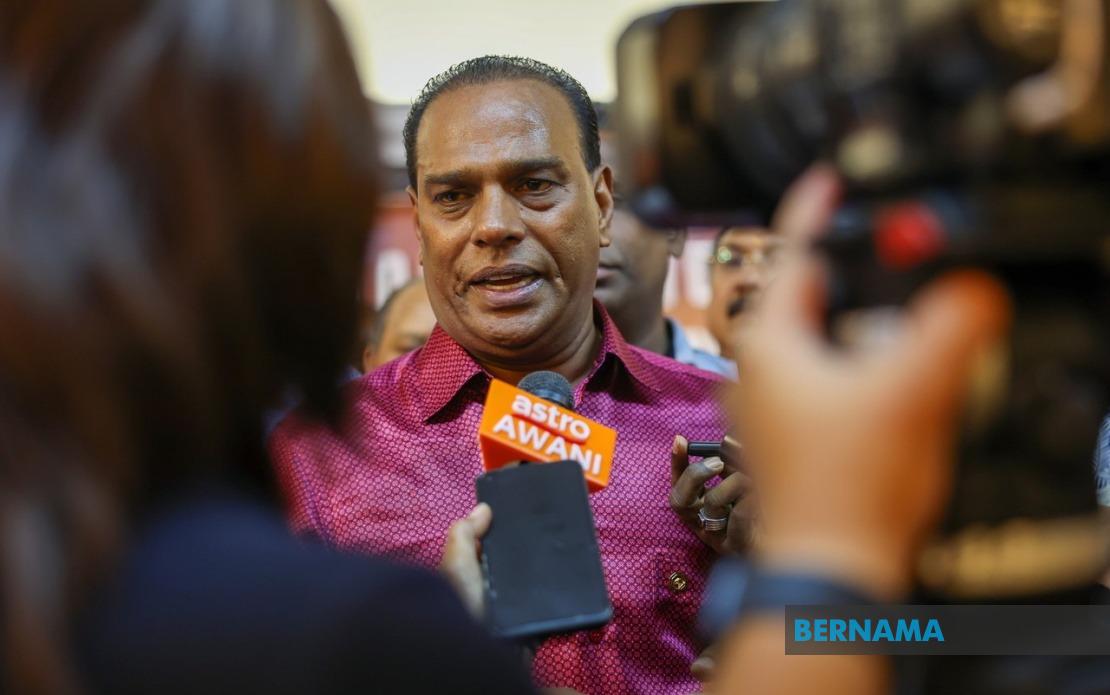
Datuk Seri M. Saravanan, the former Human Resources Minister and Tapah MP, has publicly acknowledged that he will appear before the Sessions Court tomorrow to face corruption charges, marking a significant moment in a case that has drawn considerable attention in Malaysia's political landscape. The Malaysian Anti-Corruption Commission (MACC) issued a media notice today regarding the proceedings, signalling the culmination of an investigation into allegations that have shadowed the veteran politician for over a year.
The charges relate to the contentious matter of foreign worker recruitment during the COVID-19 pandemic in 2022, a period when Malaysia faced acute labour shortages across multiple sectors. According to Saravanan's account, the allegations stem from a third-party statement made by an individual who has since passed away approximately two months prior. This development has added an unusual dimension to the case, as the original witness who implicated the former minister is no longer available to testify or maintain the allegations in court.
In a telling twist that may strengthen Saravanan's position, the individual who initially made the incriminating statement subsequently executed a Statutory Declaration withdrawing the allegations entirely. This retraction—formalised through the legal mechanism of a Statutory Declaration—suggests either a misunderstanding or potential fabrication of the original claims. However, the MACC proceeded with charges notwithstanding this withdrawal, indicating investigators believed sufficient evidence existed independent of the third-party statement to warrant prosecution.
Saravanan has maintained his steadfast denial of any wrongdoing, emphasising in a video message distributed to media outlets that he has never maintained any contact with the original accuser through telephone or text communications. His assertion of non-contact with the witness appears designed to undermine the credibility of any hearsay evidence that might be presented against him. The former minister's composure in facing these allegations publicly reflects a calculated approach to managing the reputational damage inherent in corruption charges at this stage of his career.
The specific charge anticipated relates to Section 16 of the Malaysian Anti-Corruption Commission Act 2009, which encompasses the solicitation, receipt, provision, promise, or offering of bribes. This provision carries significant penalties in Malaysia's legal framework, with convictions potentially resulting in imprisonment and substantial fines. For a politician of Saravanan's standing—who also serves as deputy president of the Malaysian Indian Congress (MIC)—such charges represent not merely a personal legal crisis but also implications for his political party and his political future.
The timing of these charges adds another layer of complexity. The foreign worker recruitment issue that prompted this investigation touches upon sensitive labour policy questions that have preoccupied Malaysian governance throughout the pandemic and its aftermath. Any perception of ministerial involvement in irregular hiring practices could fuel broader concerns about policy integrity during a period when emergency measures proliferated across government agencies.
Saravanan's legal team has already signalled an aggressive litigation strategy, with plans to petition the court tomorrow to expedite trial proceedings. This application for an accelerated trial timeline suggests the defence believes rapid passage through the judicial system may serve their interests better than protracted proceedings. Whether the court grants such an application remains uncertain, but the former minister's apparent eagerness to resolve the matter quickly through the judicial process indicates confidence in his ability to defend against the charges substantively.
The involvement of the MACC in this prosecution underscores the anti-corruption agency's continued focus on high-profile political figures, an area of its mandate that has garnered both praise and criticism depending on political perspective. The decision to proceed with charges despite the primary accuser's death and subsequent recantation demonstrates the MACC's conviction that corroborating evidence exists. Whether such evidence proves adequate in court will ultimately determine the case's outcome and, by extension, Saravanan's political viability.
For Malaysian observers and policymakers, this case represents a test of the country's judicial system's capacity to handle high-stakes political corruption allegations fairly and transparently. The case also highlights ongoing questions about governance during crisis periods, particularly regarding the delegation of extraordinary powers during the pandemic and the oversight mechanisms designed to prevent their abuse. The verdict, whenever reached, will carry implications extending well beyond the individual defendant to encompass broader questions about ministerial accountability and institutional integrity.
Looking ahead, the immediate focus falls on tomorrow's proceedings and the court's reception to the defence's expedited trial application. However, the broader narrative of this case—involving a deceased witness, withdrawn allegations, and a senior politician's determination to clear his name—will likely continue generating scrutiny within political and media circles for months to come, regardless of the eventual judicial outcome.

