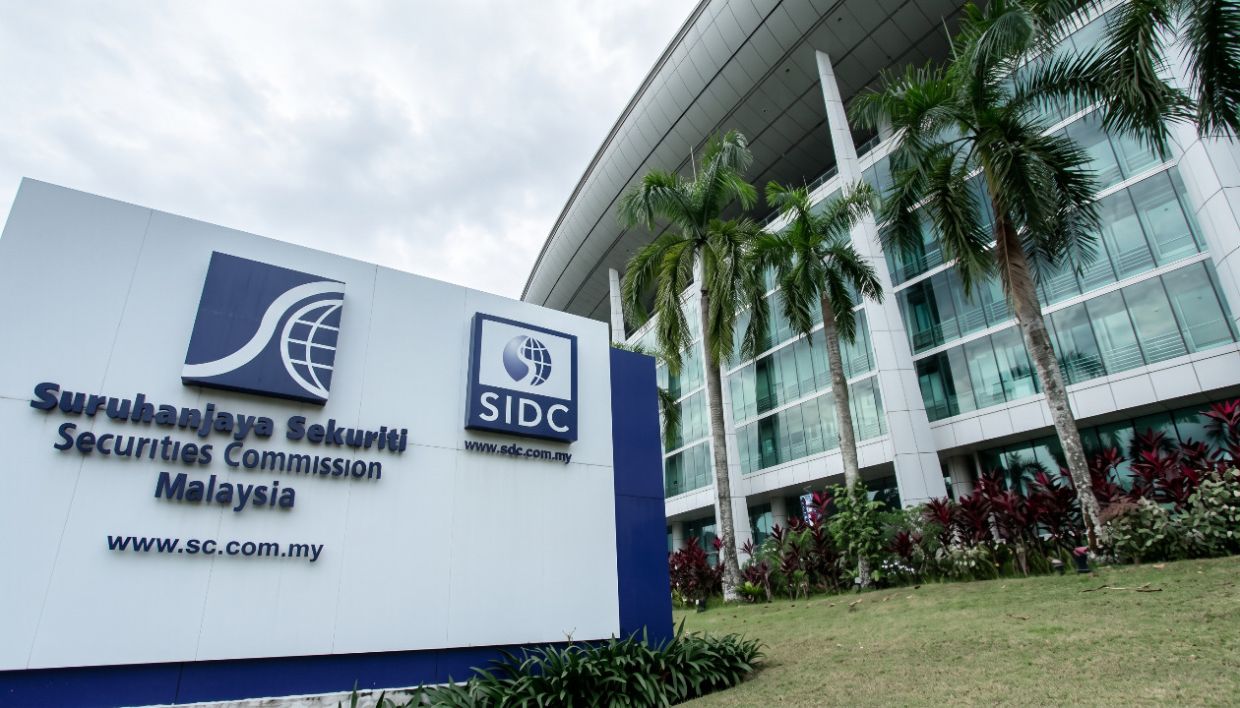
Muhamad Fadzli Jamaludin, who previously directed Kyaputen Sdn Bhd, received a five-year custodial sentence from the Kuala Lumpur Sessions Court following his conviction on charges of unlicensed fund management activities and money laundering. The verdict marks a significant enforcement action by Malaysia's financial regulator in protecting retail investors from unauthorised financial intermediaries operating within the country's investment landscape.
The Securities Commission Malaysia laid the initial three charges against Fadzli on November 9, 2023, under section 58(1) of the Capital Markets and Services Act 2007, alleging that he had represented himself as conducting a fund management business without the requisite regulatory authorisation. These charges were subsequently supplemented by nine additional accusations under section 4(1)(b) of the Anti-Money Laundering, Terrorism Financing and Proceeds of Unlawful Activities 2001, indicating that the prosecution believed the unlicensed operations had generated proceeds requiring criminal concealment through money laundering mechanisms.
The dual prosecution proceeded through joint trial proceedings, during which the prosecution established its case through testimony from 23 witnesses. Critically, six of these witnesses were individuals who had invested capital with Fadzli's operation, and their collective financial loss amounted to RM1.263 million. This figure underscores the material harm inflicted on ordinary retail investors who, lacking the sophistication to verify regulatory compliance, became vulnerable to fraudulent fund management schemes. The criminal conduct spanned approximately twenty months, from August 2018 through April 2020, with illicit activities concentrated in Kuala Lumpur and Melaka.
During the trial phase, Fadzli mounted a defence that ultimately proved unsuccessful. Rather than presenting witnesses to corroborate his position, he chose to testify personally under oath, placing significant evidentiary weight on his own account. Sessions Court judge Puan Hamidah Mohamed Deril, in rendering judgment, found that this defence strategy had failed to introduce reasonable doubt into the prosecution's case. The judge's assessment suggests that Fadzli's personal testimony was insufficient to rebut the substantive evidence presented by the financial regulator and its witnesses.
The sentencing framework applied by the court reflected the gravity of both offence categories. For the fund management violations under the Capital Markets and Services Act, Fadzli received five-year terms on each charge, while the money laundering convictions similarly attracted five-year sentences. Crucially, the judge ordered these terms to run concurrently rather than consecutively, meaning the defendant serves five years total rather than facing cumulative sentences that could have extended substantially beyond that period. This concurrent approach, though still imposing substantial punishment, reflects judicial discretion in calibrating sentence length when multiple convictions arise from a single underlying course of conduct.
The legislative framework governing fund management activities establishes steep penalties for breaches, reflecting Parliament's determination to maintain market integrity. Any person convicted under section 58(1) of the Capital Markets and Services Act faces potential imprisonment up to ten years and fines reaching RM10 million, underscoring that unlicensed financial intermediation constitutes a serious criminal matter rather than merely a regulatory infraction. The money laundering offences carry even more severe consequences, with maximum imprisonment of fifteen years and financial penalties equivalent to no less than five times the illegal proceeds or RM5 million, whichever exceeds the other.
The conviction carries significant implications for Malaysia's retail investment community and broader regulatory environment. Fund management constitutes a regulated activity in Malaysia precisely because individual investors require protection from unqualified intermediaries who might misappropriate capital, engage in unsuitable investing strategies, or abscond with client funds. The Securities Commission Malaysia's regulatory remit demands that any entity or individual managing investment portfolios on behalf of others must maintain a valid licence, undergo prescribed capital requirements, implement client asset segregation protocols, and submit to ongoing compliance monitoring. Unlicensed operators circumvent these protective safeguards entirely, exposing investors to counterparty risk without regulatory recourse mechanisms.
The public pronouncement issued by the Securities Commission following the verdict served not merely to document the enforcement outcome but to educate the investing public regarding the distinction between authorised and unauthorised financial service providers. The regulator explicitly reminded investors that they should only engage with individuals and entities holding valid Securities Commission licences when pursuing fund management services. This advisory reflects a persistent challenge within Southeast Asian financial markets, where retail investor sophistication remains heterogeneous and opportunities for fraudulent intermediaries persist, particularly within community networks or family circles where trust assumptions override prudent verification practices.
The RM1.263 million in aggregate losses sustained by Fadzli's victims warrants examination in the context of Malaysian consumer fraud patterns. While this sum, distributed among six investors, represents substantial individual financial hardship particularly within middle-income households, it also demonstrates the capacity of relatively modest schemes to inflict meaningful damage through targeted marketing and relationship-based trust exploitation. The two-year operational window suggests a gradually expanding deception wherein early investments may have generated returns sufficient to attract subsequent investors, creating a self-perpetuating scheme until inevitable discovery or collapse occurred.
Regulatory enforcement actions of this type serve multiple deterrent functions within the financial system. The criminal conviction and imprisonment of Muhamad Fadzli Jamaludin communicates to prospective actors that unlicensed financial intermediation will face serious criminal consequences rather than administrative remedies alone. Simultaneously, the case reinforces legitimate market participants' competitive position, as licensed fund managers operate subject to compliance costs and prudential requirements that unlicensed competitors could theoretically evade. The conviction thus protects not only retail investors but also the integrity of Malaysia's licensed investment industry.
Looking forward, this enforcement action underscores the importance of investor vigilance and the necessity of regulatory cooperation in identifying and prosecuting unlicensed financial intermediaries. The Securities Commission Malaysia continues to encourage members of the public to report suspected unlicensed financial services operators, providing such information to authorities capable of investigating and pursuing criminal proceedings. As Malaysia's financial markets continue maturing and retail participation in investment products increases, maintaining robust protections against fraudulent intermediaries remains essential to preserving market confidence and investor protection.

