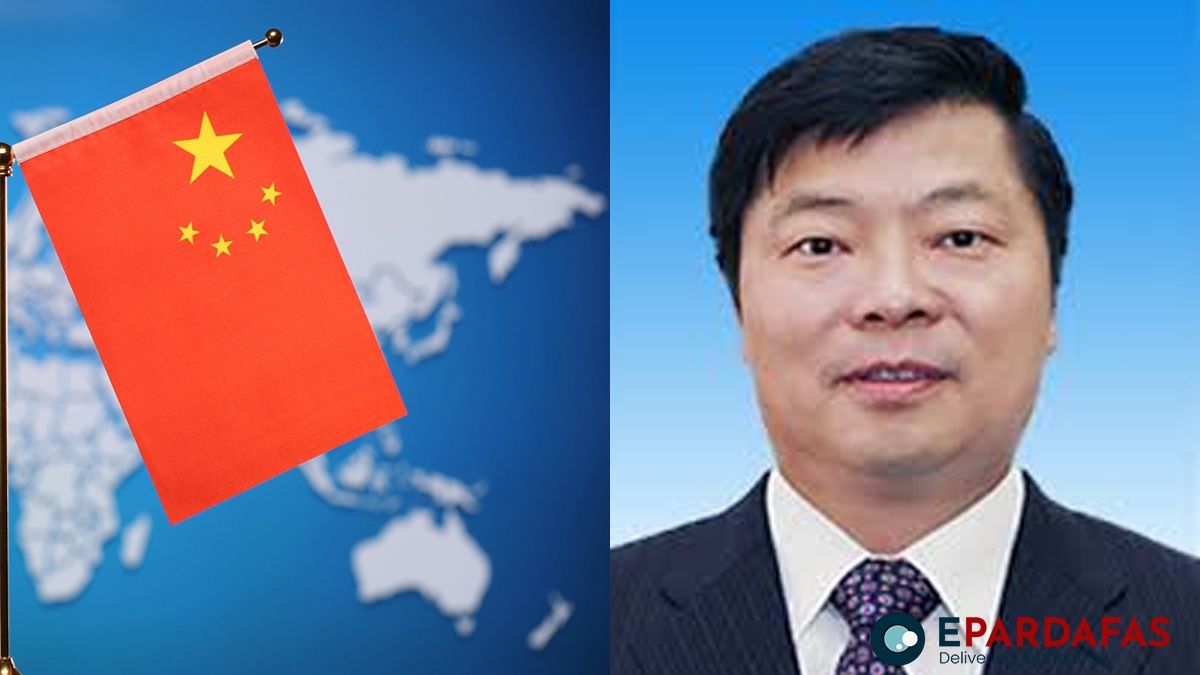
Beijing's top anti-graft watchdog announced an investigation into Ouyang Weimin, the former president of the China Development Bank, marking the latest high-profile official to face scrutiny under the government's sprawling anti-corruption campaign. The Central Commission for Discipline Inspection disclosed on Sunday that Ouyang was under investigation jointly with the National Commission of Supervision on suspicion of serious violations of party discipline and the law, though authorities provided minimal detail about the specific allegations.
Ouyang's career trajectory reflects the typical pathway for senior financial officials in China's state apparatus. He joined the Communist Party in 1986 and built much of his early professional record within the People's Bank of China, where he accumulated experience navigating the country's monetary policy frameworks and banking sector development. His progression through the financial bureaucracy eventually positioned him for broader economic leadership roles across provincial and national institutions.
Before his appointment at China Development Bank, Ouyang served as vice-governor of Guangdong, the economically vital province that borders Hong Kong and has long served as a laboratory for China's market-oriented reforms. His selection for the Guangdong post indicated confidence from Beijing in his capacity to manage complex economic portfolios and coordinate between central and local authorities. In 2019, he received his most prominent assignment: president and deputy party secretary of the China Development Bank, a position that placed him at the helm of one of the nation's most influential financial institutions.
Ouyang held the presidency for roughly four years before stepping down in 2023, though official announcements regarding his departure contained no indication of impropriety. His transition out of the role appeared routine on the surface, following standard patterns of leadership succession within state institutions. The investigation announcement now casts retrospective questions over the circumstances of his exit and the activities conducted during his tenure.
The China Development Bank itself represents a critical pillar of Beijing's economic strategy. Established in 1994, the institution operates as a state-owned development finance entity reporting directly to the State Council. Its mandate encompasses mobilizing capital for strategic economic initiatives, with particular emphasis on supporting industries deemed essential to national development and channeling resources toward underdeveloped regions and sectors that require state intervention. The bank's operations extend across major infrastructure projects, industrial restructuring, and regional economic integration efforts.
Outcome of such investigations carries significant implications for understanding governance dynamics within China's financial system. Anti-corruption probes targeting officials at Ouyang's level frequently reveal systemic issues within their respective institutions, potentially triggering broader institutional reforms or leadership reshuffles. The investigation may prompt scrutiny of decision-making processes at the China Development Bank during his presidency, including loan allocations, project selections, and organizational management practices.
For regional observers, particularly in Southeast Asia, the investigation underscores the complexity of engaging with Chinese development finance institutions. The China Development Bank operates as a major source of funding for Belt and Road Initiative projects across the region, and leadership transitions or institutional disruptions could affect project timelines, approval processes, or strategic priorities. Countries receiving Chinese development finance need to monitor such investigations for potential policy shifts that might influence future funding availability or project conditions.
Under President Xi Jinping's administration, anti-corruption efforts have expanded dramatically in scope and intensity, targeting officials across military, civilian, and financial sectors. The campaign has removed numerous figures previously considered powerful within their respective spheres, fundamentally reshaping factional alignments within the party. Critics argue the anti-corruption drive functions partly as a mechanism for consolidating Xi's authority by eliminating potential political competitors, though official narratives consistently frame such investigations as essential governance measures aimed at strengthening party discipline.
The probe into Ouyang reflects this broader pattern of investigation targeting senior financial officials who accumulated substantial influence during their tenures. Financial sector officials often possess discretionary authority over major resource allocation decisions, making them attractive targets for anti-corruption efforts that can simultaneously address genuine governance concerns and remove potentially independent power centers. The opaque nature of most such investigations—with authorities typically releasing minimal substantive information—means that distinguishing between legitimate anti-corruption actions and politically motivated removals remains difficult for external observers.
For Malaysia and other Southeast Asian nations maintaining economic relationships with China, developments within Beijing's financial institutions warrant careful attention. The China Development Bank has financed numerous regional infrastructure projects, and investigations into senior leadership may signal broader institutional changes affecting future cooperation frameworks. Additionally, as Chinese officials face increasing scrutiny for financial irregularities, Southeast Asian governments engaging in procurement or development partnerships should strengthen due diligence processes ensuring compliance with international standards and transparent governance principles.

