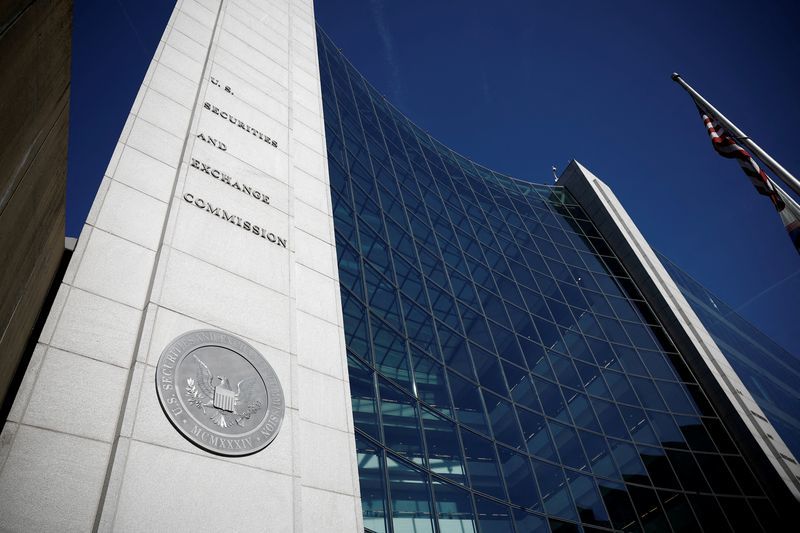
American financial regulators have brought charges against Jason Satsky, previously a top-ranking investment banker focused on power and renewable energy deals at Bank of America, for allegedly disclosing confidential information about a major corporate acquisition to a personal acquaintance. The Securities and Exchange Commission filed the case on Friday, asserting that Satsky's breach of fiduciary duty permitted his longtime friend Gavin Wolfe to amass illegal profits totalling $18.5 million from trading in South Jersey Industries shares ahead of the company's announcement that it had agreed to be acquired.
According to the SEC's enforcement action, Satsky shared advance knowledge of the prospective takeover with Wolfe, who operates an investment firm called Evergreen Capital, in the latter months of 2021. The two men have maintained a personal friendship spanning more than two decades and previously collaborated professionally in the energy sector. Bank of America served as financial adviser to South Jersey Industries during the transaction process, placing Satsky in a privileged position with respect to non-public details about the impending deal. Acting on the confidential intelligence, Wolfe accumulated just over 2.2 million shares of South Jersey Industries' parent company, representing a combined market value near $53 million at the time of acquisition.
The financial gain materialised when South Jersey Industries publicly confirmed the $8.1 billion buyout proposal on February 24, 2022, triggering a substantial rise in the company's stock price. Wolfe's position yielded a 36 percent return on his investment, translating into the alleged illegal windfall. The timing of his share purchases in relation to the confidential merger discussions indicates a pattern of trading synchronised with material information that had not yet been disclosed to the broader investment public. Such conduct constitutes a fundamental violation of securities laws governing insider trading, which exist to maintain fair and transparent capital markets.
Regulatory documents reveal the two men coordinated on their schemes across various settings, including during social occasions. Most notably, both Satsky and Wolfe, accompanied by their spouses, attended a nationally televised college basketball competition featuring Duke and Kentucky held at Madison Square Garden. Satsky had procured premium seating through his employer, affording them an appropriate venue to discuss the transaction confidentially while maintaining the appearance of casual socialising. This pattern of communication about the acquisition across multiple environments suggests deliberate coordination rather than accidental disclosure.
Satsky, aged 59 and based in New York, is now defending himself against the SEC's allegations through legal representation. His attorney, Robert Anello, has issued a statement categorically rejecting the regulator's claims, asserting that his client will demonstrate full compliance with applicable financial laws and that evidence will vindicate him. Anello specifically denies that Satsky communicated any non-public information regarding South Jersey Industries to Wolfe or any other party. This defence strategy attempts to sever the connection between Satsky's position at Bank of America and any unauthorised sharing of merger intelligence.
Wolfe, aged 55, maintains residences in both New York and Sunny Isles Beach, Florida. Through his own counsel, Reed Brodsky, Wolfe has similarly denied all allegations and pledged vigorous defence against the SEC's case. Brodsky's statement emphasises that Wolfe developed his investment decision through an autonomous analytical framework rather than through receipt of privileged information. He contends that the SEC has overlooked sworn testimony and documentary evidence that demonstrate Wolfe's share purchases reflected independent investment reasoning and market analysis. This counter-narrative seeks to reframe the suspicious timing of his trades as coincidental rather than causally linked to his friendship with Satsky.
Before establishing Evergreen Capital, Wolfe served as a senior banker in the power and renewable energy sector at Credit Suisse. Both he and Satsky joined Bank of America together in 2012, reinforcing their professional relationship. Evergreen manages assets belonging to the Wolfe family, suggesting Wolfe operates with significant capital resources. Bank of America terminated Satsky's employment in March 2025, according to the SEC filing. The financial institution itself faces no allegations of misconduct and has confirmed that Satsky no longer maintains any employment relationship with the company.
The enforcement action carries substantial consequences for both defendants. The SEC seeks recovery of all profits obtained through the alleged illegal trading scheme, meaning Wolfe could be required to disgorge the $18.5 million gain. Beyond financial remedies, the regulator intends to impose civil monetary penalties and pursue permanent bans from serving as officers or directors at any public company. Such career restrictions would effectively exclude both individuals from future participation in corporate leadership roles, constituting a significant professional consequence beyond immediate financial liability. These enforcement tools aim to deter future insider trading violations and protect market integrity.
The case underscores the persistent vulnerability of financial markets to breach of fiduciary duty by banking professionals who possess privileged access to non-public corporate information. Despite decades of regulatory enforcement and compliance infrastructure, individuals with confidential deal knowledge continue to face temptation to monetise that advantage through coordinated trading with associates. The long-standing friendship between Satsky and Wolfe, combined with their professional history and subsequent financial incentive, created a circumstance where regulators allege the boundaries separating legitimate socialising from unauthorised information transfer became blurred. Bank of America's swift termination of Satsky suggests the institution took the allegations seriously upon discovery, though the precise mechanisms by which the suspected disclosure came to light remain unclear from available regulatory filings.

