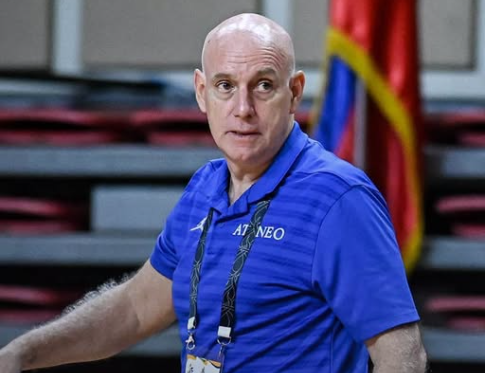
Investigators in the Philippines have recommended filing hazing charges against former Ateneo de Manila University men's basketball team head coach Thomas Anthony 'Tab' Baldwin and 10 other team personnel in connection with the deaths of two young players during a beach training exercise. The Philippine National Police Criminal Investigation and Detection Group concluded that the fatal activity breached Republic Act No. 11053, the nation's Anti-Hazing Act, marking a significant escalation in the official response to a tragedy that shocked the country's sports community.
Rene Baterbonia and Divine Adili drowned on June 8 during what was officially described as a team training activity in Dipaculao, Aurora. Officials presenting the case have characterised the incident not merely as an accident but as a systemic failure in which every member of the coaching staff present at the beach remained passive as conditions deteriorated. The breadth of the investigation has extended beyond the head coach to encompass strength and conditioning coaches Grant Dearns and Ceasar Vicent Javellana Elumba, multiple assistant coaches, student managers, and support personnel. This comprehensive approach suggests authorities viewed the drownings as a product of institutional negligence rather than isolated poor judgment.
The Anti-Hazing Act, which provides the legal framework for the charges, contains definitions that expanded the traditional understanding of what constitutes prohibited conduct. Officials emphasised that hazing encompasses far more than initiation rites; the law specifically includes forced physical exertion and exposure to dangerous environmental conditions as violations. This reframing proved crucial to the case, as prosecutors highlighted that the day's activities systematically subjected young athletes to escalating physical stress without appropriate safeguards. The players were awakened at 4am and forced to run four kilometres, followed by intense competitive games with physical punishments assigned to losing teams. The progression from these exhausting exercises directly into open water activity at the precise moment of peak high tide at 2:27pm revealed, officials argued, either reckless disregard or deliberate indifference to player safety.
The seawater portion of the activity commenced at approximately 2 to 2:30pm, coinciding with conditions that authorities characterised as hazardous. Rip currents, powerful waves, and inconsistent seabed depths created an inherently risky marine environment for athletes already fatigued from hours of demanding physical activity. The timing proved particularly significant; the team could not have chosen conditions more dangerous for an open-water exercise. Investigators found no weights on either victim's body when recovered, eliminating one potential explanation that might have attributed the deaths to voluntary, unauthorised behaviour. The evidence instead pointed toward a coordinated activity executed under staff supervision without appropriate risk assessment or rescue provisions.
Authorities highlighted a troubling detail regarding the activity's actual purpose within the team's structure. While the event was publicly framed as a team-building exercise, internal communications and context suggested it served as a selection mechanism. With 20 athletes present but only 17 positions available in the official roster to be submitted to the University Athletics Association of the Philippines, the training session functioned as a competitive elimination process. This distinction matters considerably because it reframes the activity from general team bonding into something closer to a hazing ritual designed to test which players possessed sufficient toughness or desperation to risk dangerous conditions to secure their place on the official squad.
The most damaging element of prosecutors' case may be the absence of resistance from any staff member present. Officials repeatedly emphasised that all 11 team personnel stood on the beach while the incident unfolded. No coach stopped the activity. No strength and conditioning professional raised concerns about the exhaustion levels of the participants or the dangerous sea conditions. No assistant coach questioned whether the timing aligned with predicted high tide. This collective inaction, officials suggested, constituted tacit endorsement of conduct that knowingly endangered the athletes in their care. It transformed what might be characterised as an individual coach's poor judgment into institutional institutional failure reflecting inadequate safety protocols and absent accountability mechanisms.
The case carries implications extending well beyond the individuals charged. Philippine universities have increasingly emphasised athlete welfare in recent years, particularly following multiple high-profile deaths and injuries. The Ateneo incident represents one of the most prominent drowning deaths connected to a major athletic programme, placing intense scrutiny on university sports governance. Other institutions fielding competitive teams must now contend with heightened expectations regarding safety protocols, coach training, and institutional oversight. The recommendation of charges against entry-level staff as well as the head coach suggests prosecutors will pursue accountability throughout organisational hierarchies rather than concentrating blame on senior figures.
Thomas Anthony Baldwin, who has overseen Ateneo's basketball programme for an extended period, previously released a nine-minute video expressing remorse for the deaths. His public apology acknowledged responsibility without providing detailed explanation of the circumstances that led to the fatal decision to conduct the marine activity. The progression from that public statement to formal recommendations for hazing charges represents a significant legal and reputational escalation. For Southeast Asian readers, the case illustrates broader tensions between athletic excellence and athlete safety that persist across the region. Many programmes prioritise competitive success and coaching staff authority in ways that can marginalise safety considerations, creating conditions where dangerous practices continue unchallenged until they produce catastrophic consequences.
The investigation has also revealed procedural failures in how Philippine universities oversee high-risk training activities. University officials apparently lacked robust systems requiring advance notification of off-campus athletic activities, hazard assessment before high-risk exercises, or mandatory presence of medical personnel during marine activities. These gaps proved fatal for Baterbonia and Adili and exposed systemic vulnerabilities affecting countless other student-athletes across the archipelago. The case should prompt urgent review of safety protocols at other institutions, both within the Philippines and across Southeast Asia, where similar structures may enable dangerous coaching practices to proceed unchallenged.
As the case proceeds through preliminary evaluation and potential prosecution, it will establish important precedent regarding accountability for deaths occurring during university athletic activities. The decision to charge not only the head coach but the entire support staff signals that institutions cannot assign responsibility exclusively to senior figures while treating lower-level personnel as mere executors of unsafe directives. Every individual present at a training activity bears some obligation to prioritise athlete welfare, and the legal system will evaluate their conduct through that lens. For university administrators across the region, the message is unambiguous: comprehensive oversight, transparent safety protocols, and a culture permitting staff to challenge unsafe practices represent essential institutional commitments rather than optional enhancements to athletic programmes.

