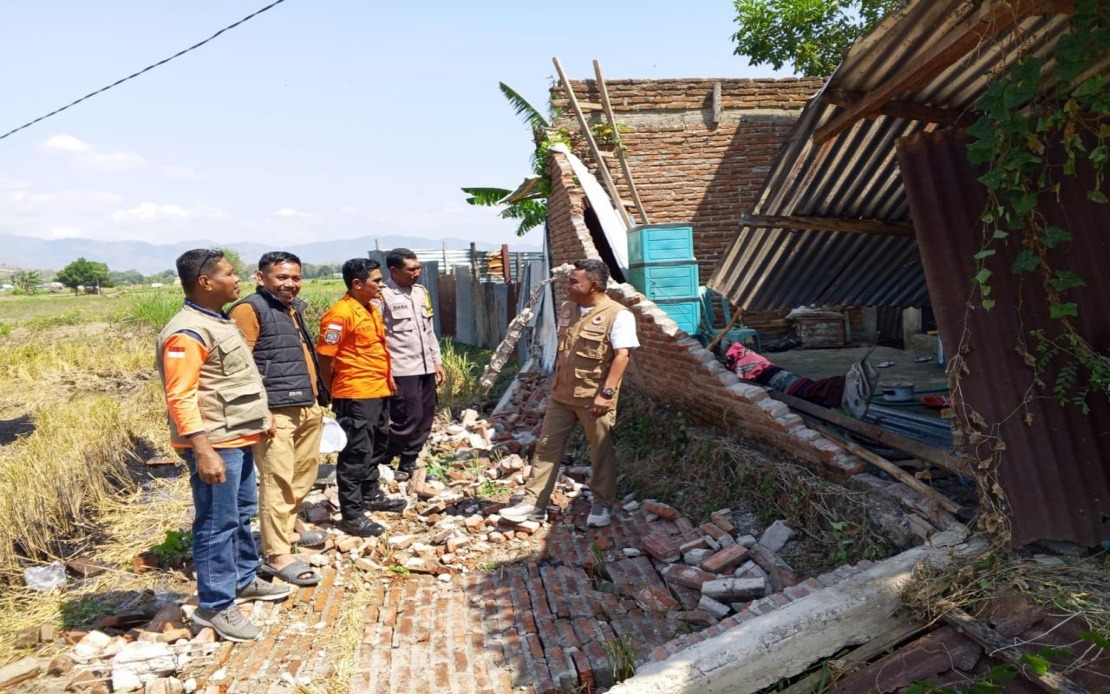
Indonesia's Flores Island faced a catastrophic natural disaster on Saturday morning when a powerful earthquake measuring magnitude 7.7 struck the East Nusa Tenggara province, claiming at least 38 lives and prompting large-scale emergency response operations. The tremor, which occurred at 4.58 am local time with its epicentre positioned approximately 30 kilometres from Mbay in the sea at a depth of 15 kilometres, left rescue personnel scrambling to locate survivors believed to be pinned beneath the rubble of damaged buildings across the affected areas.
According to Suharyanto, the chief of Indonesia's National Disaster Management Agency (BNPB), the humanitarian situation remained fluid as of mid-afternoon Saturday, with two individuals facing serious medical complications and an additional eleven sustaining less severe injuries. The initial shock prompted roughly two thousand residents to flee their homes independently, seeking safety away from potentially unstable structures. However, Suharyanto emphasised that significant numbers of people required coordinated rescue intervention, with multiple structures harbouring individuals still trapped beneath the wreckage and debris.
The physical destruction wrought by the earthquake extended across multiple sectors of island infrastructure and community services. Residential buildings sustained widespread damage, whilst several primary health facilities serving local populations were severely compromised. The tremor also triggered cascading geological hazards, with landslides obstructing transportation corridors throughout the region and complicating both evacuation efforts and supply distribution. Despite these challenges, the island's runway infrastructure remained functional, preserving aviation capacity for emergency operations, though terminal facilities and two operational ports sustained notable structural damage.
In the immediate aftermath, Indonesian authorities prioritised three critical operational objectives. The National Search and Rescue Agency (Basarnas), alongside personnel from the Indonesian military and law enforcement divisions, mobilised substantial personnel to conduct systematic search operations and extract trapped residents. The government simultaneously initiated infrastructure restoration efforts, with the Public Works Ministry deploying teams and heavy equipment to clear landslide-blocked roads and restore terrestrial communication pathways. Additionally, authorities deployed two rotary-wing and one fixed-wing aircraft to facilitate both evacuation operations and the transport of humanitarian supplies to isolated communities.
The tsunami risk, which initially accompanied the earthquake alert system, was substantially mitigated when sea-level monitoring stations recorded no significant elevation changes following the initial tremor. Authorities lifted the tsunami warning at 7.31 am, enabling rescue teams to redirect their full attention toward land-based operations rather than coastal evacuation procedures. This development proved fortuitous, as it allowed rescue personnel to concentrate exclusively on systematic search operations and structural extraction activities without dividing resources between marine and terrestrial operations.
Humanitarian assistance mobilisation occurred rapidly, with relief supplies including food provisions, potable water supplies, sanitation resources, temporary shelter tents, and electrical generation equipment being distributed to displaced communities. The complexity of distributing aid in a geographically compromised region challenged logistical operations, as damaged infrastructure and blocked routes required innovative delivery methods. Helicopter transport became essential for reaching isolated communities where ground access remained impossible due to landslide obstruction.
Suharyanto acknowledged that the Saturday morning event represented merely the initial phase of the disaster recovery timeline, noting that casualty figures and infrastructure damage assessments would likely increase as search operations progressed and field assessments reached remote areas. The first day of response operations typically yields incomplete statistical pictures, as rescue teams require time to conduct thorough searches of collapsed structures and survey all affected settlements. Officials cautioned against treating the 38-death figure as final, indicating that revised estimates would emerge as rescue operations expanded and damage surveys extended into previously inaccessible regions.
For Malaysia and broader Southeast Asian nations, the Flores earthquake underscored the region's vulnerability to seismic activity and the critical importance of maintaining robust disaster preparedness frameworks. The incident demonstrated how rapidly death tolls accumulate in areas where building standards may not withstand major seismic events and where mountainous terrain amplifies secondary hazards such as landslides. The response by Indonesian authorities, whilst commendable in its speed and scale, also highlighted resource constraints faced by developing nations managing large-scale natural disasters affecting remote populations.
The earthquake's timing and location within Indonesia's eastern archipelago, far from major population centres like Jakarta or Surabaya, potentially reduced the catastrophic potential compared to similar-magnitude events striking densely populated regions. However, the isolation of Flores Island simultaneously complicated rescue access and extended timelines for deploying specialised equipment and personnel. This geographical reality placed particular emphasis on pre-positioned disaster response capability and community-level emergency preparedness programmes across the archipelago's vulnerable outer regions.
The incident also renewed attention to Indonesia's commitment to disaster risk reduction infrastructure, particularly regarding early warning systems and building code enforcement in earthquake-prone zones. While the tsunami warning system functioned effectively, terrestrial warning systems and community awareness programmes remain critical components of comprehensive disaster preparedness. The damaged health facilities represented another vulnerability layer, as medical infrastructure damage occurs precisely when healthcare capacity becomes most essential for managing disaster-related casualties and injuries.

