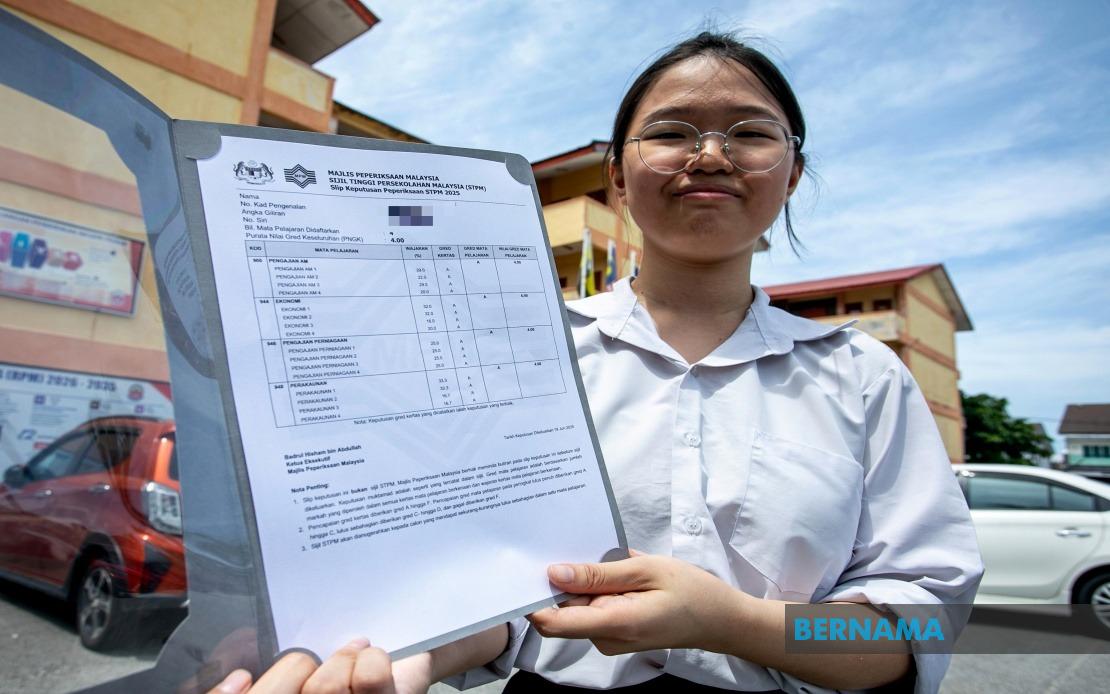
Yong Xin Yi, a final-year student at SMK Jalan Tasek in Ipoh, has joined an elite cohort of top performers by securing four A's in the 2025 Sijil Tinggi Persekolahan Malaysia (STPM) examination. The 20-year-old's stellar academic achievement stands out not merely as a testament to her intellectual capacity, but as a vivid illustration of how methodical planning and consistent discipline can translate ambitious educational goals into tangible success. Her accomplishment places her among only five students from her school to reach this pinnacle in this examination cycle, underscoring the competitive nature of Malaysia's premier pre-university qualification.
The cornerstone of Xin Yi's academic strategy revolved around a structured timetable that carved out five dedicated hours each evening for revision and consolidation of classroom material. Beginning at 5:00 pm and concluding at 10:00 pm, this daily window became her laboratory for deepening understanding and cementing knowledge across her subject offerings. What distinguishes her approach from conventional cramming is the deliberate sequencing of her efforts: rather than attempting to absorb new information during these evening sessions, she focused on reinforcing concepts already introduced during school hours. This layered methodology recognises a fundamental reality of effective learning—that spacing and repetition, when properly orchestrated, produce superior retention compared to massed practice attempted shortly before examinations.
Crucially, Xin Yi identifies active classroom engagement as the bedrock upon which her evening revision sessions rest. By maintaining unwavering concentration during lessons, she minimised the cognitive load required later during her independent study time. This strategic sequencing allowed her to use evening hours for deepening comprehension and exploring nuances rather than grappling with foundational confusion. She emphasises that this front-loaded engagement in class translates directly into more efficient self-directed learning, a principle that Malaysian students pursuing advanced qualifications would do well to internalise. The pedagogical insight here extends beyond mere time management; it reflects a mature understanding that learning is not a solitary evening endeavour but a collaborative process that demands full participation during instructional hours.
Another pillar of her success involved meticulous completion of all assigned homework and exercises. Rather than viewing these tasks as administrative chores to be rushed through, she treated them as integral components of her mastery strategy. Homework assignments, when approached with genuine intent to understand underlying principles rather than simply provide correct answers, function as diagnostic tools revealing gaps in comprehension that can be addressed before examination season. For Xin Yi, this disciplined completion of work set by her teachers became an early warning system and reinforcement mechanism rolled into one, enabling her to identify and rectify weaknesses proactively.
Among her four subjects, General Studies presented the most formidable challenge. Unlike quantitative disciplines where solutions can be objectively verified, General Studies demands sophisticated written communication, precise understanding of structural conventions, and intimate familiarity with marking rubrics. Recognising this vulnerability, Xin Yi deliberately allocated disproportionate attention to this subject, systematising her approach to master both content and form. This adaptive allocation of effort demonstrates strategic thinking beyond mere time-logging; she essentially conducted a personal skills audit and adjusted her resource deployment accordingly. Her willingness to confront difficulty head-on rather than gravitate toward comfortable subjects reflects psychological maturity that frequently distinguishes top achievers from merely competent ones.
Xin Yi's final transcript demonstrates remarkable consistency: she achieved Grade A across General Studies, Principles of Accounting, and Economics, accumulating a perfect Cumulative Grade Point Average (CGPA) of 4.00. This uniformity of excellence across subjects spanning humanities, social sciences, and quantitative domains suggests comprehensive intellectual capability rather than narrow specialisation. For Malaysian educators and parents observing from the sidelines, this profile offers encouragement that breadth of achievement remains possible within the current system, though it demands considerable stamina and planning.
Beyond the numerical achievements lies a narrative of familial support that underpins individual excellence. Born in Ipoh as an only child, Xin Yi credits her parents—a clerk and phone salesman respectively—as instrumental to her accomplishment. Their sustained encouragement throughout her academic journey provided both emotional sustenance and motivational fuel during challenging periods. She explicitly articulates her aspiration to repay their sacrifices by leveraging her educational credentials toward improved family circumstances, a cultural value deeply rooted in Malaysian society. This intergenerational compact, wherein parental investment in children's education anticipates tangible returns through the children's subsequent career success, remains a powerful motivator across Malaysian households regardless of socioeconomic background.
Looking ahead, Xin Yi has elected to pursue tertiary studies in economics at Universiti Putra Malaysia, a decision reached through careful consideration of her interests and labour market prospects. Her deliberate pathway into an economist career reflects the kind of strategic educational planning increasingly necessary in a competitive regional economy. Economics offers multiple career trajectories spanning government agencies, financial institutions, multinational corporations, and development organisations, all fields where Malaysia maintains significant presence. Her choice to pursue this field at a respected public university rather than seeking opportunities abroad suggests confidence in domestic institutions and perhaps pragmatic recognition of the value proposition they offer.
The broader implications of Xin Yi's success extend beyond individual achievement to illuminate systemic possibilities within Malaysian secondary education. Her trajectory demonstrates that excellence remains attainable through conventional schooling pathways, disciplined study habits, and without recourse to expensive private tuition networks that dominate discourse around examination preparation. While her situation cannot be universalised—parental support and innate capability remain unevenly distributed—her methodology offers replicable principles that students and parents can adapt to their circumstances. As Malaysia continues refining its education system and grapples with persistent debates about examination culture and student wellbeing, Xin Yi's balanced approach—combining focused classroom participation, structured home revision, and strategic resource allocation—provides a credible alternative narrative to both examination anxiety and academic mediocrity.

