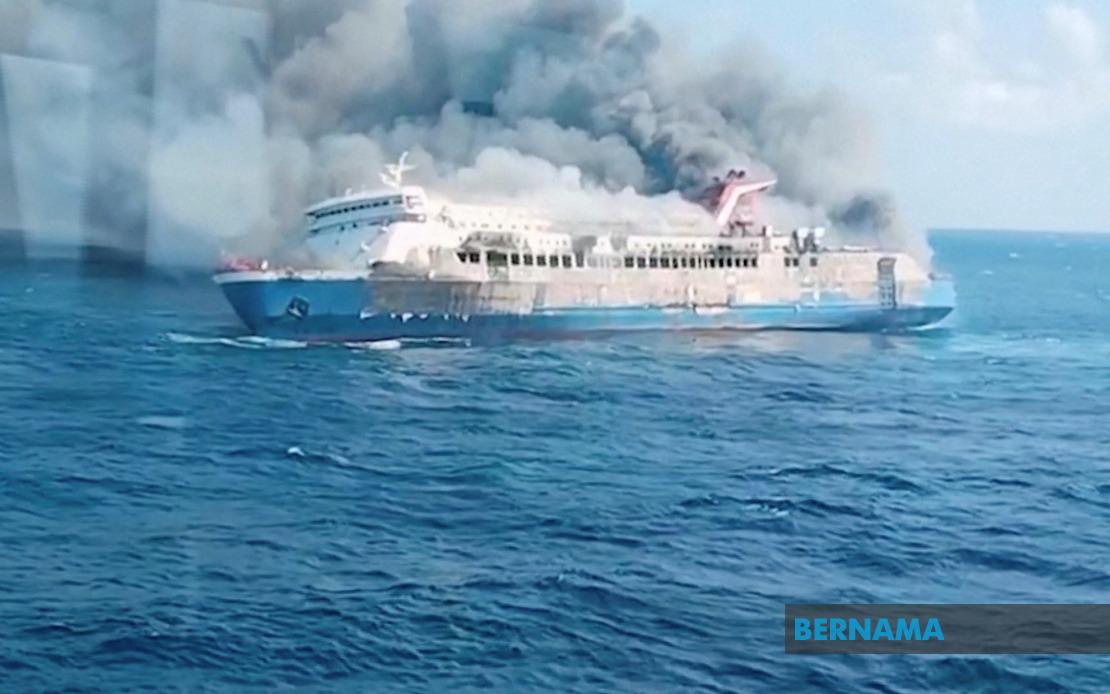
A major maritime disaster unfolded in Indonesian waters on August 2 when the KMP Mutiara Santosa 2 erupted in flames while traversing the route between Surabaya and Makassar. The incident has claimed at least five lives, with search and rescue teams racing against time to locate 41 passengers and crew members still unaccounted for in what represents one of Southeast Asia's deadliest shipping accidents in recent months.
The ferry, which departed from Surabaya with 232 passengers and 39 crew members aboard, encountered the fire during what was intended to be a routine inter-island voyage. Surabaya Search and Rescue Office Chief Nanang Sigit confirmed that authorities received notification of the emergency at 8.24 am local time, prompting an immediate and coordinated response involving multiple government agencies. By 4 pm the same day, rescue personnel had successfully evacuated 225 individuals from the stricken vessel, though the outcome for the remaining passengers and crew remained uncertain.
The scale of destruction aboard the ferry was devastating. According to Nanang's assessment, the majority of the ship's structure fell victim to the advancing flames, forcing terrified passengers to congregate on the bridge and forward sections of the vessel as their only refuge while awaiting rescue. The concentration of survivors in these limited spaces underscored both the rapid spread of the fire and the desperation of those trapped on the burning ship. Several occupants, faced with what they perceived as their only option, abandoned ship and jumped into the surrounding waters, where fortuitously they were spotted and retrieved by nearby fishing and commercial vessels operating in the area.
The rescue operation itself demonstrated the complexity of maritime emergency response in Indonesia's sprawling archipelago. Deployed assets included search and rescue vessels, aircraft, and personnel from various government departments and maritime authorities. The coordination of these resources across the waters off northern Sumenep required significant logistical effort, particularly given the remote nature of the incident location and the vastness of the search area where missing individuals might have drifted.
For Malaysian and regional observers, this incident carries particular resonance given the heavy reliance on maritime transport throughout Southeast Asia. The waters between Surabaya and Makassar form part of crucial shipping corridors that connect major population centres and commercial hubs. The KMP Mutiara Santosa 2, as a domestic Indonesian passenger ferry, represented the type of vessel upon which hundreds of thousands of regional travelers depend annually for inter-island connectivity.
The precise origin of the fire remained under active investigation as rescue operations continued. Such investigations typically examine multiple factors including mechanical failure, electrical system malfunctions, fuel system issues, and human error. The speed at which the fire consumed the vessel—overwhelming most of the ship's structure—suggests either a fuel-related incident or an electrical fire that rapidly became uncontrollable, possibilities that investigators would prioritize in determining causation.
Maritime safety standards across the Indonesian shipping sector have long been subject to international scrutiny. While major international carriers operating in regional waters maintain rigorous safety protocols and regular inspections, smaller domestic ferry operators sometimes face resource constraints that can affect maintenance regimens and safety equipment standards. The condition of the KMP Mutiara Santosa 2, including the functionality of fire suppression systems and emergency protocols, would likely feature prominently in post-incident safety reviews.
The incident also highlights vulnerabilities in maritime search and rescue coordination across Southeast Asia's waters. While Indonesia has invested significantly in developing its search and rescue capacity, the sheer geographical scale of the Indonesian archipelago and the volume of maritime traffic presents enduring challenges. Regional cooperation mechanisms, including mutual assistance agreements with neighbouring countries including Malaysia, become critical during large-scale maritime emergencies requiring rapid deployment of specialized equipment and personnel.
For the families of the missing, the uncertainty following the initial phase of rescue operations represented an agonizing period. Maritime incidents of this scale typically involve extensive follow-up search operations that may extend over days or weeks, particularly if currents or weather conditions complicate recovery efforts. The speed of rescue in the immediate aftermath—with 225 survivors extracted—provided some hope, but the persistence of 41 missing individuals underscored the tragedy's human cost.
The broader implications for regional maritime safety extend beyond this single incident. Insurance companies, shipping regulators, and maritime authorities throughout Southeast Asia typically intensify scrutiny of vessel safety protocols and crew training standards following major accidents. The incident may prompt renewed discussions about mandatory safety equipment, crew competency requirements, and passenger evacuation procedures across regional ferry operators serving similar routes and carrying comparable passenger loads.
Indonesian authorities faced mounting pressure to clarify findings from their investigation, particularly regarding whether any preventable factors contributed to the disaster. Such determinations often influence subsequent regulatory changes and industry-wide safety improvements that ripple across the region's maritime sector, affecting how carriers throughout Southeast Asia approach fire prevention, detection, and suppression systems aboard passenger vessels.

