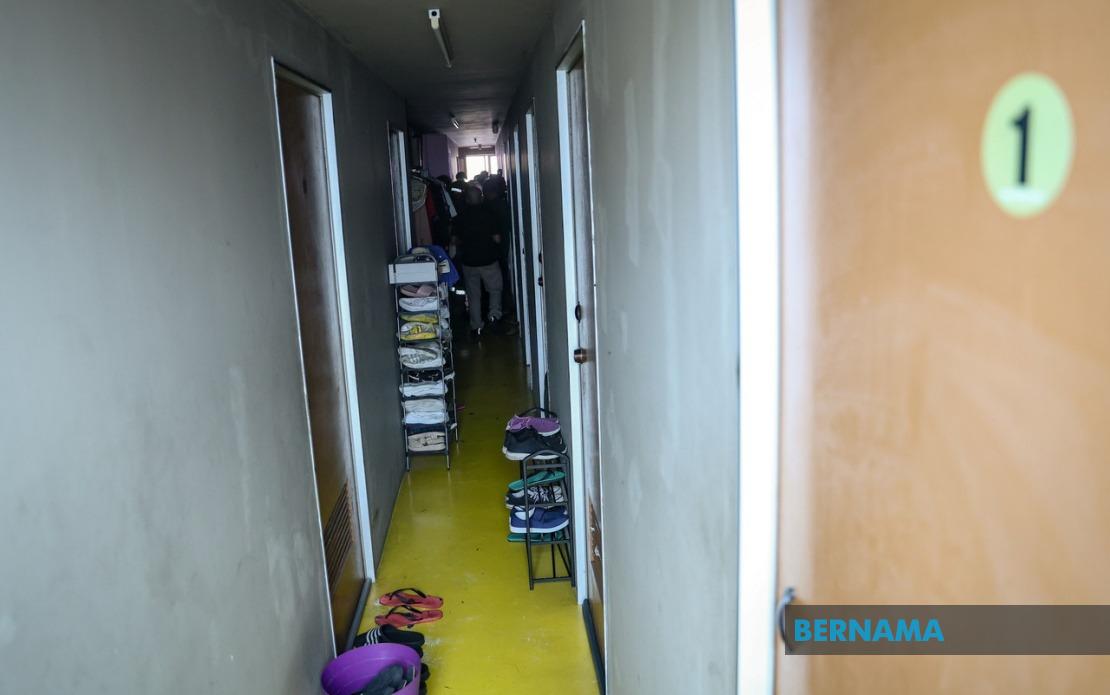
Johor Bahru's Fire and Rescue Department has intensified its crackdown on unsafe rental accommodation, conducting enforcement operations against nine premises in the city that have been illegally converted into overcrowded multi-room dwellings locally dubbed 'rumah sarang burung'—literally 'bird's nest homes'. The operation, which took place in the Larkin area on July 30, reflects growing concerns among authorities about fire hazards in informal housing arrangements that have proliferated across Malaysian urban centres.
Senior Assistant Fire Commissioner Siti Rohani Nadir, who heads Johor JBPM, explained that the enforcement initiative seeks to compel property owners who have modified buildings without official consent to meet mandatory fire safety standards. The core objective extends beyond mere regulatory compliance; the department views these interventions as essential measures to protect residents from potential conflagrations that could prove catastrophic in densely packed spaces where evacuation routes are limited and structural modifications often compromise escape pathways.
The operation represents a coordinated response by authorities to tackle what has become a systemic problem in Malaysia's affordable housing landscape. These conversions typically involve dividing single commercial or residential structures into numerous tiny rental units, each barely functional, to maximise rental income. The inspections specifically assessed whether the modified premises had adequate emergency exits, functioning fire protection apparatus, and realistic occupancy levels that comply with building codes designed to ensure resident safety during emergencies.
Siti Rohani outlined that her department would issue separate citations under the Fire Services Act 1988 for each identified violation, treating each safety breach as a distinct offence. However, she emphasised that the enforcement campaign prioritises education and compliance improvement rather than punitive measures against owners. This measured approach reflects recognition that many property owners may be unfamiliar with the specific regulatory requirements or may be testing regulatory boundaries due to the lucrative nature of informal rental markets.
One of the inspected properties exemplifies the severity of conditions these operations target. A former shophouse had been subdivided into approximately 15 rental rooms, each occupying just seven square metres—a space barely sufficient for a bed, storage, and minimal living area. Such configurations inevitably create dangerous conditions where fires could spread rapidly and occupants would struggle to locate exits in smoke-filled corridors, particularly if residents are unfamiliar with the layout or if structural modifications have further compromised visibility and access.
The enforcement drive proceeded with cooperation from Johor police and the Johor Bahru City Council, demonstrating that addressing this issue requires multi-agency coordination. Building owners should now recognise that undertaking renovations without securing requisite approvals carries serious legal consequences, and Siti Rohani's message emphasised the importance of obtaining permissions before commencing any structural work that might affect fire safety classification.
Beyond the enforcement mechanics, this operation illuminates a deeper social reality underlying Malaysia's housing crisis. Diana, a 52-year-old resident interviewed after the raid, articulated why thousands continue inhabiting these hazardous spaces despite obvious risks. She has rented one of the cramped rooms for two years, unable to afford conventional housing after her application for public housing was rejected. Her RM2,000 monthly income as a People's Volunteer Corps member means that RM500 for a 'rumah sarang burung' room represents her only viable accommodation option while still maintaining financial obligations to her family.
Cases like Diana's reveal why demand for these illegal conversions remains robust despite safety dangers. The affordable housing shortage means that even residents aware of the risks see such accommodation as preferable to homelessness or spending more than half their income on rent for formal housing. This creates a persistent tension between legitimate fire safety concerns and genuine economic desperation among lower-income Malaysians struggling to secure dignified shelter.
The 'Rumah Sarang Burung' Task Force decision to escalate enforcement against high-risk premises signals recognition that voluntary compliance has proven insufficient. These structures now represent statistically significant fire hazards; a serious blaze in any one of these converted properties would almost certainly result in multiple fatalities given the confined spaces, limited exits, and density of occupants. From a public safety perspective, authorities must continue such operations to mitigate disaster risks.
However, enforcement alone cannot resolve the underlying problem driving informal housing markets. Until Malaysia addresses the shortage of affordable housing through expanded public housing programmes, rent controls, or other interventions, demand for illegal conversions will persist. Property owners will continue subdividing buildings because the financial incentives remain overwhelming, and residents will continue accepting dangerous conditions because legitimate alternatives remain financially inaccessible. Effective fire safety policy therefore requires parallel investments in affordable housing solutions that address root causes rather than merely addressing symptoms through enforcement operations.
For Malaysian policymakers and regional observers, this operation highlights how housing affordability failures cascade into broader social risks including compromised fire safety. The enforcement campaign serves essential protective functions in the near term, but sustainable solutions demand comprehensive housing strategies that provide safe, dignified shelter for low-income residents without forcing them to choose between financial survival and personal safety.

