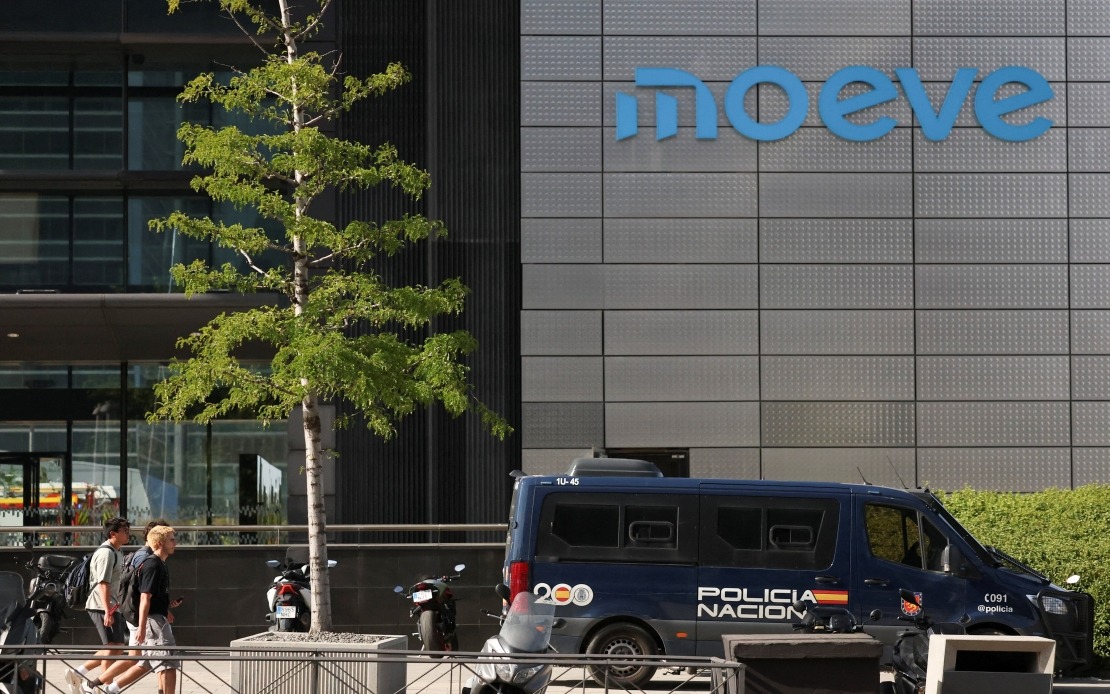
Madrid's Torre Moeve, Spain's second-tallest building, erupted in flames on Tuesday afternoon, sending thick columns of smoke billowing across the Spanish capital's skyline. The dramatic incident unfolded around 5:00 pm local time when an explosion rocked the interior of the high-rise structure, prompting immediate evacuation and emergency response from multiple agencies coordinating across the city.
The fire originated on the 25th floor, a section dedicated to technical facilities and mechanical systems that support the tower's operations. This location, away from office spaces and occupied areas, likely contributed to the absence of serious casualties during the incident. The building's height and visibility made the fire visible from numerous vantage points across Madrid, drawing public attention and prompting swift emergency service mobilization.
Emergency protocols functioned effectively throughout the crisis. City authorities immediately implemented a complete evacuation of the structure as a standard precautionary measure, ensuring occupants moved to safety before the situation could potentially deteriorate. The National Police coordinated response efforts and provided updates to the public and media, maintaining clear communication during the developing emergency.
Firefighters from the Madrid City Council moved quickly to contain and suppress the flames once they arrived at the scene. Their efforts proved successful in bringing the fire under control, allowing them to subsequently conduct systematic inspections of the building's interior to assess damage and ensure no remaining hazards existed. The rapid extinguishment prevented the incident from escalating into a major catastrophe that could have endangered many more people.
Medical support was provided to those affected by the smoke and shock of the evacuation. Two workers who inhaled smoke during the emergency received treatment for mild respiratory irritation at the scene, while a bystander experienced anxiety-related symptoms triggered by witnessing the dramatic event. All three individuals were assessed and released without requiring hospitalization, indicating the injuries remained minor despite the fire's visibility and impact.
Torre Moeve's status as Spain's second-tallest building underscores the significance of this incident within Spain's urban landscape. Such major structures house thousands of workers and are landmarks visible across their cities. The successful containment and evacuation demonstrated the importance of emergency preparedness in high-rise facilities, particularly regarding technical spaces where fires can originate and spread rapidly through ventilation and mechanical systems.
The explosion that preceded the fire raises questions about what caused the initial incident within the technical rooms. While Spanish national broadcaster RTVE reported the sequence of events citing National Police statements, the underlying cause remained under investigation by authorities. Understanding whether the explosion resulted from mechanical failure, electrical malfunction, or other factors would be crucial for preventing similar incidents in other buildings with comparable infrastructure.
This incident carries particular relevance for Malaysia and Southeast Asia, where rapid urbanization has driven investment in high-rise developments and modern commercial towers. Building safety standards, emergency response protocols, and maintenance of technical infrastructure in tall structures represent ongoing concerns across the region. The successful Madrid response offers insights into effective evacuation procedures and emergency management that regional authorities and building operators can evaluate for their own facilities.
The incident also highlights the critical role of building codes and safety inspections in preventing disasters within major structures. Torre Moeve's technical systems, likely subject to Spanish building regulations, underwent testing and oversight that contributed to the controlled outcome. As Southeast Asian nations continue developing their skylines, ensuring similarly rigorous standards for construction, maintenance, and emergency preparedness becomes essential for protecting residents and workers in increasingly dense urban centers.
The absence of fatalities in a fire affecting Spain's second-tallest building represents a positive outcome reflecting both effective emergency response and the building's design features. However, the incident serves as a reminder that even modern structures with advanced systems require constant vigilance regarding maintenance and safety protocols. The technical floor designation suggests that ongoing monitoring of mechanical and electrical systems should remain a priority for property managers and maintenance teams across all high-rise developments throughout Europe and beyond.

